Which recruitment metrics does AI improve?
AI improves recruitment metrics with 30-50% faster hiring, better candidate quality, and lower costs. Discover measurable benefits.

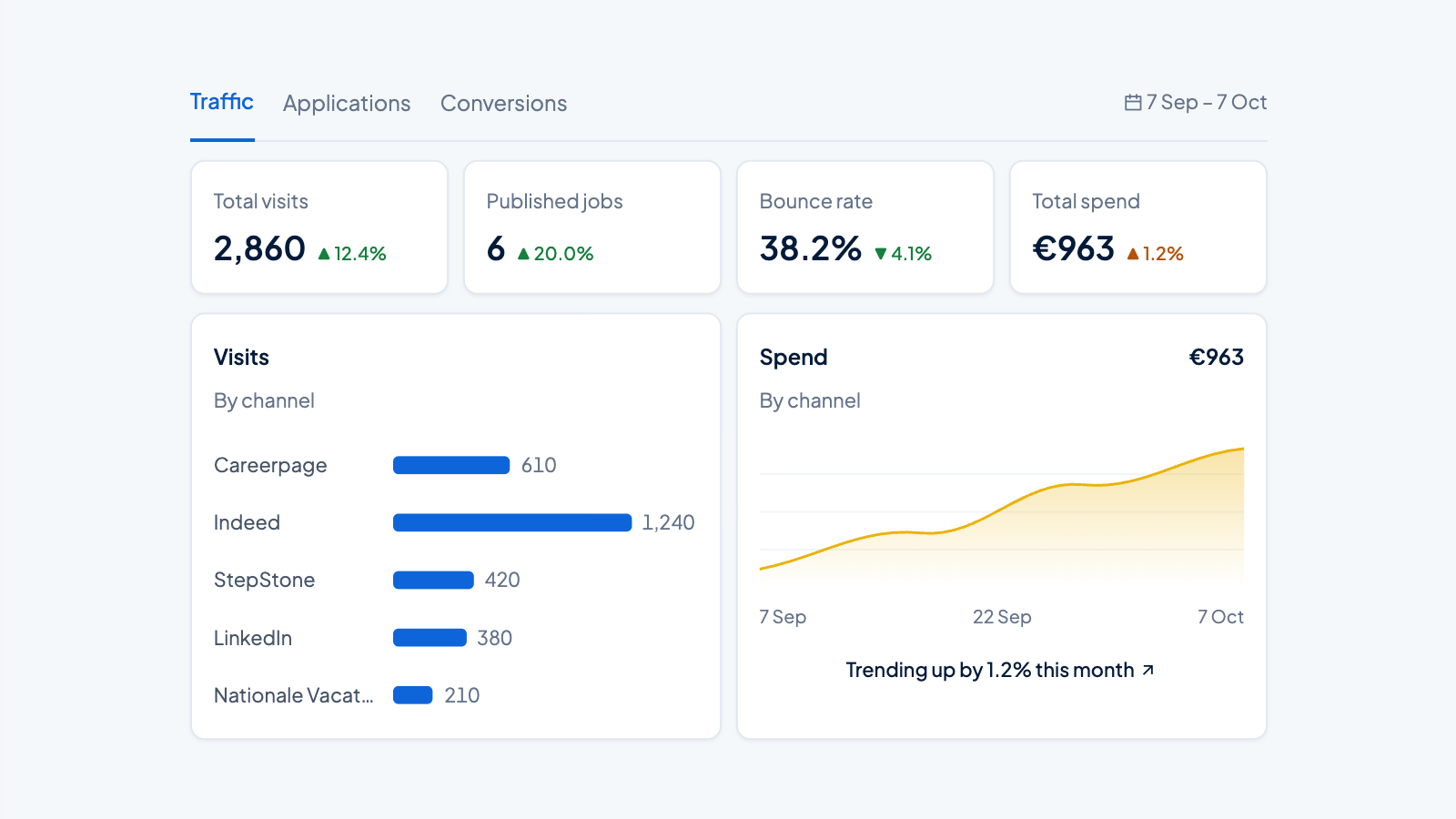
AI improves several crucial recruitment metrics through automation and data analysis. The most important improvements are seen in time-to-hire, cost-per-hire, candidate quality, and retention rates. AI tools can measure and optimize these HR analytics in real time using predictive analytics, automated screening, and intelligent matching algorithms.
What are the key recruitment metrics AI can influence?
AI can significantly improve four core metrics in recruitment: time-to-hire, cost-per-hire, candidate quality, and retention rates. These AI recruitment metrics form the basis for effective recruitment performance and provide measurable benefits for HR departments.
Time-to-hire measures the period from posting a job opening to accepting an offer. AI shortens this time through automated resume screening and intelligent candidate matching. Cost-per-hire calculates all costs per hired candidate, including advertising, recruiter time, and tools.
Candidate quality determines how well new employees perform and fit the company. AI analyzes patterns in successful employees to predict better matches. Retention rates measure how long employees stay, and AI helps by better estimating cultural fit.
- Response time to applications
- Number of qualified candidates per job opening
- Diversity in the candidate pool
- Hiring manager satisfaction
- Candidate experience scores
How does AI improve time-to-hire and why is this so important?
AI reduces time-to-hire by an average of 30–50% by automating screening, scheduling, and communication. AI recruiting tools scan resumes within seconds, schedule interviews automatically, and keep candidates informed through chatbots and automated emails.
Faster recruitment automation prevents top candidates from going to competitors. In tight labor markets, the best candidates are often off the market within a few days. AI-driven prescreening immediately identifies the most suitable candidates without manual intervention.
Automated communication keeps candidates engaged throughout the process. AI chatbots answer questions 24/7, while smart scheduling tools plan interviews more efficiently. This reduces waiting times and significantly improves the candidate experience.
Recruitment efficiency increases because recruiters can focus on interviews and decision-making instead of administrative tasks. This leads to a higher-quality selection process, despite the shorter turnaround time.
What impact does AI have on candidate quality and how do you measure it?
AI improves candidate quality through objective data analysis and predictive analytics that help reduce human bias. Machine learning algorithms analyze success factors of current top employees and match these patterns with new candidates for better recruitment performance.
Methods for measuring candidate quality include performance scores after 6 and 12 months, time-to-productivity, and manager satisfaction ratings. AI tools track which candidate characteristics correlate with long-term success in specific roles.
Skills-based matching becomes more accurate through AI analysis of resumes, online profiles, and assessment results. This leads to a better job-candidate fit than traditional keyword matching methods.
Key quality indicators to measure:
- Performance ratings after the onboarding period
- Time-to-productivity for new employees
- Retention rate after 12 months
- Manager satisfaction scores
- Cultural fit assessments
- Promotion rate of new hires
What is the ROI of AI in recruitment and how do you calculate it?
The recruitment ROI of AI tools is calculated by comparing cost savings and efficiency gains with implementation costs. Typical savings come from fewer recruiter hours, lower advertising costs, and shorter time-to-fill periods, which reduce productivity loss.
Direct cost savings come from automating repetitive tasks. With AI hiring tools, a recruiter can manage two to three times more candidates, which lowers personnel costs. Automated screening reduces the time per candidate from hours to minutes.
Indirect benefits are harder to measure but often greater. Better candidate quality leads to higher productivity, lower turnover, and reduced rehiring costs. Faster hiring prevents revenue loss from open positions.
ROI calculation formula: (Savings + productivity gains – AI tool costs) / AI tool costs × 100. Include both hard numbers and soft benefits, such as improved employer branding and candidate experience, in your analysis.
How do you measure the effectiveness of AI-driven candidate experience?
AI-driven candidate experience is measured through response times, communication frequency, and feedback scores. Automated systems can provide real-time updates and answer questions, which significantly increases candidate satisfaction compared to traditional processes.
Net Promoter Score (NPS) surveys after the recruitment process provide insight into candidate satisfaction. AI tools can send personalized communication at optimal times, which improves the experience whether or not candidates are hired.
Transparency in the process is improved by AI dashboards that give candidates real-time status updates. This reduces uncertainty and stress during the waiting process, resulting in more positive feedback.
Response rates to communication and application completion rates are important indicators. AI-optimized processes show higher engagement because candidates receive answers faster and the process runs more smoothly.
How Applyfin helps optimize recruitment metrics
Applyfin transforms your recruitment process with advanced AI technology that measurably improves all key metrics. Our platform offers a complete solution for organizations that want to modernize their recruitment and make data-driven decisions.
Our solution helps you with:
- Real-time dashboard – Monitor all recruitment metrics in one place
- Automated screening – Reduce time-to-hire by 40-60%
- Predictive analytics – Predict candidate success and cultural fit
- ROI tracking – Measure the exact impact of your recruitment investment
- Candidate experience optimization – Increase satisfaction scores with automated communication
By systematically monitoring these HR metrics, organizations can continuously improve their AI recruitment strategy. The combination of speed, quality, and transparency that AI offers transforms the way companies attract and select talent. Want to see how Applyfin can optimize your recruitment metrics? Schedule a demo and discover the power of data-driven recruitment.