What are smart job postings?
AI-powered job postings automate screening and improve candidate selection. Discover how smart recruitment saves you time.

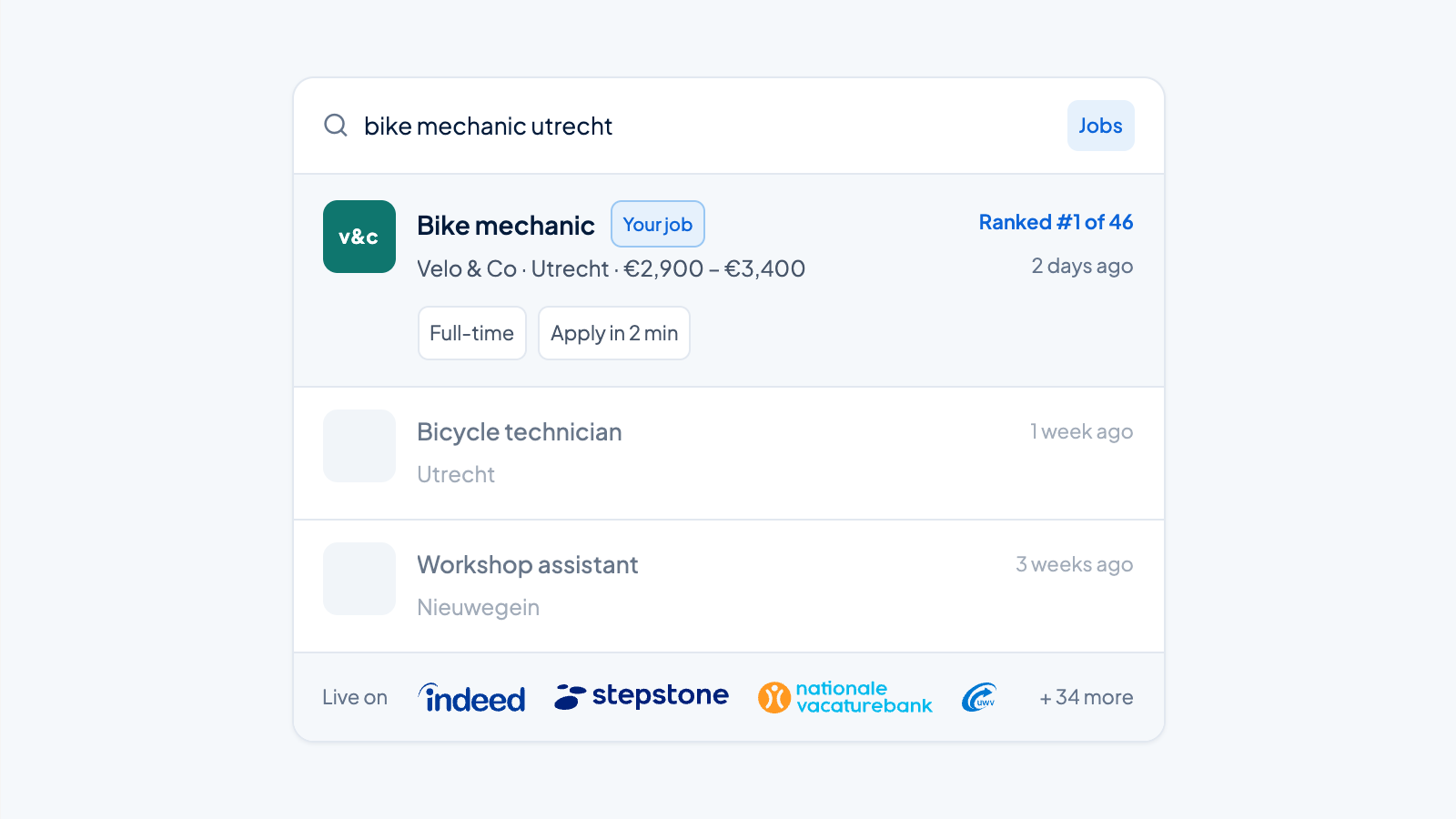
Smart job postings are job postings that use artificial intelligence and automation to optimize the recruitment process. They combine traditional job posting with advanced technology for better candidate selection, automatic screening, and integrated workflows. This makes recruitment software more efficient and helps companies find the right candidates for their open positions faster.
What exactly are smart job postings?
Smart job postings are intelligent recruitment solutions that use AI technology and automation to improve the entire recruitment process. They go beyond traditional job posting by automatically screening, scoring, and matching candidates to job requirements.
The core features of smart job postings include automatic candidate selection based on predefined criteria, AI-driven matching between candidates and jobs, and integrated workflows that automate repetitive tasks. This technology analyzes resumes, assesses skills, and ranks candidates by suitability.
The difference from traditional job posting lies in the intelligent processing of applications. While traditional methods require manual screening, smart job postings take over this process by:
- Automatically parsing resumes and cover letters
- Scoring candidates on relevant criteria
- Intelligently matching job requirements and candidate profiles
- Automated communication and follow-up
How do smart job postings work in practice?
Smart job postings work through a structured process in which AI technology optimizes every step of the candidate experience. The process starts with job posting and ends with a qualified candidate list for the recruiter.
The process takes place in several steps. When a candidate applies, the system automatically analyzes all submitted documents. AI screening assesses skills, experience, and suitability based on the job requirements. Candidates are then automatically scored and ranked.
Practical workflows include automated email communication, scheduling interviews, and collecting additional information. The system tracks all candidate interactions in one central overview, from first contact to hire. Recruiters only receive preselected, qualified candidates to move forward with.
The technical features work together seamlessly to provide a complete recruitment software solution that both saves time and improves the quality of candidates.
Why are companies increasingly choosing smart job postings?
Companies choose smart job postings because they offer significant efficiency gains, cost savings, and quality improvements. Automating repetitive tasks enables recruiters to focus on strategic activities and personal candidate support.
The main benefits are measurable and immediately noticeable. Recruiters can process up to three times more candidates compared with traditional methods. Automatic screening eliminates manual resume review and ensures consistent selection criteria.
Cost savings result from:
- Reduced time per candidate through automation
- Lower advertising costs through better targeting
- Faster time-to-hire through efficient processes
- Less manual administration and follow-up
The impact on HR processes is transformative. Teams gain better insights into their recruitment activities, can make data-driven decisions, and achieve more consistent results. Candidate quality improves because the system evaluates objectively, without human bias.
What is the difference between traditional and smart job postings?
The difference between traditional and smart job postings lies in automation, efficiency, and data-driven decision-making. Traditional methods require manual processing of every application, while smart job postings automate and optimize this process.
In terms of time, recruiters using traditional methods spend hours reading resumes and manually sorting candidates. Smart job postings drastically reduce this time through automatic preselection and intelligent ranking of candidates.
The cost differences are significant:
- Traditional: high personnel costs for manual screening
- Smart: lower operational costs through automation
- Traditional: longer time-to-hire increases job posting costs
- Smart: faster processes lower total recruitment costs
For recruiters, this means fewer administrative tasks and more time for strategic work. Candidates experience faster response times, consistent communication, and a more professional application experience. Transparency and predictability of the process improve for everyone involved.
Which components make a job posting truly smart?
A job posting becomes truly smart through the combination of automatic screening, AI matching, integrated workflows, and comprehensive data analysis. These components work together to create an intelligent recruitment software solution that supports human decision-making.
The essential technical components include advanced algorithms for resume parsing, natural language processing for text analysis, and machine learning for continuous improvement of matching results. The system learns from previous successful placements to improve future predictions.
Functional aspects that make a job posting smart:
- Intelligent screening – automatic assessment of skills and experience
- Dynamic questionnaires – customized questions based on job requirements
- Scoring algorithms – objective ranking of candidates
- Workflow automation – automated communication and scheduling
- Integrations – seamless connection with other HR systems
Data analysis plays a crucial role by providing insights into recruitment patterns, candidate quality, and process efficiency. This information helps recruiters refine their strategies and achieve better results.
How do you implement smart job postings in your organization?
Implementing smart job postings requires careful planning, the right platform selection, and effective change management. The process starts with evaluating current recruitment processes and identifying areas for improvement that automation can support.
The preparation phase includes documenting existing workflows, defining selection criteria, and training the HR team. Platform selection is based on organizational needs, integration options, and the scalability of the solution.
Steps for successful adoption:
- Analysis of current processes and bottlenecks
- Selection of suitable recruitment software
- Pilot project with a limited number of job postings
- Training for recruiters and HR staff
- Gradual rollout to all job postings
- Continuous monitoring and optimization
Change management is crucial for team acceptance. Clearly communicate the benefits, provide adequate training, and support employees during the transition period. Measure results and share successes to maintain support.
How Applyfin helps with smart job postings
Applyfin offers a complete solution for organizations that want to transform their recruitment with smart job posting technology. Our platform combines all essential components in one integrated environment:
- AI-driven candidate screening – automatic analysis and scoring of all applications
- Intelligent matching – advanced algorithms that identify the best candidates
- Automated workflows – from first contact to final selection
- Real-time analytics – insights into your recruitment processes and results
- Seamless integrations – connection with your existing HR systems
With Applyfin, you can implement smart job postings without complex technical challenges. Our team guides you through the entire process, from initial setup to full adoption by your recruitment team.
Ready to transform your recruitment with smart job postings? Contact us for a personal demonstration and discover how Applyfin can improve your hiring results.