How do you assess job applications objectively?
Objective application assessment reduces bias by 70% and improves hiring decision quality through structured processes.

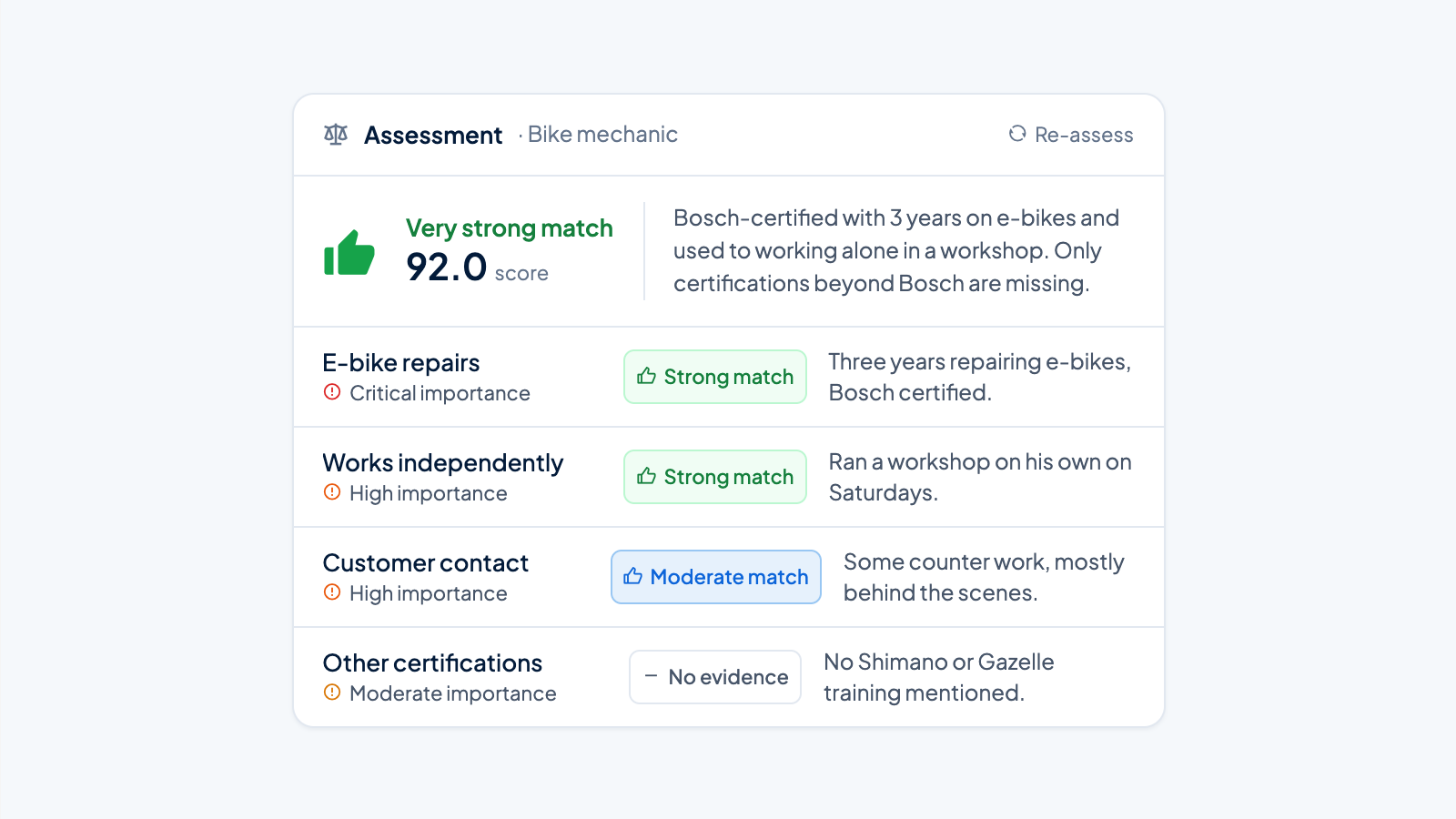
Objectively evaluating applications remains one of the biggest challenges for recruiters and HR professionals. Despite the best intentions, personal preferences, unconscious biases, and subjective impressions often tip the scales in important hiring decisions. This not only leads to missed opportunities with talented candidates but can also undermine the diversity and quality of your team.
An objective application review ensures you select the best candidates based on relevant competencies and performance indicators, rather than gut feeling or first impressions. By implementing structured processes and data-driven methods, you can significantly reduce recruitment bias and make more consistent hiring decisions.
Why subjectivity is the biggest pitfall in application reviews
Subjectivity creeps into the recruitment process in various ways. The most common forms of bias are the halo effect, where one positive trait overshadows all other aspects, and confirmation bias, where recruiters unconsciously look for confirmation of their first impression.
Personal preferences also play a major role. Recruiters tend to favor candidates who resemble them or share the same background. This phenomenon, known as similarity bias, can lead to a homogeneous work culture and missed diversity.
The consequences of subjective evaluation are measurable. Organizations that rely heavily on intuitive decision-making often have higher turnover rates and longer time-to-hire periods. Moreover, they regularly miss candidates who are objectively better suited for the role.
Which objective criteria make the difference in candidate selection
Effective, objective selection starts with defining measurable criteria directly related to job success. These criteria must be verifiable and quantifiable.
Competency-based evaluation forms the foundation of objective candidate assessment. By identifying specific skills and behavioral indicators that are crucial for the role, you can evaluate applicants on concrete performance indicators rather than general impressions.
Job-related skills such as technical expertise, communication skills, and problem-solving ability can be objectively tested through practical assignments, case studies, or standardized assessments. These methods provide a more reliable picture of someone's actual capabilities than an interview alone.
How structured interviews eliminate bias
Structured interviews are a powerful tool for minimizing recruitment bias. By asking all candidates a predetermined set of questions, you create a fair basis for comparison.
An effective structured interview includes the following elements:
- Predefined question set based on job requirements
- Standardized scoring criteria for each question
- Evaluation matrix with clear rating levels
- Multiple interviewers for different perspectives
The scoring system must be clear and consistent. For example, use a scale of 1–5 for each competency, with specific behavioral indicators tied to each score. This prevents different interviewers from rating the same performance differently.
The power of data-driven application reviews
Recruitment analytics provide valuable insights into the effectiveness of your selection process. By collecting data on candidate performance, time-to-hire, and retention rates, you can identify patterns that lead to better hiring decisions.
Assessment tools and automated screening help objectively evaluate large numbers of applicants. These tools can measure cognitive abilities, personality traits, and job-specific competencies in a standardized way.
The predictive value of selection criteria becomes clearer when you systematically track which factors correlate with successful employees. This data-driven approach allows you to continuously refine and improve your application review.
Practical tools for objective candidate evaluation
Various instruments can help you implement more objective evaluation methods. Scorecards offer a systematic way to assess candidates against predetermined criteria.
Effective evaluation tools include:
- Competency tests for job-specific skills
- Reference checks with structured questions
- Portfolio evaluations for creative or technical roles
- Simulations or work samples that mimic the actual job
- 360-degree feedback during the selection process
Portfolio evaluations are particularly valuable for roles where concrete output is important. By asking candidates to present examples of their work and evaluating them against fixed criteria, you gain objective insights into their capabilities.
How technology increases objectivity in recruitment
Modern recruitment technology plays a crucial role in reducing bias and increasing objectivity. AI-driven screening can analyze resumes based on job-relevant criteria, without being influenced by name, gender, or other personal characteristics.
Automated pre-selection systems can efficiently filter large volumes of applicants based on objective criteria such as educational background, work experience, and specific skills. This saves time and ensures no suitable candidates are overlooked.
Recruitment platforms that support structured interviews and consistent evaluation standards help maintain objectivity throughout the entire hiring process. These systems can also provide valuable analytics to measure the effectiveness of different selection methods.
How Applyfin helps with objective application reviews
Applyfin supports organizations in implementing objective recruitment processes through integrated AI workflows and data-driven functionalities. Our platform centralizes all candidate information and uses intelligent screening to score applicants based on job-relevant criteria.
The key benefits of our approach:
- AI-driven screening that reduces bias and ensures consistent evaluation
- Automated scoring and ranking of candidates on objective criteria
- Integrated pipeline management for an overview of all applicants
- Data analytics for continuous improvement of selection processes
Through recruitment automation and intelligent workflows, you can effectively manage up to three times as many applicants while increasing the quality of your hiring decisions. Want to discover how our advanced features can optimize your recruitment process? Contact us for a personal demonstration or visit our website for more information about our recruitment automation solutions.