What metrics can you track with recruitment software?
Discover crucial recruitment metrics like time-to-hire, cost-per-hire, and candidate quality for data-driven hiring decisions.

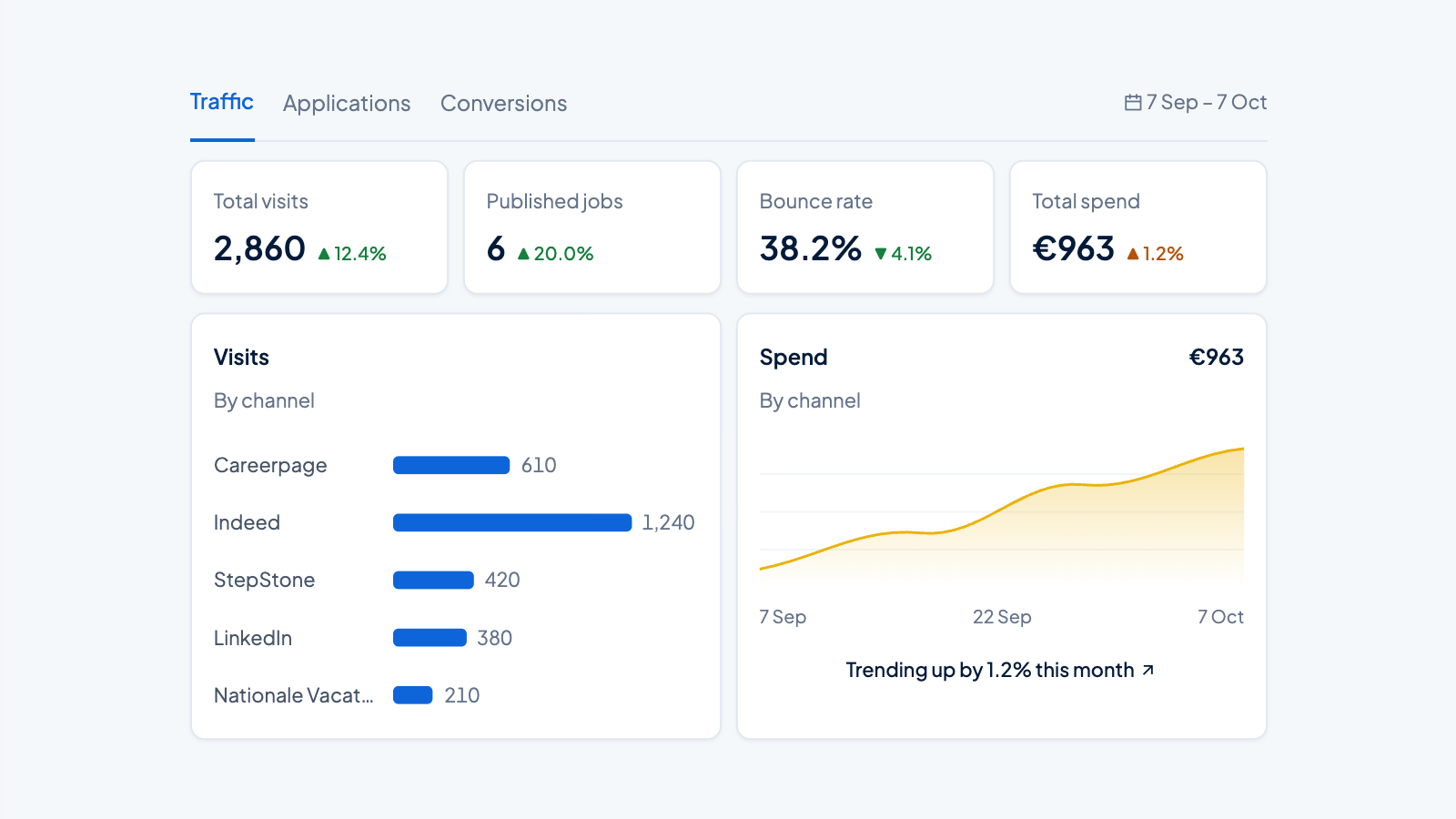
Recruitment software offers extensive capabilities for measuring various metrics that are crucial for optimizing your hiring process. From basic KPIs like time-to-hire and cost-per-hire to advanced analytics for candidate quality and ROI calculations. These metrics provide insight into the effectiveness of your recruitment strategy and help make data-driven decisions for better hiring results.
Which basic recruitment metrics are most important to measure?
The most important basic recruitment metrics are time-to-hire, cost-per-hire, source effectiveness, and applicant-to-hire ratio. These fundamental KPIs form the basis for evaluating your hiring process and provide direct insights into the efficiency and effectiveness of your recruitment efforts.
Time-to-hire measures the average time between posting a job opening and a candidate accepting an offer. This metric helps you understand how quickly your organization can respond to staffing needs and where delays occur in the process.
Cost-per-hire calculates the total cost of recruitment divided by the number of hired candidates. This includes advertising costs, recruiter time, software costs, and other related expenses. It provides insight into the financial efficiency of your hiring strategy.
Source effectiveness shows which channels deliver the best candidates. By tracking which sources lead to successful hires, you can better allocate your budget and efforts across the most productive channels.
How do you measure candidate quality with recruitment software?
You measure candidate quality by combining performance tracking of new employees, retention rates, hiring manager satisfaction scores, and pre-hire assessment results. Modern recruitment software can automatically capture and analyze these qualitative and quantitative indicators for better hiring decisions.
Performance tracking monitors how new employees perform in their first months. This can be measured through goals, evaluations, and productivity metrics. By linking this data to the original recruitment source, you gain insight into which channels produce the best performers.
Retention rates show how long new employees stay. High turnover within the first six months may indicate issues in the selection process or unrealistic expectations during recruitment.
Hiring manager satisfaction scores provide feedback on how satisfied managers are with the candidates provided. This subjective measurement complements the objective data and helps refine the recruitment process.
- 90-day performance evaluations of new employees
- Retention rates per recruitment channel
- Feedback scores from hiring managers
- Comparing assessment results and actual performance
- Time-to-productivity measurements
What is the difference between recruitment metrics and HR analytics?
Recruitment metrics focus on operational aspects of the hiring process, while HR analytics provides strategic insights into broader workforce trends and organizational goals. Recruitment data is a part of overall HR analytics, but has a more specific scope and time horizon.
Recruitment metrics are tactical and measure direct hiring activities such as the number of applications, conversion rates per stage, and recruiter productivity. These metrics help optimize daily recruitment processes and achieve short-term goals.
HR analytics, on the other hand, looks at long-term trends such as workforce planning, talent pipeline development, and the impact of recruitment on organizational performance. It combines recruitment data with other HR data such as employee satisfaction, development opportunities, and strategic workforce planning.
Integration between both levels is crucial for effective talent management. Recruitment metrics inform tactical adjustments, while HR analytics support strategic decisions about future staffing needs and organizational development.
How can you calculate and optimize recruitment ROI?
You calculate recruitment ROI by comparing total hiring costs against the value new employees generate. The basic formula is: (value of new employee – recruitment costs) / recruitment costs × 100. Optimization happens by combining cost reduction and quality improvement of hires.
For an accurate ROI calculation, you need to include all recruitment costs: advertising budget, recruiter salaries, software licenses, assessment costs, and onboarding expenses. The value of new employees can be calculated based on their contribution to revenue, productivity, and cost savings.
Data-driven optimization starts with identifying the most cost-effective recruitment channels. By analyzing conversion rates and quality metrics per source, you can shift budget to the best-performing channels.
- Collect all direct and indirect recruitment costs
- Calculate the average value per new employee
- Measure retention rates to determine long-term value
- Analyze which channels deliver the best ROI
- Optimize budget allocation based on performance data
- Monitor and regularly adjust your recruitment strategy
Which real-time metrics provide direct insight into your recruitment process?
Real-time metrics such as pipeline velocity, response rates, conversion rates per stage, and applicant volume provide direct feedback on recruitment performance. These dashboard metrics enable proactive management and help identify bottlenecks before they become problems.
Pipeline velocity shows how quickly candidates move through different stages of the recruitment process. Delays in specific stages may indicate inefficiencies or capacity issues that require immediate attention.
Response rates measure how often candidates respond to outreach attempts and invitations. Low response rates may indicate issues with messaging, timing, or audience targeting that can be adjusted immediately.
Conversion rates per recruitment stage show where candidates drop out of the process. By monitoring this data in real time, you can quickly intervene when unexpected drops in conversion occur.
These real-time insights enable recruitment teams to optimize daily activities and respond directly to changing market conditions. With modern recruitment software, these metrics can be automatically tracked and presented in clear dashboards.
How Applyfin helps with recruitment metrics
Applyfin offers a complete solution for measuring and optimizing recruitment metrics. Our platform centralizes all key KPIs in one clear dashboard and automates data collection for accurate insights:
- Automatic tracking of time-to-hire, cost-per-hire, and source effectiveness
- Real-time dashboards with pipeline velocity and conversion rates per stage
- Integrated ROI calculations for all recruitment channels
- Candidate quality analysis with performance tracking and retention monitoring
- Customizable reports for strategic HR analytics
- Benchmarking tools to compare your performance with industry standards
By centralizing all recruitment metrics on one platform, you gain immediate insight into your hiring processes and can make data-driven decisions. Schedule a demo and discover how Applyfin takes your recruitment metrics to the next level.