How to centralize job openings with AI software?
Centralizing job openings with AI software brings all recruitment channels, applicant data, and workflows together in one system. This gives you dramatically better overview, faster processes, and higher candidate quality. Modern HR teams can manage more applicants with less manual work, while AI automatically handles screening, matching, and workflow automation. Discover the concrete benefits, essential functions, and practical implementation steps for successful centralized vacancy management.

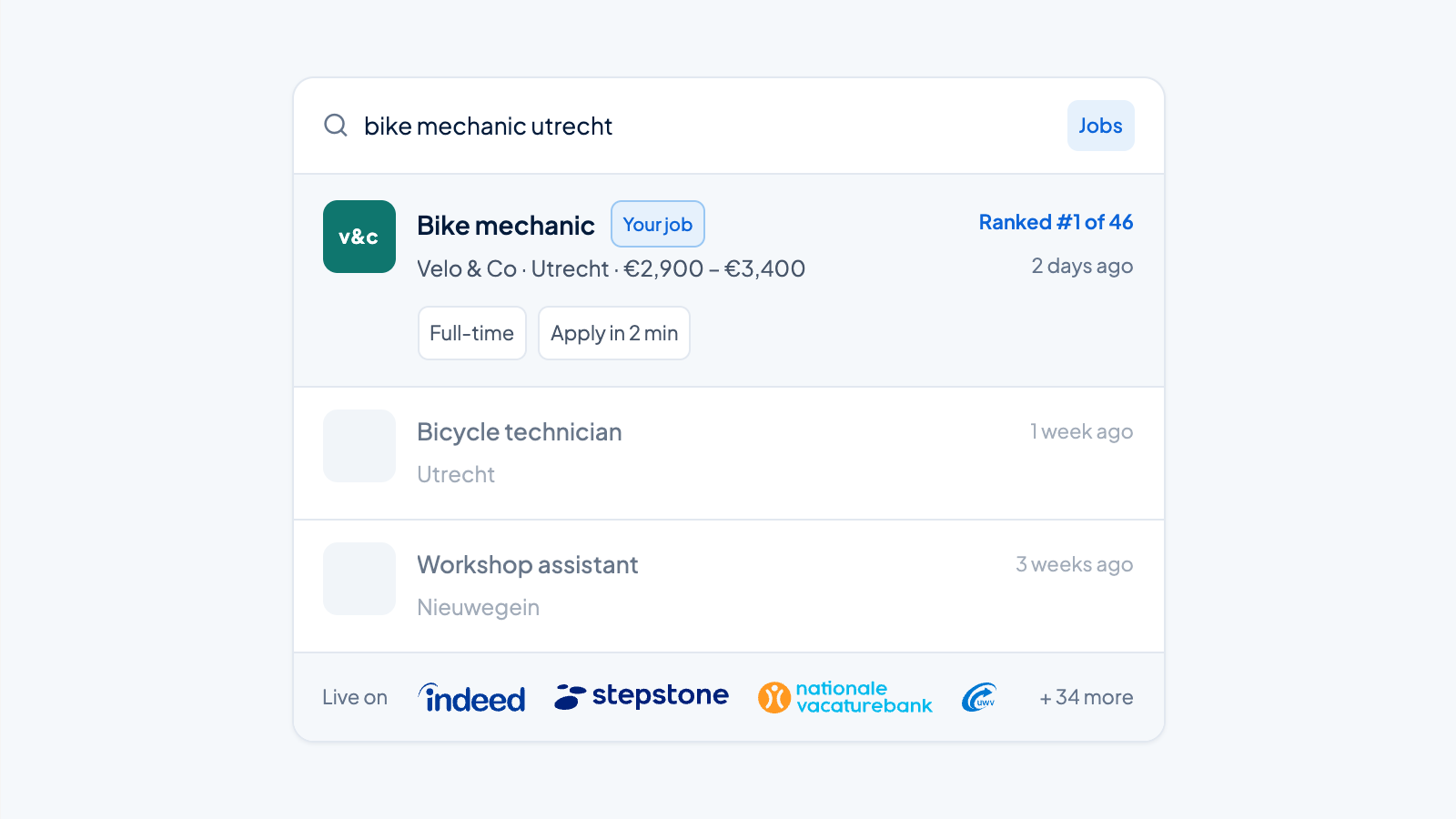
Centralizing job postings with AI software means bringing all your job posting channels, candidate data, and recruitment workflows together in one system. This provides better visibility, faster processes, and higher candidate quality. Modern HR teams can manage more candidates with less manual work, while AI automates recruitment tasks and optimizes recruitment processes.
What does centralizing job postings mean and why is it important?
Job posting centralization means consolidating all your recruitment activities in one platform: from posting job openings to tracking candidates through the entire hiring process. Instead of fragmented systems, spreadsheets, and scattered email communication, you work from one central environment where all information is available.
The challenges of fragmented systems are significant. Recruiters lose time switching between different tools, important candidate information gets scattered across multiple locations, and visibility into the hiring pipeline disappears. This leads to missed opportunities, slower response times, and frustration for both the recruitment team and candidates.
Modern HR departments are moving to centralized solutions because they dramatically improve efficiency. With all data in one place, teams can make decisions faster, collaborate better, and communicate more consistently with candidates. Hiring quality improves because nothing falls through the cracks.
How does AI software help centralize job postings?
AI-driven job posting management systems combine different technologies to bring recruitment processes together. The platform acts as a central hub where job openings are created, automatically distributed across multiple channels, and where all applications come in regardless of the original channel.
The core functionalities work seamlessly together. When a candidate applies, the system automatically collects all relevant information: resumes, cover letters, contact details, and communication history. AI in recruitment processes analyzes this data and qualifies candidates based on predefined criteria, so recruiters can immediately see which applicants are the best fit.
Pipeline management becomes visual and clear. Each candidate moves through different stages, from initial screening to final hire. The system tracks where each applicant is, what actions are needed, and who is responsible. Automated workflows trigger next steps without manual intervention, significantly reducing AI recruitment workload.
What are the benefits of centralized job posting management with AI?
The concrete benefits of centralized job posting management with AI are measurable and immediately noticeable in day-to-day recruitment practice:
- Time savings: Recruiters spend less time on administrative tasks and can focus on personal contact with the best candidates
- Increased productivity: Teams can manage more candidates at the same time because AI recruitment tasks are handled automatically
- Better candidate quality: AI screening ensures that only well-suited candidates move on to the next stage
- Improved collaboration: Hiring managers and recruiters work from the same information and can easily share feedback
- Cost savings: More efficient processes mean AI recruitment becomes cheaper without sacrificing quality
- Faster time-to-hire: Automated workflows and instant notifications speed up the entire hiring process
The result is that recruitment teams can process substantially more candidates with the same capacity. Where manual processes lead to bottlenecks, centralization with AI ensures that AI recruitment runs faster and is also more thorough.
What are the key steps to centralize job postings?
Successfully implementing centralized job posting management requires a structured approach. Follow these steps for a smooth transition:
- Evaluate your current systems: Map out which tools you currently use, where data resides, and which processes take the most time. Identify the biggest bottlenecks in your recruitment workflow.
- Define your requirements: Determine which functionalities are essential for your organization. Think about the number of job openings, applicant volume, desired integrations, and the specific AI capabilities you need.
- Choose the right software: Compare platforms based on your requirements and test usability. Pay attention to scalability so the system can grow with your organization.
- Plan the data migration: Organize the transfer of existing job openings, candidate data, and historical data to the new platform. Make backups and test data quality.
- Train your team: Invest in good onboarding so everyone can use the system effectively. Assign superusers who can support colleagues.
- Optimize continuously: Monitor results, collect user feedback, and adjust workflows where needed. Use reporting to identify areas for improvement.
This approach ensures that the transition to centralized job posting management goes smoothly and that your team quickly experiences the benefits.
What features are essential in AI-driven job posting software?
Effective AI-driven job posting software must have specific core functions that together form a complete recruitment ecosystem. Multi-channel job posting is fundamental: the platform must be able to automatically distribute job openings to job boards, social media, and your own career site, all from one central place.
Applicant tracking is at the heart of the system. All applicants must be tracked throughout the entire recruitment funnel, with full visibility into their status, communication history, and ratings. This gives teams the overview needed for good decision-making.
AI-powered candidate selection makes the difference in processing speed. The software must be able to analyze resumes, score candidates on relevant criteria, and automatically match them to job requirements. This ensures that AI in recruitment truly adds value by surfacing the best candidates.
Automated workflows eliminate repetitive tasks. Think of sending confirmation emails, scheduling interviews, sending reminders, and updating candidate status. This automation makes AI recruitment work more efficient and consistent.
Reporting and analytics are crucial for continuous improvement. The platform must provide insight into metrics such as time-to-hire, conversion rates by channel, candidate quality, and recruiter productivity. Integration options with existing HR systems, email, and calendars ensure a seamless workflow.
How do you choose the right AI software for job posting centralization?
Choosing job posting centralization software depends on several factors that align with your organizational context. Scalability is an important consideration: can the platform grow with you as your recruitment volume increases? Systems that meet your needs now may be too limited in a year.
Usability determines adoption by your team. Software can be powerful, but if recruiters struggle with it on a daily basis, the benefits won't materialize. Test the platform extensively with the people who will actually use it.
Integration options are essential for a smooth workflow. The software must be able to connect with your current systems, such as your HR platform, email, calendar, and any other tools you use. This prevents you from creating new silos.
AI capabilities vary widely between platforms. Some offer only basic filtering, while advanced systems provide in-depth candidate analysis, predictive matching, and intelligent workflow automation. Determine which level of AI support fits your needs.
For SMBs, fast implementation and simplicity are often important, while recruitment agencies primarily need high-volume handling and client management. Large enterprises usually look for advanced reporting and compliance features. Our features page provides a full overview of functionality that supports modern recruitment teams.
Want to know how centralized job posting management works for your specific situation? We're happy to help you explore the possibilities. See how our platform transforms recruitment processes or contact us for personalized advice on the best approach for your organization.