How to personalize your employer value proposition per role?
Discover how to tailor your employer value proposition per job category for better recruitment results and qualified candidates.

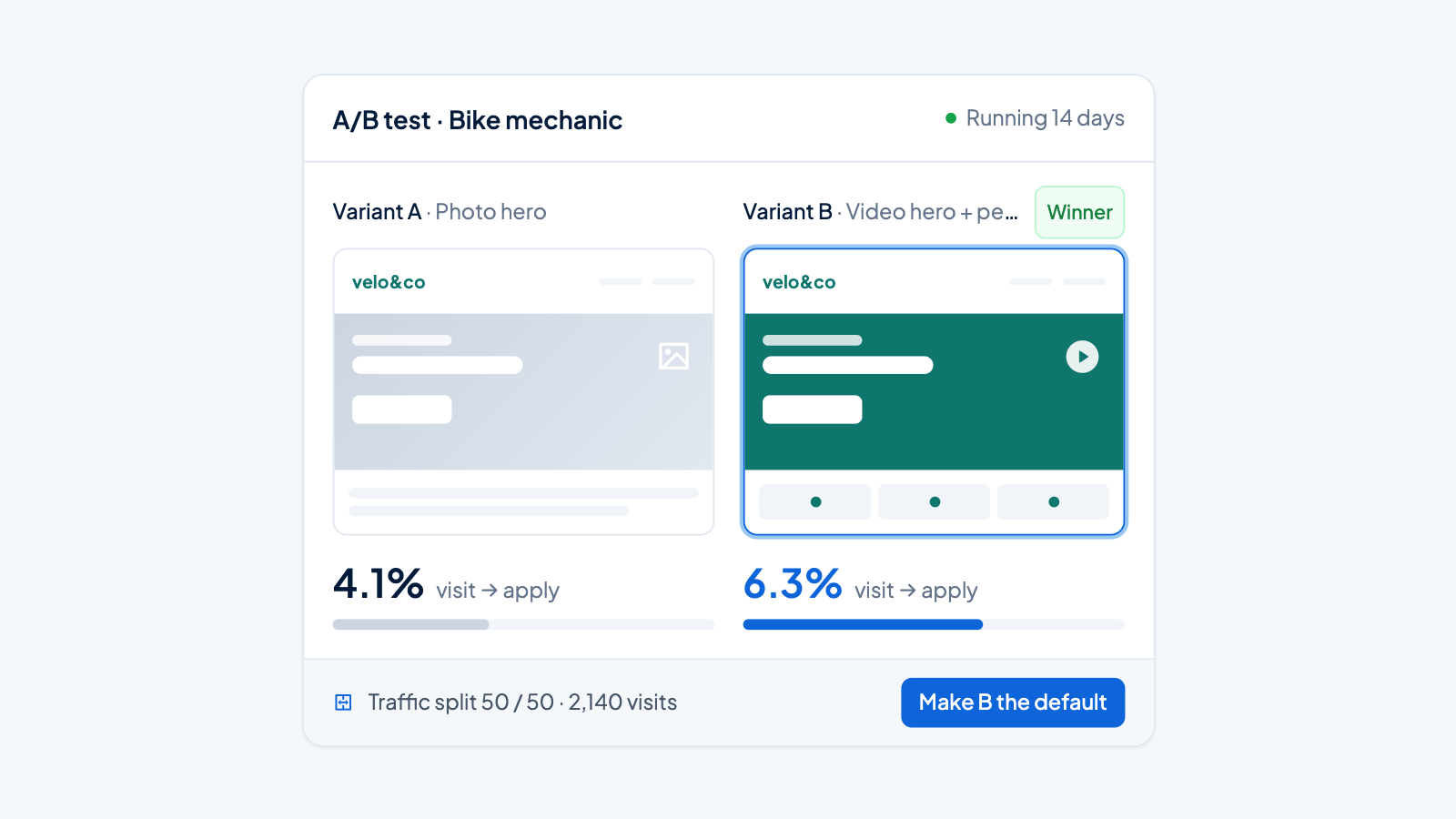
Personalizing your employer value proposition by role means adapting your employer brand to the specific needs and motivations of different role groups. Instead of one generic message, you use targeted value propositions that align with what software engineers, marketing specialists, or HR professionals truly value. This approach increases the effectiveness of your recruitment and attracts better candidates.
What is an employer value proposition and why should you personalize it?
An employer value proposition is the unique combination of benefits, opportunities, and experiences your organization offers employees. It goes beyond salary and includes development opportunities, company culture, work-life balance, and career opportunities.
Personalization is essential because different role groups have different priorities. A software developer might value technical challenges and flexible working hours, while a sales professional is more interested in commission structures and growth opportunities. A generic approach doesn't truly appeal to anyone and gets lost among similar job postings.
The benefits of personalization are clearly visible in your recruitment results. You attract more qualified candidates, shorten the time to find the right match, and increase the likelihood that candidates actually apply. Moreover, a targeted approach leads to better expectations and higher satisfaction after hiring.
How do you research what different role groups truly value?
Start with direct feedback from your current employees through surveys, focus groups, and exit interviews. Ask specifically what motivated them to join your company and what still keeps them excited. These insights form the basis for your personalized approach.
Analyze your recruitment data to discover patterns. Which elements in job descriptions lead to more applications per role group? Which questions do candidates ask most often during interviews? This information reveals what different groups find important.
Also research external sources such as industry reports, LinkedIn polls within specific fields, and recruitment benchmarks. Pay attention to trends in employment conditions and what competitors offer. Don't forget to evaluate regularly, as priorities can change due to market conditions or generational shifts.
Which elements of your EVP can you best adapt per role?
Development opportunities are the most impactful element to adapt. Technical roles often value certifications and new technologies, while leadership roles are more interested in management training and strategic projects.
Other important elements to personalize are:
- Work environment and flexibility – developers often want to work from home, sales teams prefer working in the office
- Compensation structure – fixed salaries versus commissions and bonuses
- Career paths – horizontal growth for specialists, vertical growth for managers
- Projects and challenges – innovation for R&D, stability for operations
- Team composition – independent work versus intensive collaboration
Focus on a maximum of three to four elements per role group to avoid confusion. Choose those elements that make the biggest difference for that specific group and where your organization truly excels.
How do you implement a personalized EVP in your recruitment process?
Start by adapting your job descriptions by prominently featuring role-specific benefits. Use language and examples that resonate with the target audience. An IT job posting emphasizes the tech stack and innovation, while an HR job posting focuses on people development and company culture.
Implement personalization step by step:
- Adapt your job description templates per role group
- Train your recruiters to highlight role-specific benefits during conversations
- Develop different onboarding paths that align with expectations
- Create role-specific content for your careers page
- Use targeted social media campaigns per target group
Modern recruitment tools can help by automatically showing the right message to different candidate groups. This ensures consistency and efficiency in your process.
What are the biggest challenges in personalizing your EVP?
The biggest challenge is maintaining consistency in your brand message while highlighting different elements. You want to avoid different role groups developing conflicting expectations about the same organization.
Other common obstacles are:
- Resource management – more time and budget needed for different campaigns
- Organizational resistance – teams accustomed to one standard approach
- Data management – tracking which message belongs to which role
- Measurability – more complex tracking of which approach works best
Solve these challenges by starting with a pilot group of two to three role types. Develop clear guidelines for what can and cannot be adapted. Invest in good documentation and train your team thoroughly before expanding to more role groups.
How do you measure the success of your personalized employer value proposition?
Measure success by comparing recruitment metrics per role group with your previous results. Look at the number of qualified applications, time to fill vacancies, and offer acceptance rate.
Key KPIs to monitor:
- Application quality – percentage of candidates meeting role requirements
- Conversion rates – from application to interview to offer
- Candidate experience scores – feedback on the recruitment process
- Retention rates – do new hires stay longer than expected?
- Cost per hire – efficiency of your recruitment efforts
Conduct regular candidate surveys to understand what attracted them to your job posting and process. This qualitative feedback helps you interpret the quantitative data and further refine your approach.
A personalized employer value proposition requires a strategic approach and consistent execution. Start small, measure your results, and gradually expand to more role groups. The investment in personalization pays off through better matches, faster vacancy fulfillment, and higher employee satisfaction.
How Applyfin helps with personalizing your employer value proposition
Applyfin offers the perfect technological support for implementing a personalized employer value proposition. Our platform enables you to:
- Automated job description personalization – Create different templates per role group and let the system automatically display the right message
- Candidate data analysis – Gain insight into which EVP elements work best per role group through detailed reports
- Targeted campaign management – Set up different recruitment campaigns for specific target groups from one central platform
- Performance tracking – Monitor the effectiveness of your personalized approach with real-time KPIs and conversion rates
With Applyfin, you streamline the complex process of EVP personalization and achieve measurably better recruitment results. Contact us for a personal demonstration and discover how our recruitment solution takes your employer branding to the next level.