How do you prevent good candidates from dropping out during the process?
Top candidates drop out due to communication mistakes and long silences. Learn proven strategies to retain talent.

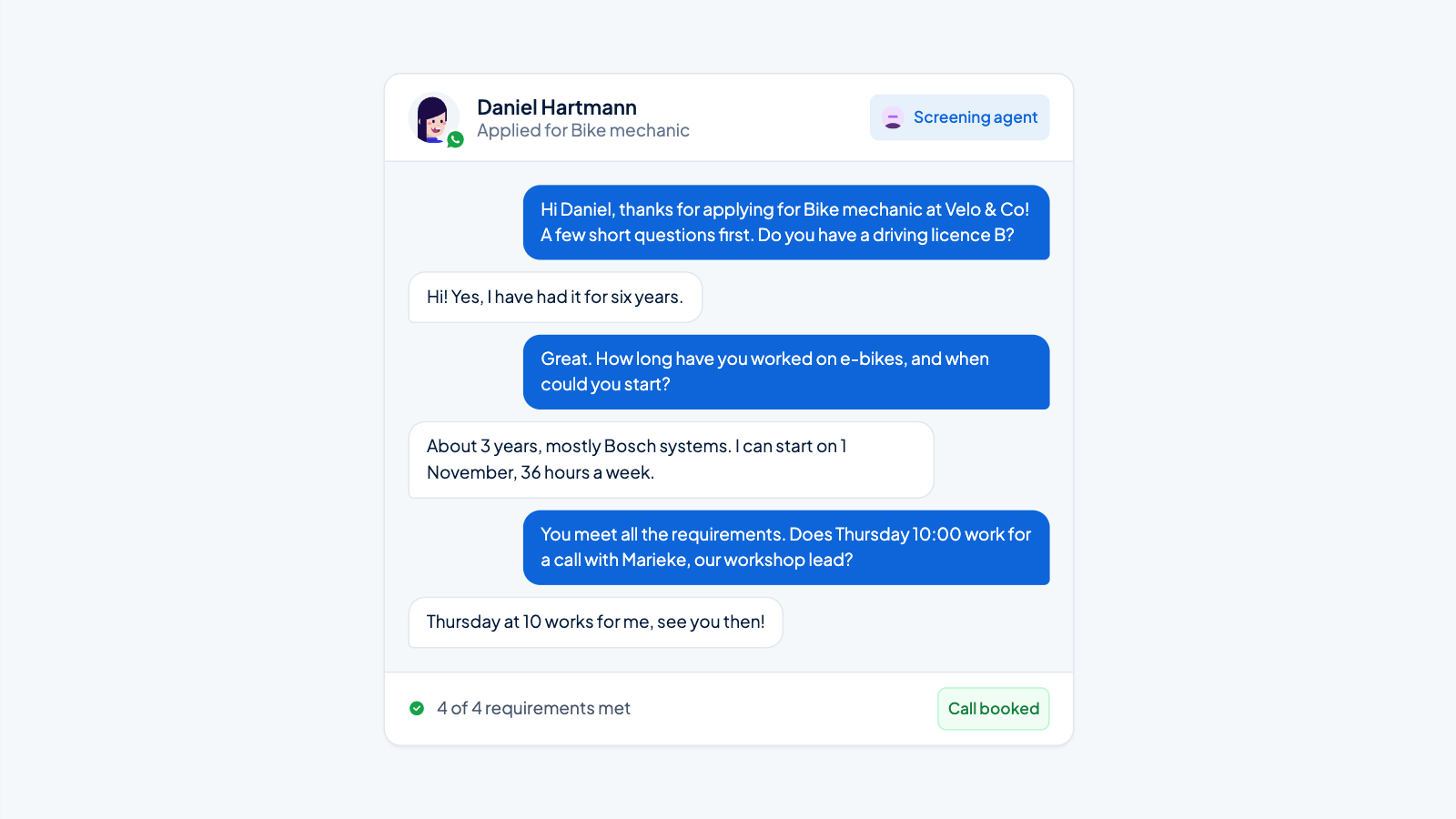
Good candidates drop out during the recruitment process due to long wait times, unclear communication, and a lack of feedback. This happens especially between the initial screening and the final interview, where candidates often wait weeks for updates. A streamlined process with regular communication effectively prevents this problem.
Long silences between interviews cost you top talent
When candidates hear nothing for weeks after a positive first interview, they assume they've been rejected or that your organization is poorly organized. Top candidates usually have multiple options and choose employers who communicate professionally and respectfully. So, set fixed communication moments, even when no decision has been made yet, and inform candidates about the expected timeline.
Unclear expectations lead to the wrong candidates in later stages
If you don't communicate clearly about job requirements, salary, and company culture, the wrong candidates stay in the process too long while suitable candidates drop out. This wastes time on both sides and frustrates everyone. Be transparent from the start about all aspects of the role and the process, so candidates can make an informed choice.
Why do good candidates drop out during the recruitment process?
Good candidates drop out due to a lack of communication, unclear processes, and long wait times. They often have multiple options and choose employers who respect their time and act professionally.
The main reasons strong candidates leave the application process are a lack of transparency about the next steps, no feedback after interviews, and processes that take too long without a clear timeline. Top talent expects a smooth experience that recognizes their value.
Additionally, practical factors play a role, such as inflexible interview times, too many interview rounds without a clear purpose, and poor preparation by interviewers. Candidates interpret these as signs of a poorly organized workplace.
At which stage of the process do most candidates drop out?
Most candidates drop out between the initial screening and the second interview, often due to a lack of follow-up communication. This phase takes an average of 1-2 weeks and is crucial for maintaining interest.
After the first positive contact, candidates have high expectations about the next steps. When this period takes too long without updates, they lose confidence in the process. Many candidates accept other offers during this phase because they think your organization isn't interested.
The handover from HR to the hiring manager also forms a risk point. Miscommunication between departments can lead to delays and uncertainty for candidates about what is expected of them.
How long can a recruitment process take without losing candidates?
A recruitment process should take a maximum of 3-4 weeks for most roles. Longer than this increases the risk that good candidates will make other choices or lose interest.
For senior positions, the process can take slightly longer, but even then, 6 weeks is the absolute maximum. The key lies not only in the total duration, but especially in regular communication about progress. Candidates accept longer processes if they know what to expect.
Divide the process into clear phases with fixed timelines:
- Initial screening within 3 days of application
- First interview within 1 week of screening
- Next steps within 1 week of each interview
- Final decision within 2 weeks of the last interview
Which communication mistakes cause candidates to drop out?
The biggest communication mistakes are no confirmation of application receipt, no feedback after interviews, and unclear information about next steps. These mistakes make candidates feel unvalued.
Many organizations forget to set up automatic confirmation emails, leaving candidates unsure if their application was received. After interviews, candidates often only hear "we'll be in touch," without a concrete timeline or next steps.
Other common mistakes are:
- Providing different information about salary and benefits
- Rescheduling interviews last-minute without a good explanation
- Vague job descriptions that don't match reality
- No preparation by interviewers, causing questions to be repeated
How do you improve the candidate experience to prevent drop-off?
Improve the candidate experience by setting up automatic communication, communicating clear timelines, and providing regular updates. A structured process with personal attention keeps candidates engaged.
Start with an automatic system that confirms every application and informs candidates about the next steps. Ensure each phase of the process has a clear timeline that you actually adhere to. If a delay occurs, communicate this proactively.
Other improvements that have an immediate impact:
- Personal feedback after every interview, even when rejecting
- Flexible interview times that accommodate candidates who are still working
- A clear explanation of the company culture and what candidates can expect
- A single point of contact throughout the entire process
- Transparency about salary and benefits from the start
What can you do if a strong candidate still dropped out?
If a strong candidate dropped out, contact them within 24 hours to find out the reason and clear up any misunderstandings. Offer concrete solutions to their concerns and show that you take their feedback seriously.
Start with an honest conversation about why they decided to drop out. Often, these are solvable problems like uncertainty about the role, concerns about the company culture, or disappointment about the salary. Listen actively and acknowledge their concerns before proposing solutions.
If their concerns are solvable, present concrete actions you will take. This could mean putting them directly in touch with their future manager, providing more information about growth opportunities, or showing flexibility in benefits. Even if they ultimately don't return, use their feedback to improve the process for future candidates.
How Applyfin helps with candidate retention
We understand how frustrating it is to lose good candidates to a poorly organized recruitment process. That's why we've developed a platform that combines automatic communication, clear timelines, and streamlined workflows to keep candidates engaged.
Our recruitment automation solution helps you to:
- Send automatic updates to candidates at every stage of the process
- Set and adhere to clear timelines
- Manage up to 3x more candidates without losing quality
- Reduce your hiring costs by up to 60% through more efficient processes
Ready to retain candidates instead of losing them? Contact us to discover how our recruitment automation features can transform your recruitment process. Visit our website for more information on how we help recruiters optimize their processes.