What data do you need for AI recruitment?
For effective AI recruitment, quality candidate data, historical hiring data, and performance statistics are essential. AI systems analyze both structured information like resumes and work experience, and unstructured data such as cover letters and assessments. The quality and diversity of this data directly determine how accurately AI can screen and match candidates to job openings. Discover which specific data types you need, how to collect historical recruitment data for AI training, and how to ensure data quality and GDPR compliance for reliable, legally sound AI-driven hiring processes.

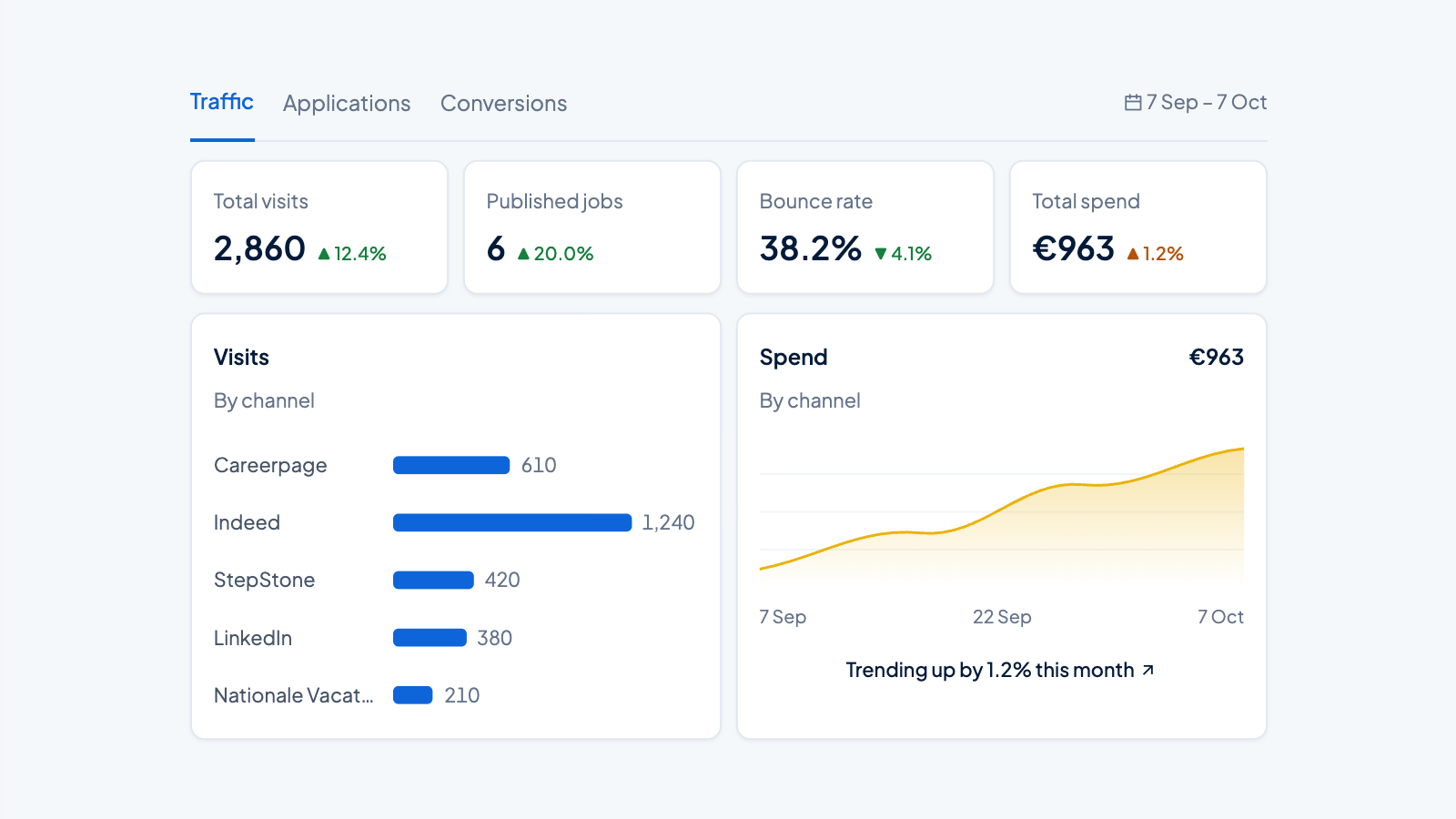
For effective AI recruitment, you need quality candidate data, historical hiring data, and performance statistics. AI systems learn to recognize patterns from structured information such as resumes and work experience, but also from unstructured data like cover letters and assessments. The quality and diversity of this data directly determine how well AI recruitment processes can screen candidates and match them to job openings.
What is AI recruitment and why does data matter so much?
AI recruitment is a technology-driven approach where algorithms and machine learning automate and optimize hiring processes. These systems analyze candidate profiles, predict suitability, and take over routine tasks from recruiters. Data forms the foundation on which AI learns which candidates are successful.
Without quality data, AI systems cannot recognize reliable patterns. The algorithms need examples of successful and less suitable candidates to learn what makes a good match. The more relevant data you collect, the more accurately AI recruitment tasks are performed.
The relationship between data quality and results is direct. Incomplete or inconsistent data leads to incorrect predictions and missed talent. Good data, on the other hand, makes AI in recruitment processes faster and more reliable than traditional methods. This explains why organizations that invest in data collection achieve better outcomes with AI recruitment activities.
What candidate data do you need for AI recruitment?
For effective AI recruitment, you need both structured and unstructured candidate data. Structured data includes resume information, work history, education, certifications, and skills. This data is easy to process and forms the basis for candidate matching.
Unstructured data provides deeper insights into motivation and personality:
- Cover letters and application texts
- Assessment results and test scores
- Notes from previous interviews
- Communication via email or WhatsApp
- Video interviews and recordings
You collect this data through application forms, applicant tracking systems, and sourcing platforms. Modern recruitment automation solutions consolidate all candidate information automatically into a single central profile. This makes it possible to include both hard facts and soft signals in AI-driven decisions.
Different data types serve different purposes. Work experience and education help with technical matching, while motivation texts and assessments predict suitability for the company culture. AI recruitment systems combine this information to create a complete picture of every candidate.
How do you collect historical recruitment data for AI training?
Historical recruitment data trains your AI system by providing examples of previous hiring decisions. Collect data on past applications, hired candidates, rejected profiles, and their later performance. Time-to-hire figures and the effectiveness of different sourcing channels are also valuable.
Start by exporting data from your existing systems. Most ATS platforms offer export functions for candidate data and hiring statistics. Organize this information systematically and link applications to eventual outcomes. This helps AI understand which characteristics proved successful.
Legacy data often requires cleaning. Remove duplicate profiles, standardize job titles, and fill in missing fields where possible. Structure the information so that AI systems can draw connections between candidate traits and hiring success.
Historical data teaches AI systems what works in your specific context. A successful salesperson at organization A may have different traits than at organization B. By analyzing your own hiring history, AI recruitment becomes cheaper and more effective because the system learns from proven matches.
What is the difference between structured and unstructured recruitment data?
Structured recruitment data consists of standardized fields with clear categories and numerical values. Think of date of birth, number of years of work experience, education level, and postal codes. This information fits into fixed databases and can be directly filtered and compared.
Unstructured data does not have a fixed format:
- Free text in cover letters
- Email correspondence with candidates
- Video interviews and conversation recordings
- Social media profiles and posts
- Handwritten notes from recruiters
AI recruitment tools process both types differently. Structured data is used directly for filtering and matching on hard criteria. Unstructured data requires natural language processing and sentiment analysis to extract valuable insights.
Modern AI systems need both for complete candidate evaluations. Structured data quickly screens for basic requirements, while unstructured data adds nuance about motivation, communication skills, and cultural fit. The combination makes AI in recruitment processes far more powerful than systems relying solely on resume data.
Which performance metrics should you track for AI recruitment optimization?
For effective AI recruitment optimization, track metrics that measure both efficiency and quality. Time-to-hire shows how quickly vacancies are filled, while cost-per-hire measures the financial impact. Candidate quality scores indicate how well AI-selected profiles perform after hiring.
Key performance indicators for AI recruitment include:
- Source effectiveness: which channels deliver the best candidates
- Application completion rate: where candidates drop off
- Engagement metrics: response speed and communication quality
- Diversity indicators: fair representation at all stages
- Offer acceptance rate: how many offers are accepted
- Quality of hire: performance after 3, 6, and 12 months
These metrics help refine AI algorithms and improve recruitment processes. By monitoring where candidates drop off or which sources provide top talent, you can adjust the system. Dashboard visibility enables continuous optimization and immediately shows where AI recruitment works faster and more effectively.
Tracking this data transforms AI from a black box into a transparent system. You see exactly which decisions it makes and can intervene where necessary. This makes AI recruitment activities measurable and continuously improvable.
How do you ensure data quality and GDPR compliance in AI recruitment?
Data quality and GDPR compliance require systematic validation and clear procedures. Implement data checks that flag incomplete or inconsistent information before it enters AI systems. Conduct regular audits of stored candidate data and remove outdated profiles according to statutory retention periods.
GDPR compliance in AI recruitment mandates explicit consent from candidates for data processing. Explain what you use data for and give candidates access to their information. Apply data minimization by collecting only relevant data and process it exclusively for the stated purpose.
Poor data quality leads to incorrect AI decisions and missed talent. If job titles are inconsistent or skills are described unclearly, the system cannot recognize reliable patterns. This makes AI recruitment tasks less effective and increases the risk of discrimination through systematic errors.
European legislation sets specific requirements for automated decision-making. Candidates have the right to an explanation about AI decisions that affect them. Ensure your systems are transparent and that recruiters always have the option to override AI recommendations with human judgment.
We built our recruitment automation solution with data quality and compliance as the starting point. By centralizing all candidate information and validating it automatically, data remains consistent and up to date. Our integrated workflows ensure that consent management and data retention proceed automatically in line with GDPR guidelines.
Organizations wanting to implement AI recruitment in a compliant and effective way can contact us for advice on the right data infrastructure and processes. Get in touch to discuss how to optimally set up your recruitment data for AI-driven processes that are both faster and legally sound.