How can AI make your recruitment pipeline transparent?
AI makes your recruitment pipeline fully transparent by automatically centralizing and analyzing all candidate data. You get real-time insight into where candidates are in the process, which stages are experiencing delays, and where opportunities lie. The system recognizes patterns, predicts bottlenecks, and shows you exactly which recruitment channels deliver the best results. Instead of spending hours on manual reports and spreadsheets, you immediately see what's working and where action is needed. Discover how to move from reactive to proactive recruitment.

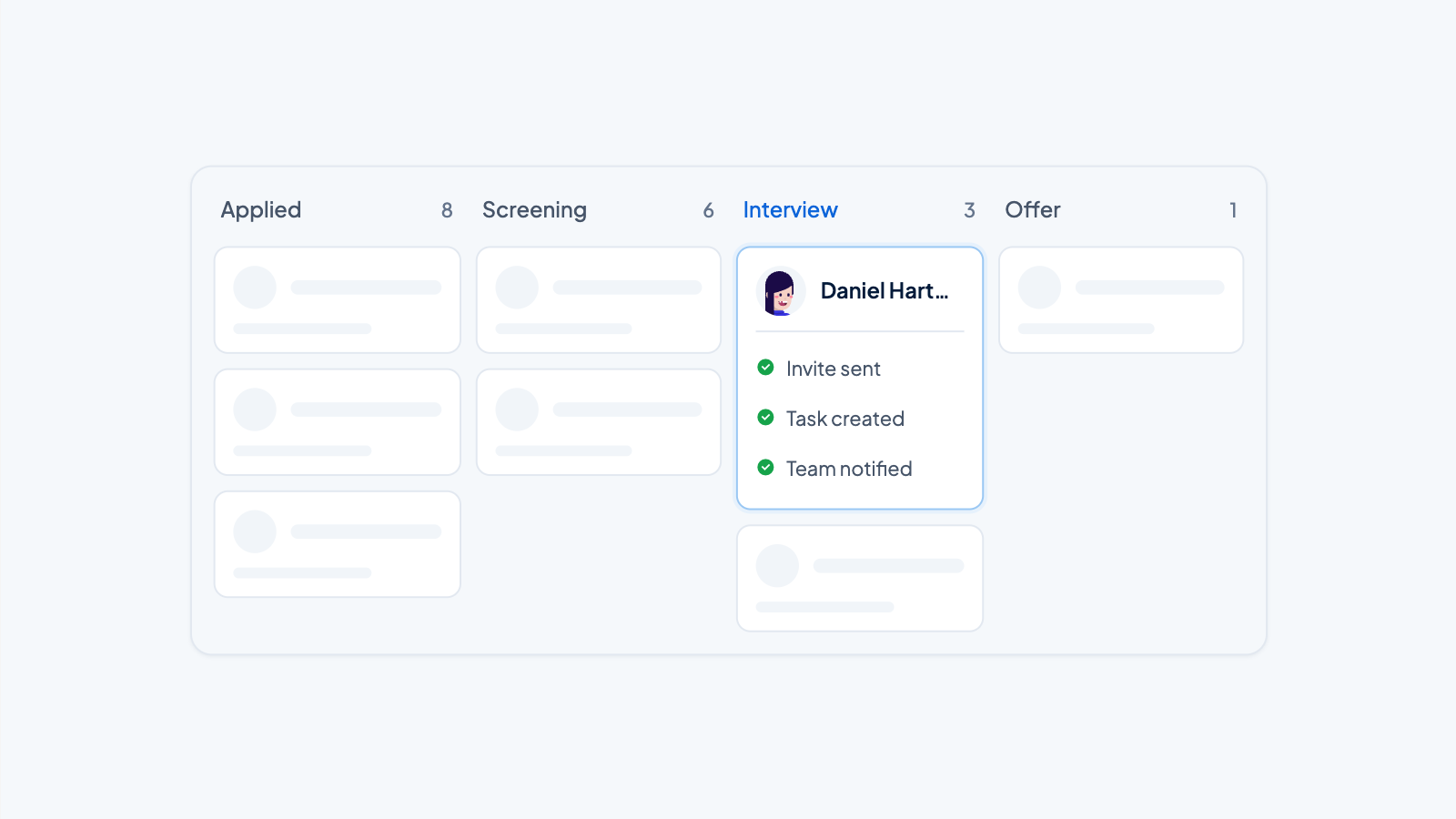
AI makes your recruitment pipeline transparent by centralizing all candidate data and analyzing it automatically. The system shows you in real time where candidates are in the process, which stages are experiencing delays, and where opportunities lie. For HR teams, this means you immediately see what’s working and where action is needed, without manual reports or spreadsheets.
What does a transparent recruitment pipeline actually mean?
A transparent recruitment pipeline gives you complete visibility into every candidate in your hiring process. You see exactly how many people are in each stage, how long each step takes, and where candidates drop off. This helps you make data-driven decisions instead of relying on gut feeling or outdated information.
The core components of a transparent pipeline are real-time visibility, structured data, and predictive analytics. Traditional systems only show you what has already happened. AI-driven insights also show you what is likely to happen and why certain patterns are emerging.
For HR professionals and hiring managers working with high volumes, this concretely means you’re no longer playing catch-up. You spot problems before they escalate and can spend your time on the candidates who truly need attention. The difference lies in the shift from reactively putting out fires to proactively steering for results.
How does AI make your recruitment pipeline visual and easy to understand?
AI transforms raw recruitment data into clear dashboards you can grasp at a glance. The system automatically gathers information from all your sources (applications, emails, conversations) and organizes it into a logical structure. You no longer need to switch between different systems or manually track data.
The technology works by recognizing patterns in candidate flows. If, for example, many candidates drop off after the first interview, the system flags this automatically. Real-time dashboards show you these trends as they emerge, not weeks later when you finally had time for reporting.
Centralization is crucial here. AI in recruitment processes pulls in data from job boards, your own website, email, and even WhatsApp conversations. Everything comes together in a single candidate profile. This means you always see the complete history without having to search through different systems or folders.
The result is a system that keeps itself up to date. While you’re busy conducting interviews and evaluating candidates, the AI works in the background organizing and analyzing all the information. You get insights delivered exactly when you need them.
What concrete insights does AI deliver in your hiring process?
AI generates practical insights you can use immediately for better recruitment decisions. These insights go beyond simple statistics and help you understand what’s really happening in your hiring process. They are answers to questions you normally wouldn’t even be able to ask.
The main types of insights that support AI recruitment activities are:
- Bottleneck identification – Which stage in your process causes the most delays and why candidates get stuck there
- Cycle time analysis – How much time each stage takes on average and where you can gain speed without sacrificing quality
- Source quality insight – Which recruitment channels deliver the best candidates and where your budget is spent most effectively
- Time-to-hire predictions – Realistic expectations of when a vacancy is likely to be filled based on current pipeline data
- Drop-off moment detection – Exact points where candidates disengage and possible reasons based on behavioral patterns
- Capacity planning – How many candidates your team can realistically handle and when extra support is needed
These insights are not abstract but directly applicable. If AI signals that candidates from a specific job board pass the screening stage more often, you can shift more budget there. If a particular vacancy takes longer than comparable positions, you see that and can make adjustments.
What is the difference between traditional tracking and AI-driven pipeline insight?
Traditional tracking requires manual input and delivers static reports that are already outdated by the time you read them. You fill in spreadsheets, pull weekly numbers, and try to discover patterns in columns of figures. AI-driven insight works continuously, automatically, and predictively.
The fundamental difference lies in the approach. Spreadsheets and fragmented systems show what has happened. You look backward and try to understand why certain results occurred. AI recruitment processes analyze what is happening now and predict what is likely to come based on all available data.
Scalability is where the difference becomes truly visible. With ten applicants per month, you can still manually track who is at which stage. With fifty candidates, it becomes difficult. At a hundred or more, traditional tracking becomes impossible without quality and speed suffering. AI recruitment tasks scale effortlessly, regardless of volume.
Accuracy is another crucial difference. People make input errors, forget updates, or interpret data inconsistently. Automated systems record every action exactly as it occurs. This means you make decisions based on reliable information instead of incomplete or incorrect data.
The time savings are significant. Where you previously spent hours collecting and analyzing data, you now get immediate answers to your questions. You spend that time on conversations with candidates and strategic choices instead of administrative tasks.
How do you start making your pipeline transparent with AI?
Implementing AI in your recruitment processes requires a structured approach. You don’t need to overhaul your entire system at once. Start with the basics and build out step by step as your team gets used to the new way of working.
Follow these steps for a smooth start:
- Identify your biggest bottlenecks – Pinpoint where you currently lose the most time or where candidates drop off. This helps you prioritize which insights are most important for your situation.
- Select relevant metrics – Choose measurement points that truly impact your results. Think of time-to-hire, cost-per-hire, conversion ratios per stage, and candidate quality per source.
- Integrate with existing systems – Ensure your new AI platform communicates with tools you already use. This prevents duplicate work and ensures all data comes in automatically.
- Train your team thoroughly – Invest time in onboarding so everyone understands how the system works and which insights are available. This increases adoption and effectiveness.
- Start with initial optimizations – Use the first insights to implement small improvements. Quick wins motivate the team and demonstrate the system’s value.
Want to see how this works in practice? On our platform, you’ll find more information on how AI recruitment becomes cheaper and faster through complete pipeline insights. The features show exactly which analyses and dashboards are available for your recruitment processes.
The most important thing is to start without disrupting your daily work. Modern AI systems work alongside your current processes and gradually take over tasks. Your team notices that work becomes easier rather than harder, which accelerates acceptance.
Do you have questions about how AI recruitment can become faster for your specific situation? Feel free to contact us for personal advice on which approach best suits your team and recruitment volume.