How does AI recruitment become data-driven?
Discover how AI recruitment enables data-driven hiring through objective candidate analysis and predictive algorithms.

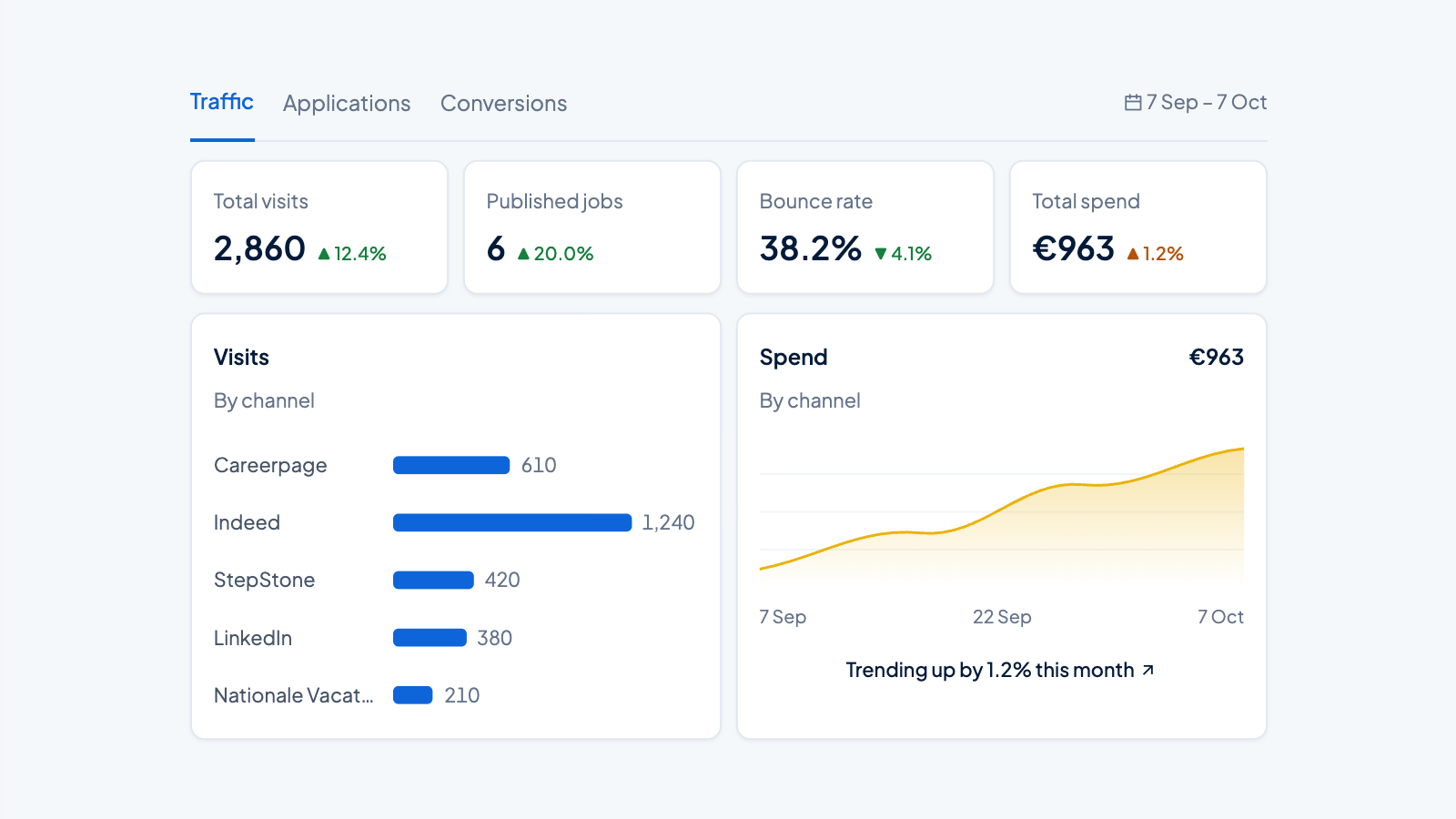
AI recruitment makes hiring processes data-driven by systematically analyzing candidate data and recognizing patterns. Machine learning algorithms process information from resumes, application forms, and online profiles to support objective decisions. This technology helps recruiters work more effectively by predicting candidate suitability and reducing bias.
What is data-driven recruitment and why is AI essential?
Data-driven recruitment uses objective data and analytics to make hiring decisions instead of relying on intuition alone. AI plays a crucial role in this by processing large amounts of candidate information and identifying patterns that human recruiters might miss.
Traditional recruitment methods often rely on subjective assessments and experience. Recruiters manually review resumes, conduct interviews, and make decisions based on their gut feeling and past experiences. This process is time-consuming and prone to unconscious bias.
AI recruitment technology changes this approach by:
- Objective analysis of candidate skills and experience
- Identification of success factors based on historical hiring data
- Prediction of candidate performance based on data patterns
- Reduction of human bias in initial screening rounds
The modern labor market demands faster decisions and better candidate matching. Companies receive hundreds of applications per job opening, making manual processing practically impossible. AI in HR makes it possible to manage these volumes efficiently while improving selection quality.
How does AI recruitment collect and analyze data effectively?
AI recruitment systems collect data from various sources and use machine learning algorithms to recognize meaningful patterns. These systems process structured and unstructured information to form a complete picture of candidates.
The main data sources for recruitment data analysis are:
- Resumes and cover letters with skills and experience
- Online profiles on LinkedIn and other professional platforms
- Application forms with specific answers
- Assessment results and technical tests
- Interview transcripts and video analyses
- Reference checks and work history
Machine learning algorithms analyze this information by applying natural language processing to texts and pattern recognition to structured data. The systems learn from successful past placements and identify characteristics that correlate with good performance.
The analysis process includes text analysis for extracting skills, sentiment analysis for assessing motivation, and predictive modeling for forecasting suitability. This automated processing happens within seconds, while manual analysis would take hours.
What concrete benefits does AI-driven recruitment offer companies?
AI recruitment automation delivers measurable benefits in terms of time, quality, and cost. Companies can process more candidates while making better matches and using their recruitment budget more effectively.
The practical benefits of smart hiring include:
- Time savings: Automated resume screening reduces manual review time from hours to minutes per job opening
- Improved candidate quality: Data analysis identifies candidates who better match the job requirements
- Reduction of unconscious bias: Objective assessment reduces bias based on name, gender, or background
- Cost efficiency: Less time per candidate and better matches lower overall recruitment costs
- Increased recruiter productivity: Recruiters can focus on conversations and relationship building instead of administrative tasks
Thanks to AI hiring technology, recruiters can manage more job openings simultaneously and have deeper conversations with qualified candidates. The technology takes over routine tasks, leaving more time for strategic activities and the candidate experience.
Improved matching leads to higher satisfaction among both candidates and hiring managers, because the suggested profiles better align with the organization's actual needs.
What are the key AI tools and features in modern recruitment?
Modern recruitment technology includes various AI-driven features that each optimize a specific part of the hiring process. These tools work together to provide an integrated solution for end-to-end recruitment automation.
The core technologies in recruitment optimization are:
- Resume screening algorithms: Automatic analysis of resumes for relevant skills and experience
- Chatbots for candidate interaction: Automated communication and initial screening questions
- Predictive analytics: Prediction of candidate success based on historical data
- Sentiment analysis: Assessment of candidate motivation based on texts and videos
- Automated matching: Intelligent linking between job openings and candidate profiles
These features integrate with existing HR systems and applicant tracking systems. Natural language processing helps understand unstructured texts, while machine learning models continuously learn from new data to improve their accuracy.
Video analysis tools can assess non-verbal communication during digital interviews, and scheduling algorithms optimize interview planning for all parties involved.
How do you successfully implement AI recruitment in your organization?
Successful implementation of AI in recruitment requires a step-by-step approach with attention to change management and team training. The transition to data-driven processes must be carefully planned and executed.
The implementation steps for AI recruitment are:
- Needs analysis: Identify which recruitment processes benefit most from automation
- Platform selection: Choose a system that integrates with existing HR tools and scales with the organization
- Data preparation: Organize historical recruitment data for training AI models
- Pilot implementation: Start with one department or job type to gain experience
- Team training: Teach recruiters to work with new tools and data interpretation
- Process optimization: Refine workflows based on initial results and feedback
Change management is crucial, as recruiters need to get used to data-driven decision-making. Clear communication about the benefits and training in new processes help with adoption. Integration with existing systems must prevent technical issues.
Best practices include a gradual rollout, regular evaluation of results, and continuous upskilling of the team.
How Applyfin helps with data-driven recruitment
Applyfin offers a complete AI-driven recruitment solution that integrates all aspects of data-driven hiring into one platform. Our technology transforms your hiring process by combining advanced algorithms and user-friendly tools.
With Applyfin, you get access to:
- Intelligent resume screening that identifies the best candidates within seconds
- Predictive analytics for accurate prediction of candidate success
- Automated matching between job openings and candidate profiles
- Real-time dashboards with recruitment insights and performance indicators
- Seamless integration with your existing HR systems
- Comprehensive training and support during implementation
Ready to transform your recruitment with AI? Contact our experts for a personalized demo and discover how Applyfin can improve your hiring results.