What is pipeline management in recruitment?
Discover how pipeline management transforms recruitment with 6 structured phases for more efficient candidate selection.

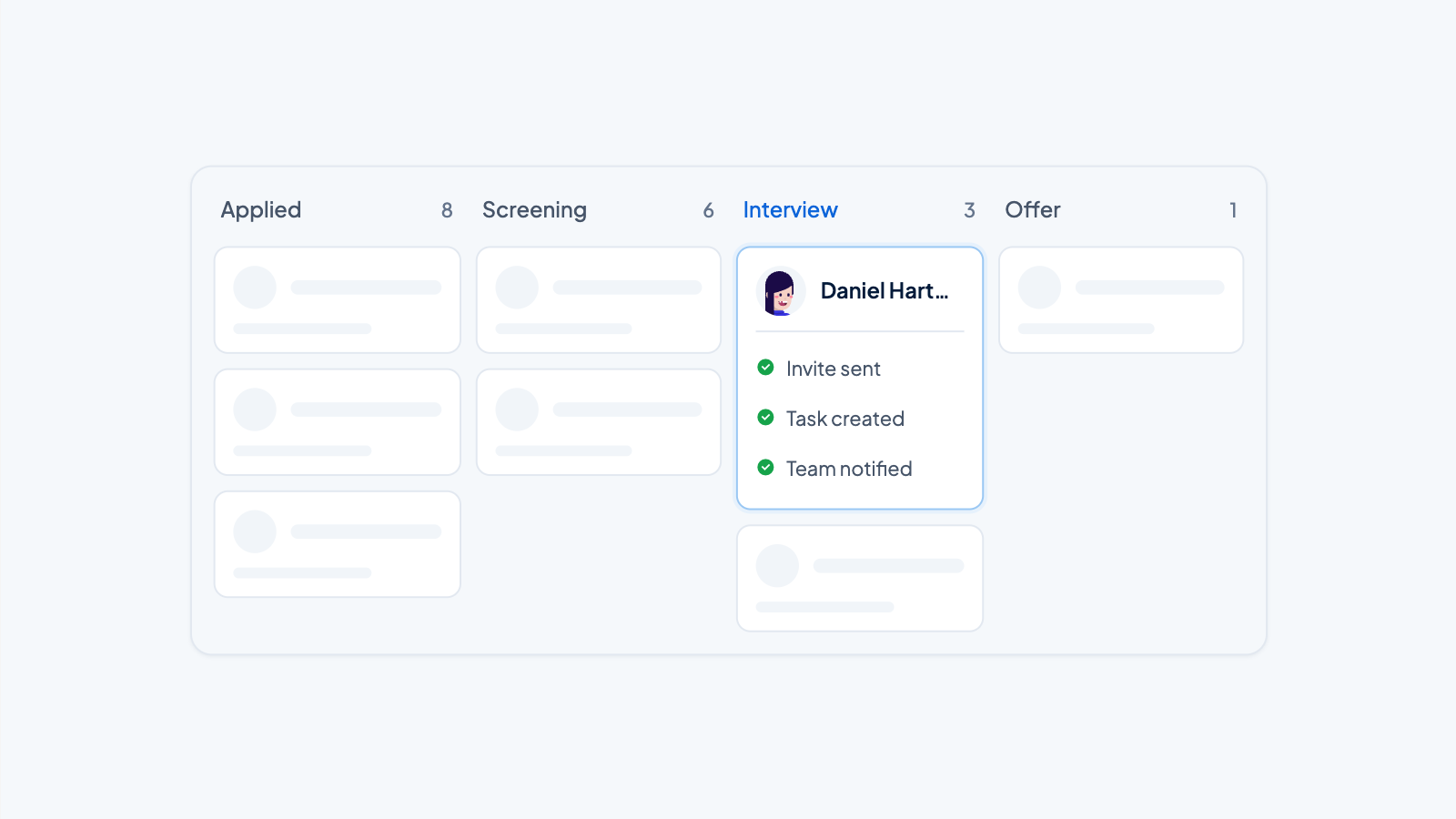
Pipeline management in recruitment is a systematic process where HR professionals guide candidates through different stages of the hiring process, from initial application to final hire. This structured system provides complete visibility of all candidates and their progress, enabling recruiters to make better decisions and work more efficiently than with traditional resume-sorting methods.
What exactly is pipeline management in recruitment?
Pipeline management in recruitment is a structured system that organizes and tracks all candidates through every stage of the hiring process. It creates a visual representation of where each candidate stands in the selection procedure, from initial screening to final decision.
This concept differs fundamentally from traditional resume sorting because it provides a dynamic overview of the entire recruitment flow. Instead of manually sifting through stacks of resumes, HR teams get a clear dashboard showing all candidates per vacancy and their current status.
An effective recruitment pipeline shows not only where candidates are, but also how long they've been in each stage and what actions still need to be taken. This prevents good candidates from falling through the cracks and ensures a professional candidate experience.
Why do modern HR teams need pipeline management?
Modern HR teams face exponentially growing numbers of applicants due to online job platforms and social media. An average vacancy can generate hundreds of responses, making manual processing practically impossible without a loss of quality.
The traditional approach, where recruiters review individual resumes and organize them in folders, leads to inefficiency and missed opportunities. Candidates get lost in the system, follow-ups are forgotten, and overall time-to-hire is unnecessarily extended.
Pipeline management helps teams maintain oversight by centralizing all candidate information and setting automatic reminders for key actions. This results in faster decision-making, better candidate communication, and ultimately a higher quality of hires.
What stages are in a typical recruitment pipeline?
A standard recruitment pipeline consists of six main stages that candidates go through before being hired. These stages ensure a systematic evaluation and selection of the most suitable candidates.
The typical stages are:
- Initial application – receipt and registration of resumes and cover letters
- First screening – assessment of basic requirements and qualifications
- Phone screening – brief conversation to verify suitability and interest
- Interviews – one or more rounds of conversations with various stakeholders
- Reference check – verification of work experience and skills with previous employers
- Onboarding preparation – contract negotiations and introduction process
Each stage has specific objectives and outcomes that determine whether a candidate moves on to the next step or is rejected. This structure ensures consistent evaluation and fair treatment of all applicants.
How does manual pipeline management differ from automated systems?
Manual pipeline management via spreadsheets and email requires significantly more time and administrative effort than automated recruitment software. Recruiters often spend more time updating documents than on actual candidate evaluation.
Traditional methods are prone to human error, such as forgotten follow-ups, lost candidate data, and inconsistent communication. Moreover, sharing information between team members is hindered by fragmented systems.
Automated systems, by contrast, offer:
- Automatic status updates when candidates move between stages
- Integrated communication tools for consistent candidate correspondence
- Real-time reports on recruitment progress and bottlenecks
- Central storage of all candidate information and interaction history
This automation allows recruiters to focus on strategic activities, such as candidate evaluation and relationship building, while routine tasks are handled automatically.
What tools and features are essential for effective pipeline management?
Effective pipeline management requires integrated recruitment software with applicant tracking, automated communication, and comprehensive reporting capabilities. These tools must work together seamlessly to provide a complete hiring solution.
Essential features include applicant tracking systems that centralize all candidate data and visualize their progress through the pipeline. Automated email sequences ensure timely communication without manual intervention.
Reporting dashboards provide insight into key metrics, such as conversion rates per stage and average processing time. AI-driven workflows can automatically screen candidates for basic requirements and prioritize the most promising profiles.
Integration capabilities with job boards, social media platforms, and HR systems ensure a seamless data flow. This eliminates manual data entry and reduces the chance of errors in the recruitment process.
How do you measure the success of your recruitment pipeline?
The success of recruitment pipeline management is measured using specific KPIs that provide insight into efficiency, quality, and candidate satisfaction. These metrics help teams continuously improve their hiring process and identify bottlenecks.
Time-to-hire is a crucial indicator that measures the average time between job posting and contract signing. Shorter hiring times indicate an efficient process and prevent good candidates from going to competitors.
Conversion rates per stage show where candidates drop out and which steps may need optimization. A low conversion rate at the phone screening stage, for example, could indicate unclear job descriptions.
Additional important metrics include:
- Quality of hire, measured by performance reviews
- Cost per hire compared to traditional recruitment methods
- Candidate satisfaction scores from feedback surveys
- Retention rates of newly hired employees
By regularly analyzing this data, HR teams can optimize their pipeline and achieve better hiring results.
How Applyfin helps with pipeline management
Applyfin offers a complete solution for modern pipeline management that fully transforms your hiring process. Our platform combines all essential features in one user-friendly environment, so you can focus on finding the best candidates.
Our solution offers:
- Visual pipeline tracking – Get real-time insight into all candidates and their progress through every hiring stage
- Automated workflows – Let routine tasks run automatically and receive smart reminders for key actions
- AI-driven screening – Automatically identify the most suitable candidates based on your criteria
- Comprehensive analytics – Measure your hiring success with detailed KPI dashboards and reports
- Seamless integrations – Connect with all popular job boards and HR systems for a streamlined workflow
Pipeline management transforms recruitment from a reactive to a strategic process. Teams that embrace this systematic approach achieve significantly better results in terms of efficiency and candidate quality. Discover today how Applyfin can improve your hiring results with professional pipeline management.