How does AI candidate matching work?
Discover how AI matching automatically selects candidates with machine learning and pattern recognition for faster, more objective recruitment.

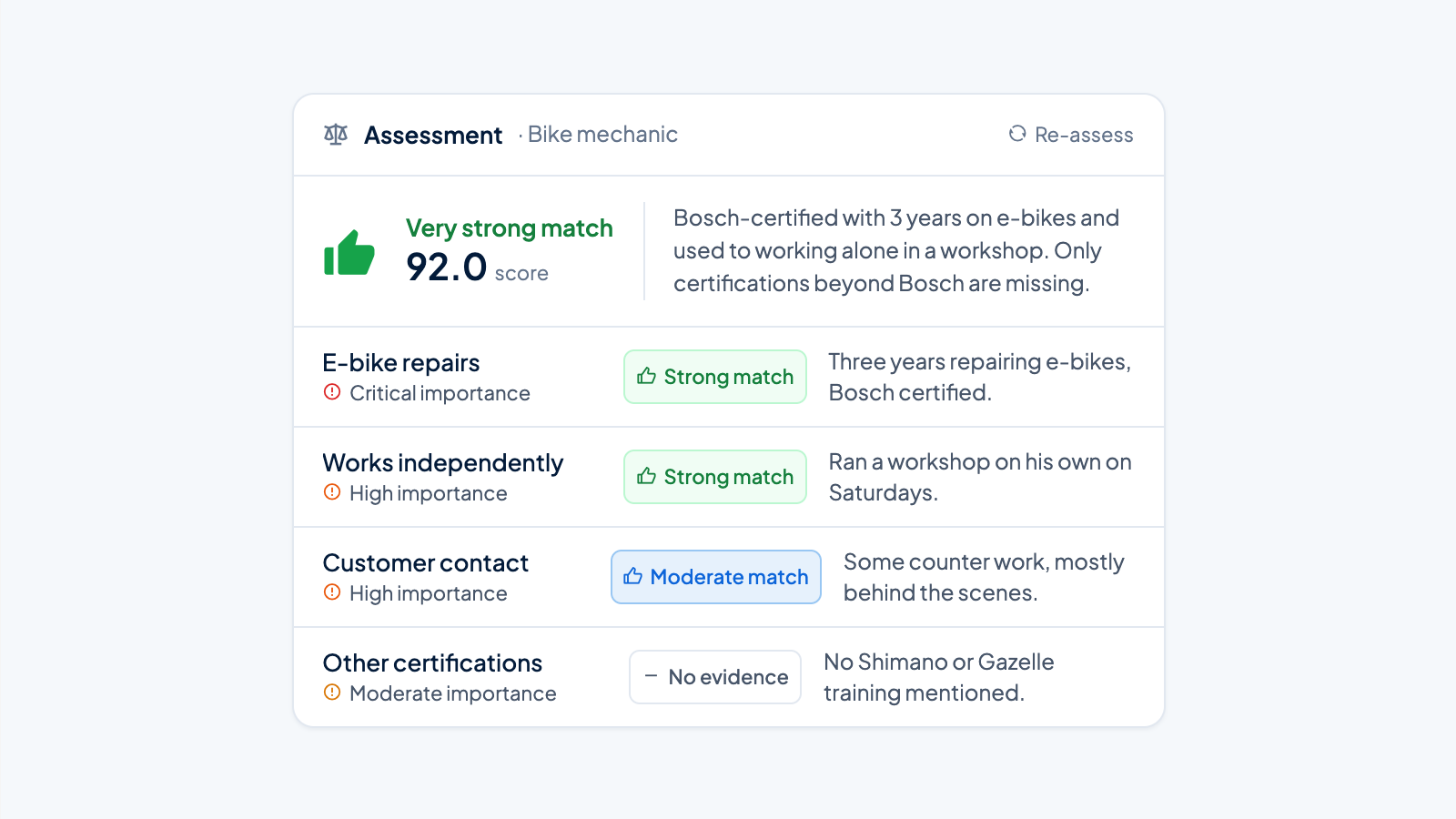
AI candidate matching uses machine learning algorithms to automatically identify the best candidates for a job opening. This technology analyzes resumes, skills, and work experience to compare them with job requirements. Modern recruitment automation makes it possible to find the right match much faster and more objectively than with traditional, manual selection.
What is AI candidate matching and why is it important?
AI candidate matching is a smart recruitment technology that automatically analyzes candidate profiles and compares them with job requirements. The system uses natural language processing to understand resumes and machine learning to recognize patterns that indicate a good match between candidate and role.
The core principles of AI matching are based on pattern recognition and data analysis. The system learns from previous successful placements and applies this knowledge to new candidates. As a result, match quality improves over time as the system collects more data.
Modern recruiters embrace this recruitment AI technology because it helps them to:
- efficiently screen large volumes of candidates
- make objective decisions without unconscious bias
- spend more time on personal conversations with qualified candidates
- maintain consistent quality in the selection process
How do AI algorithms work in candidate matching?
AI recruitment algorithms combine various technologies to intelligently match candidates. Machine learning models analyze textual information from resumes and job postings, while natural language processing ensures understanding of context and meaning in different language expressions.
The process starts with data extraction and structuring. The system extracts relevant information from resumes, such as work experience, skills, education, and certifications. At the same time, it analyzes the job description to identify required competencies and qualifications.
Pattern recognition plays a crucial role in the matching process. The algorithm learns which combinations of skills and experience have historically led to successful placements. These patterns are used to assign scores to new candidates.
Automated candidate selection happens through ranking algorithms that give each candidate a matching score. This score is based on factors such as relevant work experience, technical skills, education level, and indicators of cultural fit.
What advantages does AI matching offer over traditional recruitment?
AI-driven matching offers significant advantages over manual candidate selection. The main gains are time savings, objectivity, and improved candidate quality through consistent, data-driven decision-making instead of intuitive judgments.
Time savings is the most direct benefit. Where recruiters previously spent hours manually reading through resumes, smart candidate matching can analyze hundreds of profiles within minutes and rank them by relevance.
Objectivity is improved because AI systems are not influenced by unconscious biases that human recruiters may have. The algorithm evaluates purely on the basis of relevant qualifications and experience.
The quality improvement is reflected in:
- consistent application of selection criteria to every candidate
- identification of hidden talents that might have been overlooked
- better prediction of job success based on historical data
- a shorter time-to-hire through more efficient screening
What are the main challenges in implementing AI matching?
Implementing AI in recruitment comes with practical challenges. Data privacy, algorithmic bias, implementation costs, and the need for human oversight are the main obstacles organizations must overcome when introducing AI-driven recruitment processes.
Data privacy is a significant challenge because recruitment software processes sensitive personal information. Organizations must ensure GDPR compliance and transparent communication about how candidate data is used and stored.
Algorithmic bias can arise when the AI system inadvertently discriminates based on historical data that contains biases. This requires regular monitoring and adjustment of the algorithms to ensure fair treatment of all candidates.
Implementation costs can be substantial, especially for smaller organizations. In addition to software costs, investment is needed in training, data migration, and system integration.
Human oversight remains essential, because AI systems provide support but cannot take over all aspects of recruitment. Cultural fit, communication skills, and motivation still require human judgment.
How to choose the right AI matching platform for your organization
Choosing the right AI recruitment platform requires a systematic evaluation of features, integration capabilities, and organization-specific needs. Important criteria include match accuracy, ease of use, scalability, and compatibility with existing HR systems.
Start by defining your organization’s needs. Smaller companies have different priorities than large corporations. Consider factors such as recruitment volume, available budget, and the technical expertise of your team.
Evaluate the AI-hiring features of different platforms. Look at the quality of natural language processing, the flexibility of matching criteria, and the ability to train the system on your specific needs.
Integration capabilities are crucial for a smooth workflow. The platform must be able to work with your existing ATS, HRIS, and other recruitment tools to prevent data silos.
Always test before you buy, through pilot projects or demo periods. This provides insight into the practical usability and ROI of the system for your specific situation.
How Applyfin helps with AI candidate matching
Applyfin offers an advanced AI matching solution that helps organizations optimize their recruitment process and find the best candidates faster. Our platform combines intelligent algorithms with user-friendly features to support recruiters to the fullest.
Our AI-driven technology offers concrete benefits:
- Advanced matching algorithms that screen candidates up to 3x faster than traditional methods
- Automatic resume analysis with natural language processing for accurate skill extraction
- Intelligent ranking based on job-specific criteria and historical success data
- Bias reduction through objective, data-driven candidate evaluation
- Seamless integration with existing HR systems and recruitment tools
Ready to transform your recruitment process with AI matching? Contact us for a personal demo and discover how Applyfin can help your organization find the right candidates faster and more effectively.