How do you analyze your recruitment results?
Learn to systematically analyze your recruitment results with essential KPIs, dashboards, and AI tools for data-driven recruitment success.

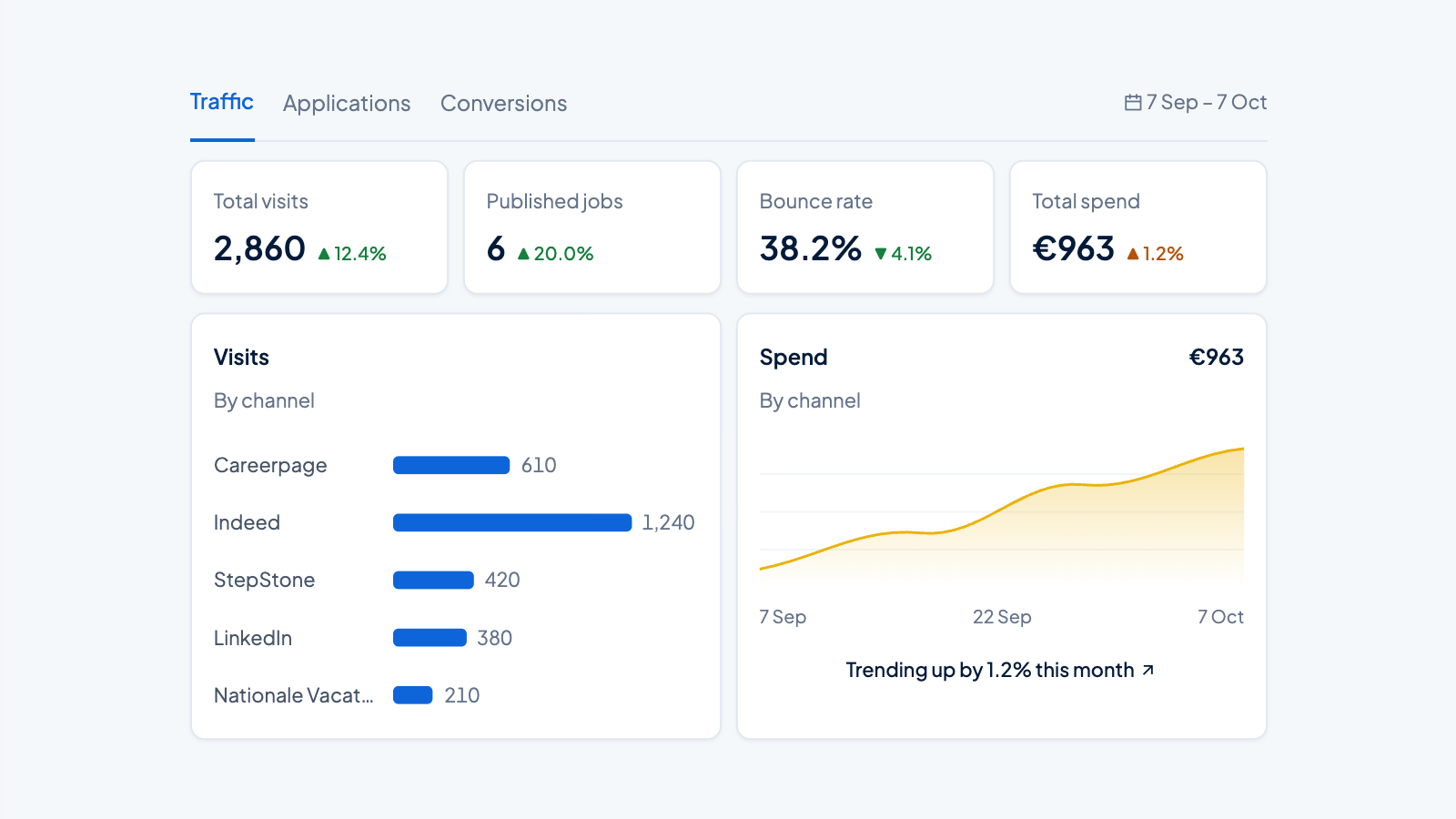
Analyzing recruitment results is a challenge many HR professionals struggle with daily. While your intuition tells you certain hiring channels work better than others, you often lack the concrete data to prove it. Without clear insights from your recruitment analytics, you’re left guessing what works and what doesn’t.
In this article, you’ll discover how to systematically analyze your recruitment results: from identifying essential recruitment KPIs to setting up effective dashboards that provide real-time insight into your hiring metrics. You’ll learn which recruitment data really matters and how to avoid common pitfalls that can cloud your analysis.
Why recruitment analysis is crucial for modern hiring
Data-driven recruitment is no longer a luxury—by 2026, it has become a necessity. Organizations that analyze their recruitment results achieve, on average, better hiring outcomes, lower cost-per-hire, and higher candidate quality. The gap with companies still hiring on gut feeling continues to widen.
Traditional, intuitive hiring methods fall short because they don’t provide an objective picture of what works. You might think LinkedIn delivers the best candidates, but without recruitment ROI analysis, you don’t know whether those candidates actually succeed in their roles. What’s more, you miss opportunities to optimize underperforming channels or allocate budgets more effectively.
The modern labor market demands speed and precision. Candidates have choices and expect a professional experience. Organizations that measure and optimize their application process attract better talent and retain it longer.
Which KPIs are essential for recruitment results
Choosing the right recruitment KPIs determines the success of your hiring analysis. Focus on metrics that directly impact your business goals and deliver actionable insights.
The most important hiring metrics are:
- Time-to-hire: Average time between job posting and contract signing
- Cost-per-hire: Total recruitment costs divided by the number of hires
- Quality-of-hire: Performance rating of new employees after 6–12 months
- Source effectiveness: Which channels deliver the best candidates
- Candidate experience scores: Applicant satisfaction with the process
- Conversion rates: Percentage of candidates progressing through each stage
Use these KPIs strategically. Time-to-hire is crucial for critical positions, while quality-of-hire matters more for senior roles. Source effectiveness helps you allocate your recruitment budget more effectively across different channels.
How to set up an effective recruitment dashboard
A good recruitment dashboard gives you an at-a-glance view of your hiring performance. It combines various recruitment data sources into clear visualizations that are immediately usable for decision-making.
Follow these steps for an effective dashboard:
- Determine which stakeholders will use the dashboard and what information they need
- Choose a maximum of 6–8 KPIs to prevent information overload
- Use clear visualizations, such as charts and heatmaps
- Enable real-time data updates wherever possible
- Create different views for the operational and strategic levels
Modern recruitment dashboards integrate data from various sources automatically. This saves time and prevents manual errors. Make sure your dashboard is accessible on different devices, so you always have up-to-date insights at hand.
Collecting and analyzing data in your hiring process
Effective recruitment analysis starts with systematic data collection from the moment you publish a job opening. Every touchpoint in your hiring funnel provides valuable information you can use for optimization.
Track these important data points throughout your entire process:
- Job views and application conversions per channel
- Candidate sources and their quality scores
- Response times at various communication moments
- Interview no-show percentages per stage
- Reasons for rejection from both sides
Analyze your recruitment data regularly to identify patterns. You might discover that candidates from certain platforms move through your process faster, or that specific interview times have better attendance. These HR analytics insights help you continuously improve your process.
Avoiding common mistakes in recruitment analysis
Many organizations make the same mistakes when analyzing their recruitment results. Recognizing these pitfalls helps you make better decisions based on your recruitment analytics.
Avoid these typical mistakes:
- Vanity metrics: Focusing on metrics that look impressive but don’t provide actionable insights
- Incomplete tracking: Missing crucial data points, which skews your picture
- Measurement periods that are too short: Drawing conclusions based on insufficient data
- No benchmark: Not comparing against industry norms or historical data
Always ensure sufficient context for your analyses. A high cost-per-hire can be acceptable if the quality-of-hire is also higher. Look at the full picture, not isolated metrics.
Optimizing recruitment results with AI and automation
Modern recruitment technology is transforming how we collect and analyze hiring data. AI-driven workflows can identify patterns people overlook and provide predictive analytics for better decision-making.
Automation helps with recruitment dashboards in several ways. Systems can automatically calculate candidate scores, identify bottlenecks in your hiring funnel, and send real-time alerts when KPIs deviate from your targets. This means you have more time for strategic activities instead of data collection.
Predictive analytics can help you anticipate future hiring needs. By analyzing historical data, AI systems can predict which positions will be difficult to fill and which hiring channels will deliver the best ROI for specific job types.
How ApplyFin helps analyze recruitment results
ApplyFin offers an integrated platform that centralizes and automates all aspects of recruitment analytics. Our system helps you systematically collect, analyze, and optimize your hiring data.
Our solution supports you with:
- Centralized data: All candidate information and metrics in one clear dashboard
- AI-driven analysis: Automatic identification of trends and optimization opportunities
- Real-time reporting: Immediate insights into your recruitment KPIs and performance
- Predictive analytics: Data-driven forecasts for better planning
With ApplyFin, you can manage up to three times more candidates while improving your recruitment ROI. Our clients achieve an average 60% cost saving through optimized workflows and better data insights.
Want to discover how ApplyFin can transform your recruitment results? View our features for a complete overview of our recruitment analytics capabilities, or contact us for a personal demo. Start today with data-driven recruitment and see the difference in your hiring success.