How to Track Recruitment Campaigns with AI
AI-driven recruitment tracking transforms how you monitor your recruitment campaigns by automatically collecting data from all channels and turning it into actionable insights. Instead of manually maintaining spreadsheets, an intelligent platform tracks every applicant in real time—from first contact to hire. This gives you immediate visibility into which campaigns are performing, where candidates drop off, and how to allocate your budget optimally. For HR teams managing dozens of vacancies and hundreds of applicants, this means tangible time savings and data-driven decisions that lead to faster hires of better candidates.

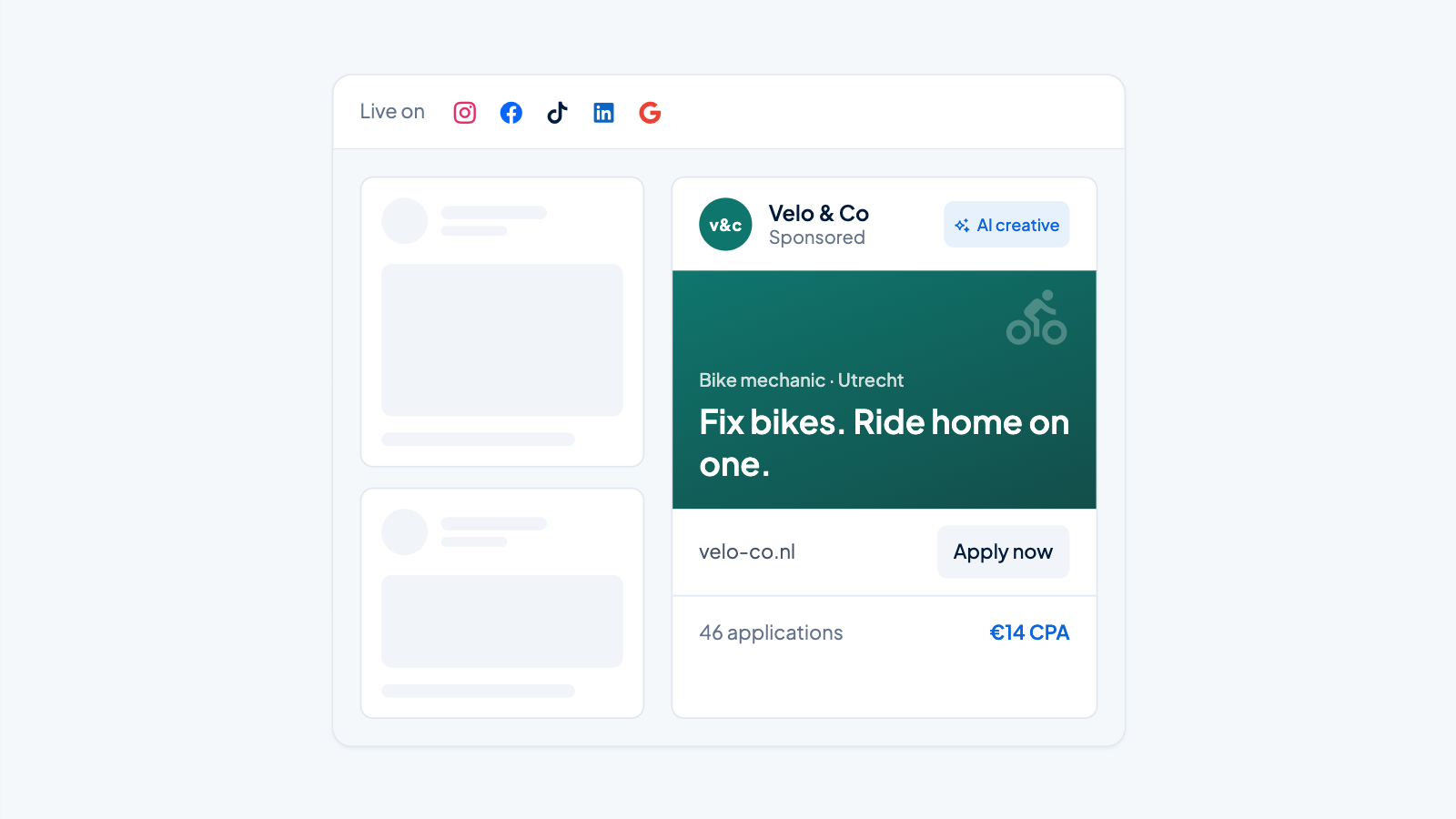
AI-driven recruitment tracking is the automatic collection and analysis of data from your recruitment campaigns using artificial intelligence. Instead of manually maintaining spreadsheets, an intelligent platform tracks every step of your recruitment process in real time. This gives you immediate insight into which campaigns are performing well, where candidates are dropping off, and how to best allocate your budget. For HR teams managing multiple job openings and hundreds of applicants, AI tracking provides oversight and data-driven decisions.
What is AI-driven recruitment tracking and why is it important?
AI-driven recruitment tracking automatically collects all data from your recruitment channels and turns it into actionable insights. The system tracks candidates from the first point of contact to the final hire, without you having to manually keep track of where each applicant is in the process.
For modern HR teams, this is essential because manual tracking simply doesn’t scale. When you manage dozens of job openings at once and receive hundreds of applications through different channels, you quickly lose sight of the bigger picture. Spreadsheets become outdated the moment you save them and don’t give you a real-time view of your recruitment funnel.
AI in recruitment processes transforms this chaos into clarity. The platform automatically records every interaction, whether a candidate comes in through LinkedIn, applies by email, or reaches out via WhatsApp. This data is merged into a single profile, so you can see exactly which campaigns deliver the best candidates and where your recruitment efforts are most effective.
Its importance lies mainly in the data-driven decisions you can make as a result. Instead of guessing which job posting performs better or which advertising channel delivers the highest-quality candidates, you see the results immediately. This makes AI recruitment processes not only faster, but also better in quality.
Which metrics should you track in recruitment campaigns?
The right metrics give you insight into the effectiveness of your recruitment efforts and help you optimize where it really matters. Not all numbers are equally valuable, so focus on metrics that lead to concrete improvements in your recruitment process.
The most important metrics to track are:
- Time-to-hire: the number of days between posting a job opening and the acceptance of an offer. This metric shows the efficiency of your process.
- Cost-per-hire: the total cost of hiring divided by the number of candidates hired. This shows whether your budget is being used effectively.
- Source effectiveness: which channels (LinkedIn, Indeed, your own website) deliver the most and the best candidates.
- Conversion rates per stage: what percentage of applicants move to the next step in your funnel. This reveals bottlenecks in your process.
- Applicant quality score: how well candidates match your job requirements, often determined by AI screening.
- Candidate experience indicators: response times, communication frequency, and candidate feedback about your process.
Vanity metrics such as the total number of applications mean little without context. A hundred applications sounds good, but if only two candidates are qualified, your campaign is underperforming. Therefore, focus on metrics that measure the quality and efficiency of your AI recruitment tasks, not just the quantity.
How does AI work when monitoring recruitment campaigns?
AI systems automatically collect data from all channels where your job openings are posted and candidates apply. This information is processed in real time and presented in clear dashboards, without requiring technical knowledge to use the system.
The process starts with automated data integration. When you publish job openings on various job boards and advertising platforms, the AI system records all views, clicks, and applications. Interactions via email, phone, and even WhatsApp are also automatically linked to the correct candidate profile.
Then the AI recognizes patterns in applicant behavior. For example, the system learns which candidates with certain characteristics are most likely to move on to a next interview. These insights are used for predictive analyses that help you adjust campaigns before they underperform.
The dashboards are updated continuously, so you always see current information. You don’t have to wait for weekly reports or manually export data. The system integrates with your existing ATS and job boards, so all information syncs automatically. This makes AI in recruitment not only faster, but also more reliable than manual tracking.
What are the benefits of automated campaign tracking?
Automated tracking with AI delivers concrete benefits that are immediately noticeable in your daily recruitment work. These benefits affect both the efficiency of your team and the quality of your hires.
- Huge time savings: no more manual data entry or spreadsheet maintenance. Recruiters spend their time on conversations with candidates instead of administration.
- Better decisions through data insight: you see immediately which campaigns are working and which are not. This prevents wasting budget on underperforming channels.
- Smarter budget allocation: invest more in the channels that have proven to deliver the best candidates, and stop running ineffective ads.
- Faster problem identification: when a campaign underperforms, you see it right away and can make adjustments before you’ve wasted much of your budget.
- Higher recruiter productivity: by automating repetitive tasks, recruiters can manage up to three times more applicants without a drop in quality.
- Improved hiring quality: AI screening helps identify the best-fitting candidates, making your selection process more effective.
For recruitment agencies that need to handle volume without extra staff, AI recruitment becomes cheaper and more scalable. For corporate HR teams, it means more control over the hiring process and better collaboration with hiring managers who get real-time insight into the pipeline.
How do you implement AI tracking in your recruitment process?
Implementing AI tracking doesn’t have to be complex when you follow a structured approach. These steps help you systematically transition to automated campaign monitoring.
- Analyze your current tracking situation: what data are you currently collecting, where are the gaps in your insight, and which questions can’t you answer about your campaigns?
- Determine which platform features you need: look for systems that integrate with your current job boards, ATS, and communication channels. Make sure the platform offers real-time dashboards and automated reporting.
- Integrate with your existing tools: connect the AI platform to your job sites, email, and other systems. Good platforms offer ready-made integrations that require no technical knowledge.
- Set up relevant dashboards and alerts: configure which metrics you want to track and when you want to receive notifications, for example when conversion rates are dropping.
- Train your team: make sure all recruiters know how to use the system and how to interpret the data to make better decisions.
- Create data-review routines: schedule weekly moments to discuss campaign performance and make adjustments based on the insights.
Many HR teams worry about the complexity of change, but modern AI platforms are designed for ease of use. Most recruiters become productive with the system within a day. The key is to start small with a few job openings and gradually expand usage as your team becomes familiar with the possibilities.
What results can you expect from AI-driven recruitment tracking?
AI tracking delivers measurable improvements in both the speed and quality of your recruitment process. Most teams see clear results within a few weeks, while strategic benefits develop over a longer period.
You immediately see improved campaign visibility. You know exactly how many candidates each job opening generates, where they come from, and what stage they are in. This eliminates the frustration of “where are the applications?” and gives hiring managers confidence in the process.
Faster optimization cycles are another concrete result. Instead of waiting weeks for reports, you adjust campaigns daily based on current data. A job posting that isn’t converting? You see it immediately and can make changes. An advertising channel that delivers many unsuitable candidates? Stop the campaign before you waste more budget.
Your recruitment funnel becomes more transparent. You understand exactly where candidates drop off and can make targeted improvements. Maybe it turns out that candidates drop off after the application form because it is too long, or that response times are too slow at a certain stage.
Collaboration between recruiters and hiring managers improves significantly. Both parties look at the same real-time data and can constructively discuss how to optimize the process. This prevents misunderstandings about “why is this taking so long” or “are there any good candidates?”
Strategically, you build a valuable database of recruitment insights. You learn which recruitment strategies work for different types of roles, which seasonal patterns to expect, and how to use your budget most effectively. This knowledge makes every subsequent hiring project more successful.
Do you want to experience for yourself how AI tracking transforms your recruitment process? Check out the features of our platform and discover how we help recruiters manage up to three times more applicants. Ready to get started with automated campaign tracking? Contact us for a personal demo. Or explore how our complete recruitment automation works at applyfin.com and take the first step toward data-driven hiring.