What is a centralized recruitment system?
A centralized recruitment system brings all hiring activities together in one platform: job management, candidate tracking, AI screening, and communication. No more fragmented tools, but one clear environment where teams work faster, track candidates better, and recruitment becomes more efficient. Discover why organizations are switching to centralized platforms and how AI workflows reduce administrative burdens while improving the quality of hires.

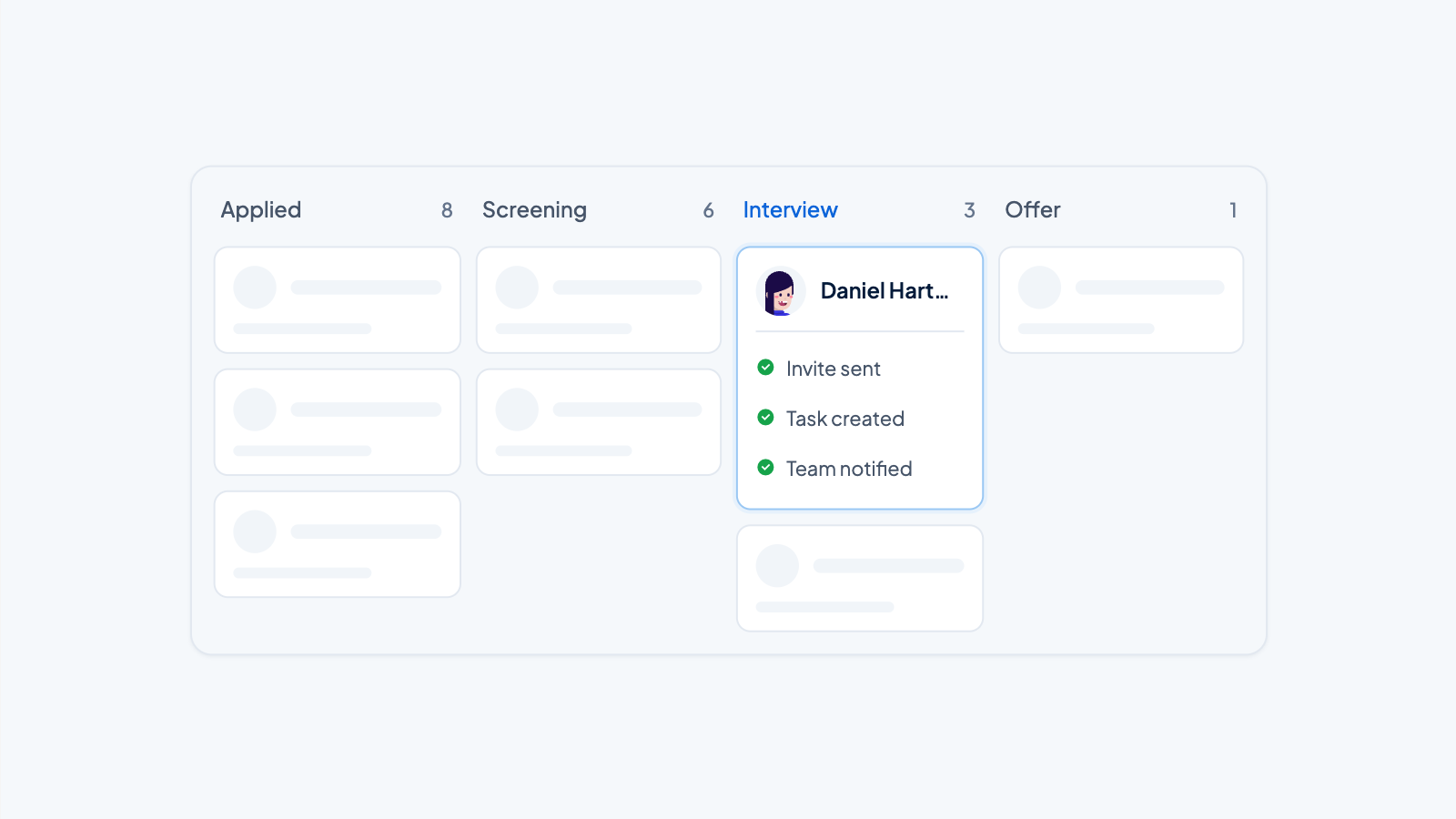
A centralized recruitment system brings all hiring activities together in one platform: from job posting management and candidate tracking to communication and AI workflows. Instead of switching between separate tools like email, spreadsheets, and various job boards, you work in one environment where all candidate data, conversations, and process steps are visible. This makes recruitment faster, more organized, and more efficient for hiring teams.
What exactly is a centralized recruitment system?
A centralized recruitment system is a platform that brings all recruitment activities together in one digital environment. You manage job openings, track candidates through the entire hiring process, communicate with applicants, and automate recurring tasks without having to switch between different tools.
The main difference from fragmented tools is that all information is in one place. With traditional approaches, you often use a combination of email, Excel files, job boards, a separate ATS, and maybe communication tools like WhatsApp. This leads to scattered data, duplicate work, and missed candidates.
A centralized system bundles features such as job posting management, candidate profiles with resumes and interview notes, email communication, interview scheduling, scorecards for evaluation, reports, and dashboards. Modern platforms also integrate AI support for tasks like resume screening, automatic qualification of applicants, and smart matching between job openings and candidates.
Why do companies choose a centralized recruitment platform?
Organizations switch to centralized systems because they can work considerably more efficiently. The main benefits are:
- Efficiency gains: Recruiters spend less time on administrative tasks and can focus on personal contact with candidates. Automating routine work such as screening and follow-ups saves hours every week.
- Cost savings: By working smarter with AI in recruitment processes, costs per hire decrease. You need fewer external agencies and reach the right candidates faster.
- Better collaboration: Hiring managers, recruiters, and other team members work in the same system. Everyone sees progress, can give feedback, and stays informed without endless email chains.
- Transparency: Real-time insight into where each candidate is in the process. You immediately see how many applications there are, who still needs to be screened, and where delays occur.
- Reduced administrative burden: No manual copying of data between systems, no searching for the latest version of a resume, no missed messages because they sit in different inboxes.
These benefits mean that AI recruitment tasks not only go faster, but are also executed with higher quality. Teams can handle more candidates without additional staff.
How does a centralized recruitment system work in practice?
The workflow within a centralized platform follows a logical sequence from job opening to hire. Different team members work together in the same environment, with automation and AI taking over much of the manual work.
- Create and publish job openings: You create a job opening in the system and automatically publish it to multiple channels (your own website, job boards, social media). The platform generates branded landing pages and tracks where candidates come from.
- Receive and centralize applications: All incoming resumes, cover letters, and contact details are automatically collected in candidate profiles. Communication via email or WhatsApp is also linked to the right profile.
- Automatic screening and qualification: AI support screens resumes based on job requirements and scores candidates. This saves recruiters a lot of time when reviewing large numbers of applications.
- Assess and select candidates: Recruiters and hiring managers review qualified candidates, add notes, and give scores. The system tracks all feedback and makes comparison easy.
- Communication and scheduling: Interview invitations, confirmations, and follow-ups are sent automatically. Calendar integrations make interview scheduling clear.
- Reporting and optimization: Dashboards show metrics such as time-to-hire, conversion rates per source, and cost per candidate. These insights help you continuously improve recruitment processes.
Because of this integrated approach, AI recruitment activities work seamlessly together and no information is lost between steps.
What is the difference between a traditional ATS and a centralized recruitment system?
Traditional applicant tracking systems (ATS) mainly focus on tracking candidates through the hiring process. A centralized recruitment system goes further by integrating sourcing, automation, AI qualification, and analytics into one platform.
Classic ATS systems often have limitations: data remains fragmented because you still need external tools for job posting, communication, and screening. Much work remains manual, such as copying resume data, reviewing every application, and keeping track of where each candidate stands. Automation is often limited to standard email templates.
Modern centralized platforms, by contrast, offer integrated sourcing with automatic distribution to job boards and campaign tracking. AI workflows take over repetitive tasks such as resume screening, qualification based on job requirements, and even initial conversations via chatbots. Real-time analytics provide insight into recruitment performance and help optimize processes.
The result is that AI recruitment moves faster, recruiters can handle more candidates, and hire quality improves through data-driven decisions. Where a traditional ATS is mainly a database, a centralized system functions as a complete recruitment workspace.
Which organizations benefit from a centralized recruitment system?
A centralized recruitment system offers particular value for organizations that recruit regularly and need visibility and efficiency. SMBs that are growing and have multiple job openings at the same time benefit from streamlined workflows and time savings.
Recruitment agencies benefit from the ability to manage large numbers of candidates and job openings for different clients. Transparency and reporting features help demonstrate value to clients. Corporate talent acquisition teams that hire for multiple departments or locations get a better overview and can collaborate more effectively.
Organizations with high application volumes, for example in sectors such as sales, customer service, or hospitality, especially benefit from automatic screening and qualification. If AI didn't make recruitment cheaper and more efficient, manually processing hundreds of applications per job opening would be unfeasible.
Signals that your organization is ready for centralization include: growing recruitment volumes where your team is losing oversight, inefficient processes with a lot of manual work and duplicate data entry, lack of insight into where candidates get stuck, or frustration about fragmented communication and missed talent.
How do you implement a centralized recruitment system successfully?
A successful implementation starts with good preparation. Map out the recruitment processes you currently use, the pain points, and what you want to improve. Determine who will work with the system and which integrations are needed with existing tools such as your HR system or calendar.
Data migration requires attention: which candidate data and job opening information do you want to bring into the new platform? Make sure you work GDPR-compliant and only transfer relevant, current data. Plan enough time for cleaning up old data.
Training your team is essential for adoption. Make sure recruiters, hiring managers, and other users understand how the system works and what benefits it offers. Hands-on training with real-world examples works better than manuals alone.
Start with a pilot for one or a few job openings before you switch over completely. This helps resolve teething problems and adjust processes. Collect feedback from users and make changes where necessary.
Want to learn more about how a centralized system can transform your recruitment? Check out our features to see what's possible. For personal advice on implementation, you can contact us. Or discover on our homepage how we help recruitment teams work more efficiently with automated workflows.