What is data-driven recruitment?
Data-driven recruitment transforms how you hire by basing decisions on concrete metrics rather than intuition. This modern approach systematically analyzes recruitment processes, helping you find candidates more effectively, save costs, and shorten time-to-hire. Discover which KPIs like cost-per-hire and quality-of-hire are essential, how to start using data analysis in your hiring process, and which tools help you process three times as many candidates with the same capacity.

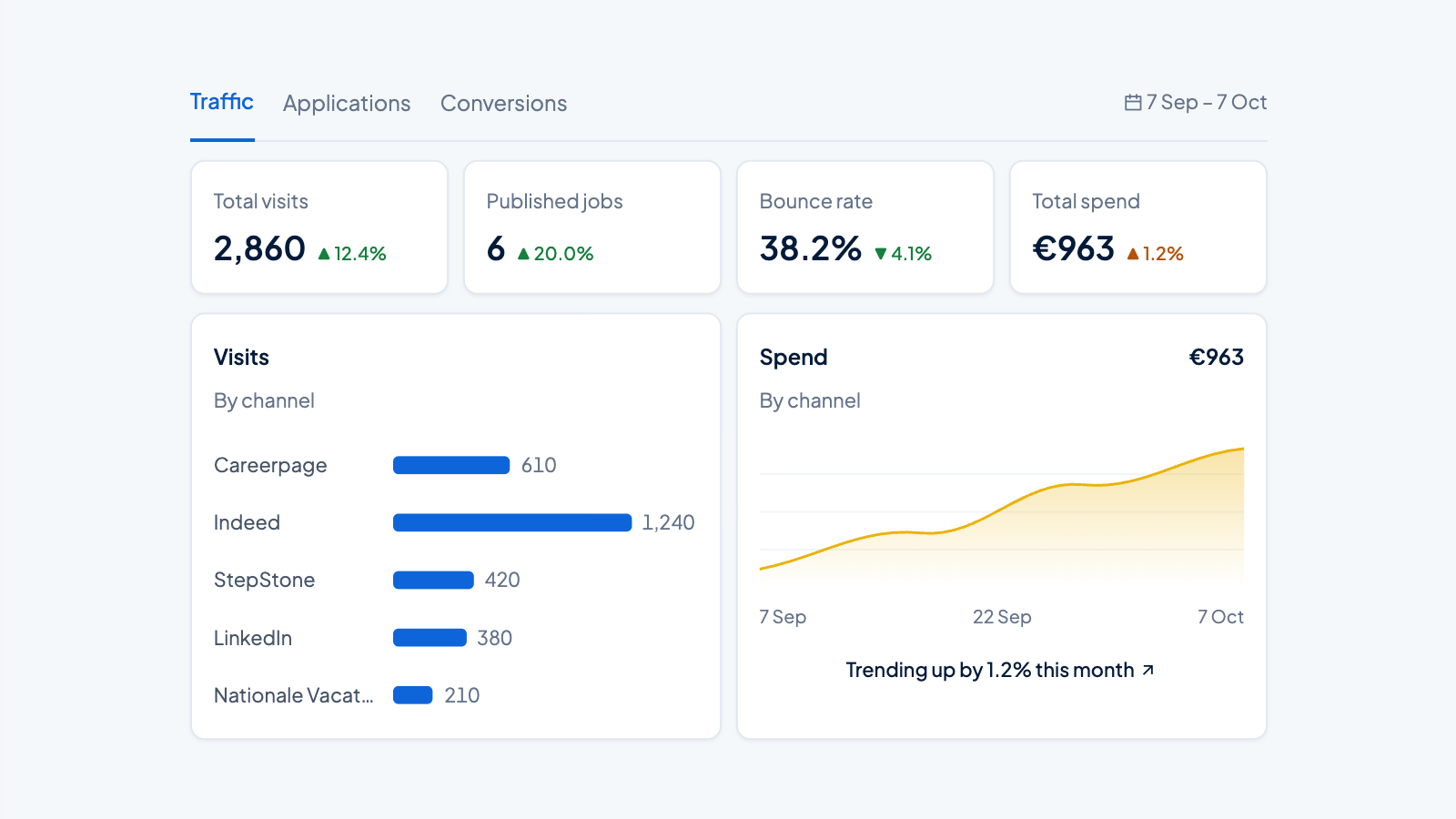
Data-driven recruitment is a modern approach where you base hiring decisions on concrete data and measurable metrics instead of intuition alone. By analyzing recruitment processes with data, you gain insight into what works and what doesn't. This allows you to recruit more effectively, save costs, and attract better candidates. This approach is becoming increasingly important for SMBs and recruitment agencies that want to improve their efficiency.
What is data-driven recruitment exactly?
Data-driven recruitment means systematically collecting and analyzing data to improve your hiring process. Instead of relying only on gut feeling or experience, you base decisions on measurable information about candidates, job openings, and recruitment channels. This helps you discover patterns that would otherwise remain invisible.
The difference from traditional recruitment is significant. Where you may have thought a particular job board was working well, data shows exactly how many qualified candidates each source produces. You see which applicants move on to an interview and ultimately get hired. These insights make your hiring process more transparent and effective.
For modern HR teams, this approach is valuable because it makes what works concrete. You can allocate budgets more effectively, pivot faster when something isn't working, and clearly demonstrate what recruitment delivers. Data is especially essential in AI recruitment processes to understand how automation affects your results.
Which data and metrics matter in recruitment?
The most important recruitment metrics provide insight into the effectiveness of your hiring process. By tracking this data, you can see where improvements are possible and steer more precisely toward results. Not all data is equally relevant, so focus on metrics that directly contribute to your goals.
These core indicators are the most valuable for data-driven recruitment:
- Time-to-hire – how much time passes between opening a job opening and a candidate accepting an offer
- Cost-per-hire – the average cost to successfully fill one job opening, including advertising costs and time invested
- Quality-of-hire – how well new employees perform in their first period and whether they stay with the organization
- Source effectiveness – which job boards, social media, or other channels produce the best candidates
- Conversion rates – how many applicants move from each stage to the next in your hiring process
- Candidate experience metrics – how candidates experience your process, measured through feedback or response rates
These metrics show you where bottlenecks are. If your time-to-hire is long, you know your process can be more efficient. When certain sources produce few good candidates, you can shift your budget. With AI recruitment tasks, you can collect and analyze this data automatically, which saves a lot of time.
How do you start with data-driven recruitment and selection?
Getting started with data-driven recruitment doesn't have to be complicated. Start small and build systematically. The most important thing is that you collect data consistently and actually use it to make decisions. Many SMBs start with a few basic metrics and expand later.
Follow these steps to adopt data-driven recruiting:
- Assess your current situation – look at what data you already collect and where gaps exist in your information
- Choose your most important metrics – determine which three to five indicators are most relevant to your organization
- Set baseline measurements – measure your current performance so you can see improvements later
- Implement the right tools – use systems that automatically collect data without extra manual work
- Build in analysis habits – schedule weekly or monthly moments to review your data and make adjustments
- Test and optimize – try out improvements and measure whether they affect your metrics
It's wise to start with one or two job openings where you track everything carefully. That way you learn what works before rolling it out across your entire recruitment process. With AI recruitment activities, much of this data collection is done automatically, which lowers the barrier.
What are the benefits of data-driven recruitment?
Data-driven recruiting delivers concrete benefits across different aspects of your recruitment. You work more efficiently, find better candidates, and can demonstrate your results to stakeholders. This approach especially helps when you need to fill many job openings or work with limited resources.
Your recruitment becomes more efficient and faster because you know exactly where your time and money are going. You can stop channels that deliver little while strengthening successful sources. This means AI recruitment is faster at delivering results and your team can focus on candidates with the highest chance of success.
The quality of your hires improves because you recognize patterns among successful employees. You learn which traits or backgrounds correlate with strong performance. You also reduce unconscious bias in your selection because decisions are based on objective criteria instead of gut feeling.
For recruitment agencies, the advantage is that you can concretely show clients what you deliver. Corporate talent acquisition managers gain better visibility into their pipeline and can identify bottlenecks earlier. HR teams that handle high volume can fill more job openings with the same capacity, which means AI recruitment is cheaper per hire.
Which tools and technologies support data-driven recruitment?
The right technology makes data-driven recruitment practically feasible. Without good systems, data collection becomes time-consuming and analysis remains limited. Modern recruitment platforms combine various functions that together provide a complete picture of your hiring process.
An applicant tracking system with built-in analytics forms the foundation. It centralizes all your candidate data and shows how applicants move through your process. You can see at a glance where candidates drop off and which stages take the longest. Recruitment automation platforms go further by automating repetitive tasks, such as screening resumes or scheduling interviews.
AI-powered qualification tools analyze candidates based on objective criteria. They evaluate resumes, answer initial questions from applicants, and score profiles based on how well they match your job opening. This saves recruiters a huge amount of time when going through large numbers of applications. We use this technology to help teams process three times as many candidates.
Integration options with your existing HR systems are essential. Data from different sources must come together for a complete picture. Think of integrations with your payroll system, performance management tools, and job boards. Modern recruitment systems offer these connections as standard.
Dashboard and reporting features make your data accessible. You want to be able to see how your recruitment is performing without needing technical knowledge. Visual overviews of your most important metrics, trends over time, and comparisons between job openings or recruiters help you make the right decisions quickly.
When you're considering moving to data-driven recruiting, it's wise to start with a platform that combines these elements. That way you avoid working with separate tools that don't communicate with each other. Implementation support helps you see results quickly and enables your team to work effectively with the new approach.