What is recruitment analytics software?
Data-driven recruiting transforms HR processes. Discover how recruitment analytics software optimizes your hiring strategy with measurable results.

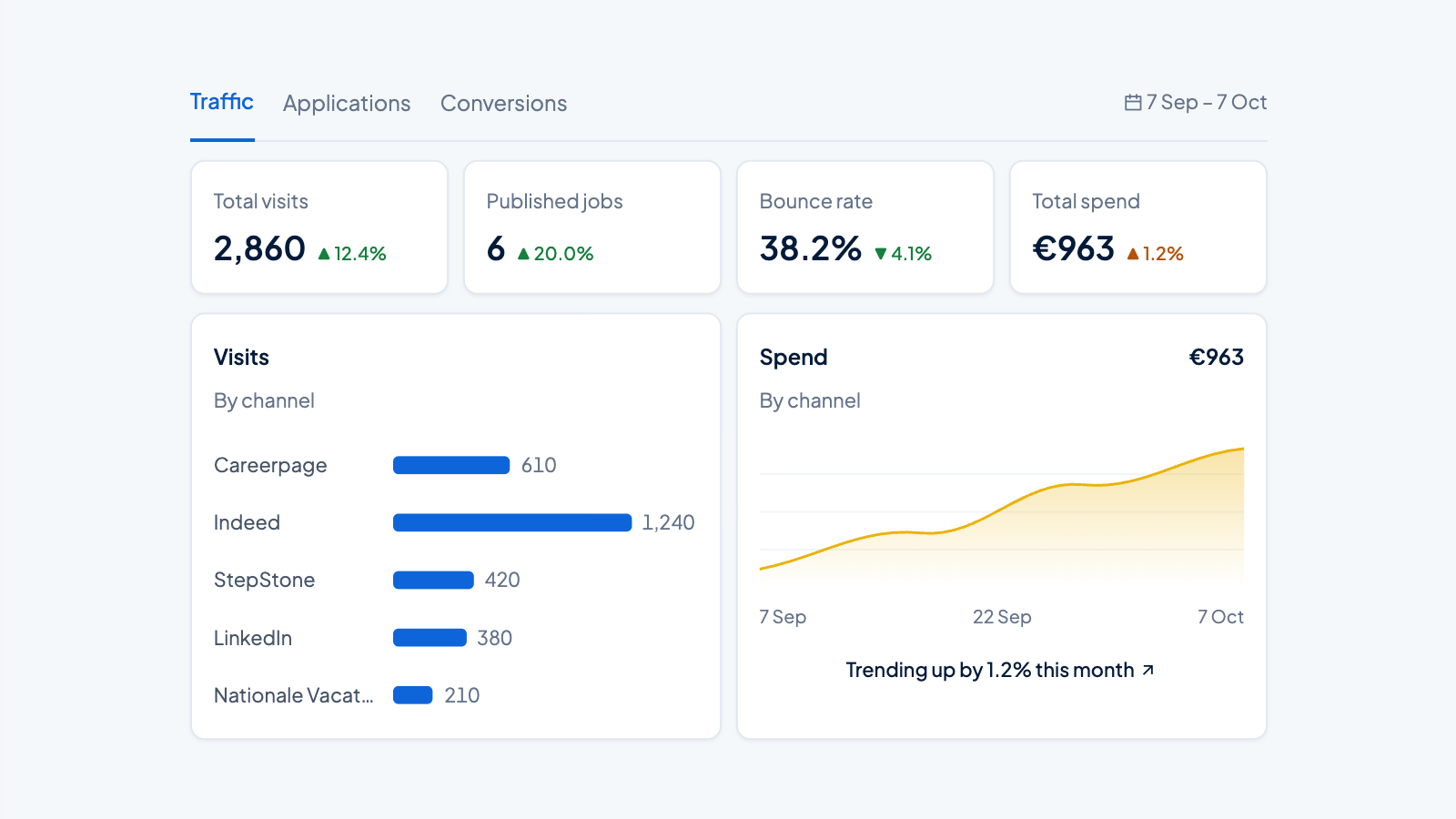
The modern recruitment world revolves increasingly around data. While many HR teams still rely on gut feeling and intuition, forward-thinking organizations use recruitment analytics software to optimize their hiring processes. This technology transforms how we attract, assess, and hire talent by providing valuable insights that would otherwise remain hidden.
In this article, you’ll discover exactly what recruitment analytics software entails, why traditional methods fall short, and how this technology can revolutionize your recruitment strategy. We’ll also discuss the most important metrics and give practical tips for choosing the right tool for your organization.
What exactly is recruitment analytics software?
Recruitment analytics software is an advanced HR system that collects, analyzes, and visualizes data from every aspect of the hiring process. Unlike traditional HR systems, which mainly function as databases, recruitment analytics goes much further by identifying patterns and offering predictive insights.
This software automatically gathers data from various sources, such as application forms, emails, phone calls, and social media interactions. The system then analyzes this information to uncover trends, identify bottlenecks, and measure the effectiveness of different recruitment channels.
The biggest difference from classic applicant tracking systems lies in the depth of analysis. Where traditional systems primarily handle administrative tasks, HR analytics software provides strategic insights that directly impact hiring decisions and business results.
Why traditional recruitment methods fall short on data insight
Manual recruitment processes create several problems that hinder modern organizations’ growth. The lack of measurable results makes it nearly impossible to assess the effectiveness of different recruitment strategies.
Many HR teams still work with spreadsheets and disconnected systems, causing valuable data to be lost or fragmented. This fragmentation leads to inefficient decision-making, because managers lack a complete overview of their recruitment performance.
Traditional methods also miss the ability to objectively assess candidate quality. Without data-driven recruitment, it becomes difficult to eliminate bias and consistently identify the best candidates. This results in longer time-to-fill, higher costs, and missed opportunities to attract top talent.
Essential metrics that recruitment analytics software measures
Modern recruitment technology tracks several crucial KPIs that provide insight into the health of your hiring process. These recruitment metrics form the foundation for data-driven decision-making:
- Time-to-hire: the average time between posting a job and accepting an offer
- Cost-per-hire: total recruitment costs divided by the number of hires
- Source effectiveness: which recruitment channels deliver the best candidates
- Candidate quality scores: objective assessment of candidate quality based on predefined criteria
- Conversion rates: the percentage of candidates who advance to each subsequent stage in the funnel
These hiring analytics help organizations use their recruitment budget more effectively and continuously improve processes. By monitoring these metrics regularly, teams can quickly adjust when certain channels or strategies underperform.
How recruitment analytics transforms your hiring strategy
Data-driven recruitment opens the door to strategic improvements that are directly visible in the results. Organizations that use recruitment data effectively make better sourcing decisions by focusing on channels that demonstrably deliver results.
Job descriptions are optimized based on data about which terms and benefits attract the most qualified candidates. This leads to a higher response from relevant candidates and less time wasted on unqualified applications.
The candidate experience improves significantly when organizations have insight into where candidates drop off in the process. By identifying and addressing these bottlenecks, acceptance rates rise and the employer brand improves.
Recruitment analytics software also makes it possible to recognize seasonal patterns and market trends, enabling teams to proactively anticipate changes in the labor market.
Choosing the right recruitment analytics tool for your organization
When selecting applicant tracking analytics software, several criteria are essential for success. Integration capabilities with existing HR systems top the list, because data silos drastically reduce the effectiveness of analytics.
Scalability plays a crucial role, especially for growing organizations. The chosen solution must be able to grow with the number of vacancies and candidates without performance loss. User-friendliness is equally important, as complex systems often lead to low adoption rates within the team.
ROI considerations during implementation include not only purchase costs but also training, maintenance, and the time needed to generate valuable insights. The best systems show measurable improvements in key metrics within a few months.
Consider these five steps in your selection process:
- Map out your current recruitment challenges and desired outcomes
- Evaluate integration possibilities with existing systems
- Test user-friendliness with a diverse group of team members
- Calculate the total cost of ownership over a three-year period
- Request references from similar organizations in your industry
How Applyfin helps with recruitment analytics
We understand that effective recruitment analytics requires more than just collecting data. Our platform centralizes all recruitment activities and provides real-time insights that are directly applicable to your daily work.
The key benefits of our analytics functionalities:
- Integrated data collection: all candidate interactions are automatically captured and analyzed
- AI-driven insights: our algorithms identify patterns and predict candidate success
- Real-time dashboards: access to current metrics and trends, without technical knowledge
- Predictive analytics: anticipate hiring needs and optimize resource allocation
With our advanced features, recruiters can manage up to three times more candidates while achieving better results. Organizations experience an average 60% reduction in recruitment costs thanks to our data-driven approach.
Ready to transform your hiring process with powerful analytics? Contact us for a personal demonstration and discover how our recruitment technology moves your organization forward.