How do you track candidates across multiple platforms?
Discover why multiplatform candidate tracking is complex and how to develop a structured approach for better recruitment.

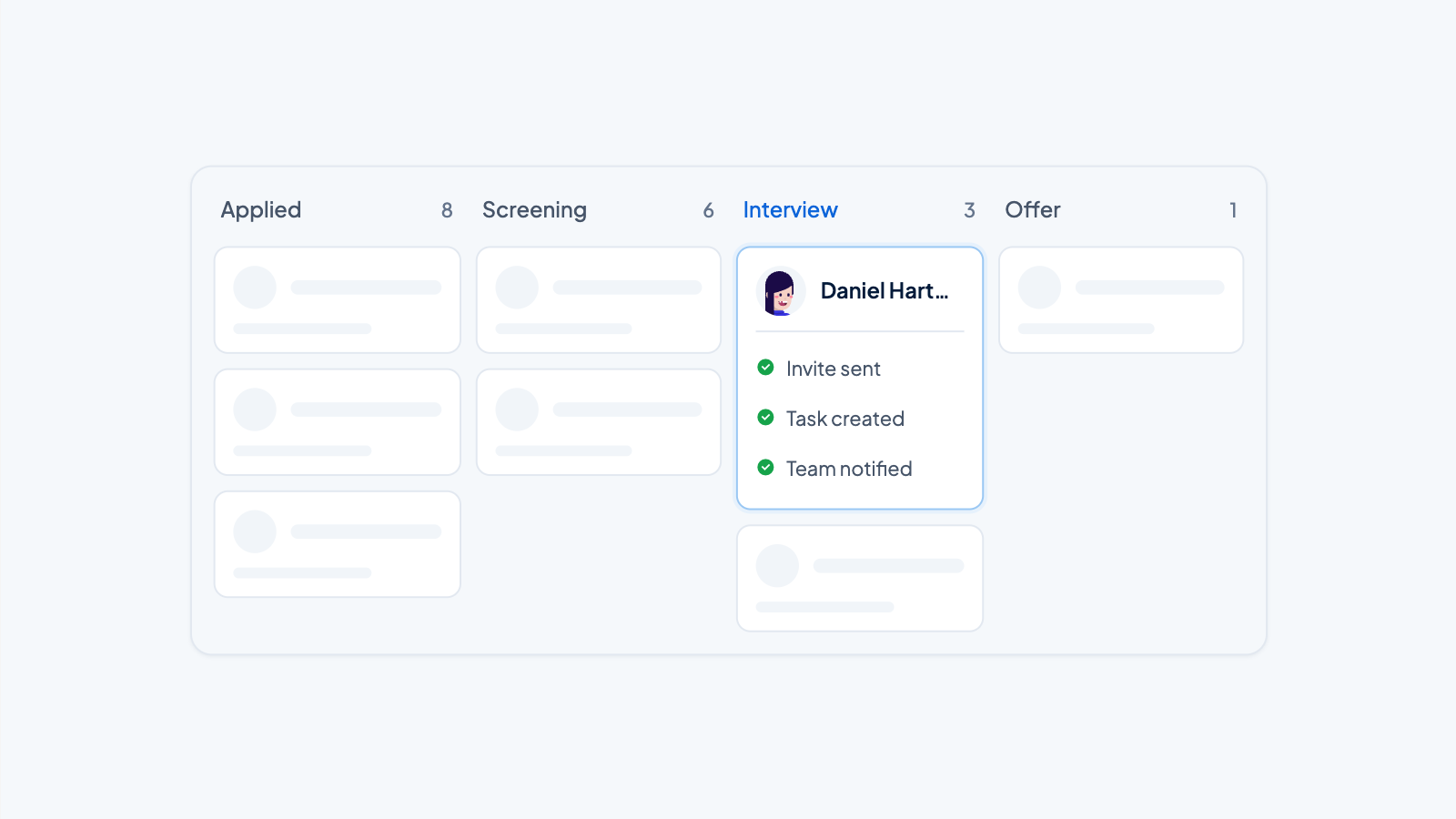
Modern recruiters work with a wide range of platforms every day to find the best candidates. From LinkedIn Recruiter to Indeed, from specialist job boards to their own ATS systems: each platform offers unique benefits. But this diversity also brings a major challenge: how do you keep track of all the candidates who apply through different channels?
Effectively tracking candidates across multiple platforms has become one of the biggest operational challenges in recruitment. Many HR professionals struggle with scattered data, missed follow-ups, and inefficient workflows. In this article, you'll discover why multi-platform tracking is so complex and how to develop a structured approach to better candidate management.
Why tracking candidates across platforms is so challenging
The modern recruitment landscape consists of dozens of different platforms, each with its own interface, data structure, and communication options. This fragmentation creates significant challenges in recruiters' day-to-day work.
Data fragmentation is the biggest problem. Candidate information spreads across different systems: resumes in your ATS, LinkedIn profiles, email correspondence in Outlook, WhatsApp conversations on your phone, and notes in various tools. This scattering makes it virtually impossible to get a complete picture of a candidate without switching between different platforms.
In addition, different data formats lead to inconsistencies. LinkedIn uses different field names than Indeed, and your ATS has its own categories. Manually transferring data introduces errors and takes a lot of time.
The lack of real-time synchronization between platforms means that changes in candidate status are not automatically passed on. A rejection in your ATS remains invisible in your LinkedIn pipeline, which leads to confusion and duplicate work.
Which platforms recruiters use for candidate management
Dutch recruiters use a wide range of hiring platforms, each with specific strengths and use cases.
LinkedIn Recruiter remains the most widely used tool for active sourcing and networking. The platform offers extensive search capabilities and direct communication options, but often lacks in-depth tracking functionality for the entire recruitment funnel.
Indeed and other large job boards serve as important candidate sources, especially for high-volume recruitment. These platforms generate many applications but offer limited options for advanced candidate management.
Specialized ATS systems often form the heart of recruitment operations. These tools offer extensive pipeline management but usually have limited integrations with external sourcing platforms.
Social media platforms like Facebook and Instagram are gaining popularity for employer branding and candidate attraction, but they further complicate the tracking process by introducing yet more communication channels.
The consequences of fragmented candidate tracking
Scattered candidate data has direct and measurable consequences for recruitment efficiency and results. This impact is often underestimated, but it can lead to significant costs.
Missed opportunities arise when recruiters lose track of previous interactions with candidates. A talent who wasn't available six months ago may now be open to a new role. Without a central overview, these valuable connections remain unused.
Duplicate work is a daily frustration. Recruiters spend hours manually copying candidate data between systems, updating different databases, and synchronizing communication. This time could be spent far more effectively on actual candidate interaction.
The candidate experience suffers from fragmented systems. Candidates have to provide the same information multiple times, receive inconsistent communication, and experience delays in the process. This damages your employer brand and reduces the chance of successful placements.
Increased costs manifest themselves in several forms:
- Longer time-to-hire due to inefficient processes
- Higher administrative burdens and overhead
- Missed placements due to a poor candidate experience
- Duplicate licensing costs for overlapping tools
How a centralized system simplifies candidate tracking
A unified recruitment platform brings all candidate data together in one clear system. This eliminates the need to switch between different tools and provides a complete 360-degree view of every candidate.
Workflow automation plays a crucial role in increasing efficiency. Repetitive tasks such as sending confirmation emails, scheduling interviews, and updating candidate status are performed automatically. This allows recruiters to focus on value-adding activities such as candidate interaction and relationship building.
The ability to manage up to three times more candidates comes from the combination of automated workflows and centralized data. Recruiters spend less time on administrative tasks and can put more energy into actual recruitment work.
Real-time synchronization between all channels ensures that changes are immediately visible throughout the entire system. A status update is automatically shared with all relevant stakeholders, which prevents miscommunication and improves collaboration.
Practical steps for effective multi-platform tracking
Implementing effective candidate tracking requires a systematic approach. These steps will help you move from fragmented systems to an integrated solution.
Start with a thorough analysis of your current recruitment tech stack:
- Inventory all the platforms your team uses for candidate management
- Identify which data is stored in each system
- Map out where duplication and inefficiencies occur
- Document current workflows and pain points
Then define your ideal data architecture. Determine which candidate information should be centrally available and how different data sources can be integrated. Ensure consistent naming and categorization across all platforms.
Automation is the key to scalability. Implement automated data synchronization between systems and set up workflows for routine tasks. This reduces manual work and prevents errors.
Training and change management are essential for successful implementation. Make sure all team members understand how the new system works and what benefits it offers. Develop clear procedures for data entry and maintenance.
How Applyfin helps with candidate tracking
Applyfin offers a complete solution for centralizing recruitment tracking across multiple platforms. Our platform integrates all candidate data into one clear system, from first contact to final placement.
The key benefits of our approach:
- Centralized candidate profiles that consolidate all interactions, including resumes, emails, WhatsApp messages, and conversations
- AI-driven qualification workflows that automatically screen and score candidates for relevance
- Automated distribution to various job boards and advertising platforms
- Real-time pipeline visibility with complete tracking of every candidate throughout the entire process
By combining recruitment automation with intelligent data integration, recruiters can manage up to three times more candidates, while administrative burden is reduced by 60%. The platform eliminates the frustration of fragmented systems and enables teams to focus on what really matters: finding and placing the best talent.
Want to find out how centralized candidate tracking can improve your recruitment results? View our features and experience for yourself how automation can transform your workflows. For a personal demo, you can contact us directly, or visit our website for more information about our recruitment technology solutions.