What is intelligent candidate filtering?
AI filtering saves recruiters 75% screening time and eliminates bias in candidate selection.

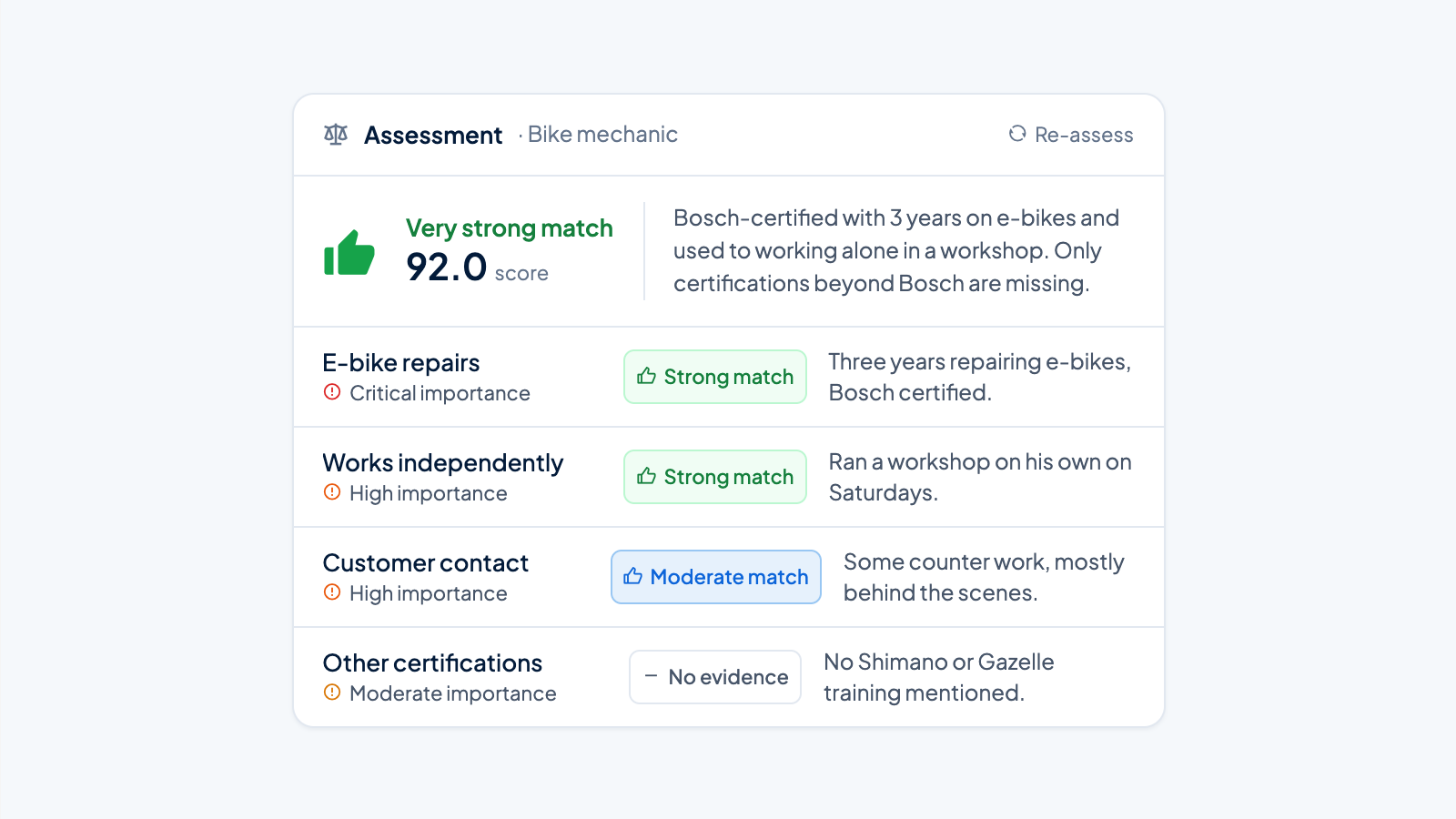
Manually screening hundreds of resumes costs recruiters hours of valuable time every day. As the labor market becomes increasingly competitive, HR professionals struggle with growing piles of applications and pressure to find the right candidates faster. Intelligent candidate filtering offers a solution by using AI technology for automatic resume screening and candidate matching.
This advanced recruitment technology transforms how organizations handle applicant tracking and hiring automation. From eliminating human bias to drastically reducing time-to-hire, smart filtering is revolutionizing modern hiring processes.
We explore how intelligent filtering works, what concrete benefits it offers, and how to successfully implement this technology in your recruitment process.
Why traditional candidate screening fails in the modern labor market
Traditional resume screening suffers from fundamental limitations that are becoming increasingly problematic. Recruiters spend an average of just six seconds per resume, leading to superficial assessments and missed opportunities for excellent candidates.
Human bias plays a significant role in manual screening. Unconscious bias around names, educational background, or work experience influences decisions, often at the expense of diversity and objectivity. These biases can exclude valuable candidates before they even get a chance.
The growing gap between supply and demand exacerbates these problems. With more vacancies than available candidates in many sectors, organizations can no longer afford inefficient screening processes. Manual processes simply don't scale with modern hiring volumes.
Wasted time is another critical issue. Recruiters spend up to 60% of their time on administrative tasks instead of strategic activities such as candidate interactions and stakeholder management.
What is intelligent candidate filtering and how does it work?
Intelligent candidate filtering uses AI algorithms and machine learning to automatically analyze, assess, and rank resumes and candidate profiles. This recruitment AI goes beyond simple keyword matching by recognizing complex patterns and relationships in data.
The system analyzes several elements:
- Work experience and skills
- Educational background and certifications
- Career progression and stability
- Relevant projects and achievements
- Soft skill indicators from text analysis
Machine learning algorithms learn from historical hiring data and recruiter feedback. As a result, recommendations become increasingly accurate as the system processes more data. The technology can even identify hidden talent by finding candidates who may not match perfectly on paper, but have the potential to excel.
Automatic filtering works in real time, meaning new applications are evaluated and scored immediately. This leads to faster response times and a better candidate experience.
The 5 key benefits of AI-driven candidate screening
AI-driven screening delivers concrete, measurable benefits that directly impact recruitment results:
- Dramatic time savings: automatic screening reduces screening time by 75–80%, allowing recruiters to focus on valuable conversations and strategic activities.
- Increased accuracy: AI systems make consistent assessments without fatigue or varying moods, leading to more reliable candidate selection.
- Elimination of unconscious bias: objective algorithms assess candidates purely on relevant criteria, promoting diversity and inclusion.
- Superior match quality: advanced pattern recognition identifies subtle relationships between candidate profiles and successful performance in specific roles.
- Unlimited scalability: systems can process thousands of applications simultaneously without loss of quality, perfect for organizations with high hiring volumes.
How to implement intelligent filtering in your recruitment process
Successfully implementing intelligent filtering requires a thoughtful, phased approach. Start by evaluating your current recruitment process and identifying the biggest bottlenecks where automation can have the greatest impact.
Integration with existing applicant tracking systems is a crucial part. Modern AI platforms can work seamlessly with popular ATS solutions, preserving your current workflows while adding intelligent features.
Training AI models happens by using historical hiring data and feedback. Make sure you have enough quality data from successful hires to train the system effectively. Data quality largely determines the success of your AI implementation.
Involve your recruitment team from the start of the implementation process. Organize training sessions and communicate clearly about how the technology will support, not replace, their work.
Start with a pilot project for one or a few vacancies before rolling out fully. This gives you the chance to fine-tune the system and resolve any teething problems.
Common mistakes when using AI filtering and how to avoid them
Overfiltering is a common pitfall in which algorithms are set too strictly, excluding potentially excellent candidates. Avoid this by regularly evaluating and adjusting your filter settings based on results.
Insufficient training data can lead to biased or ineffective algorithms. Ensure diverse, representative datasets that include different backgrounds and success stories. Diversity in training data is essential for fair and effective filtering.
Another mistake is fully trusting AI without human oversight. While automation saves a lot of work, human review remains crucial for nuance and context that algorithms may miss.
A lack of regular calibration causes systems to keep following outdated patterns. Schedule monthly reviews to evaluate performance and adjust algorithms based on new insights and changing hiring needs.
Communicate transparently with candidates about the use of AI in your hiring process. This builds trust and meets growing expectations around transparency in automated decision-making.
The future of intelligent recruitment: trends and developments
Predictive analytics is becoming increasingly sophisticated, allowing organizations to anticipate future hiring needs and proactively identify talent. This technology supports workforce planning and strategic personnel decisions.
Chatbots for candidate interaction are evolving into more natural, conversational interfaces that can answer complex questions and guide candidates through the application process. This improves the candidate experience while reducing the load on recruiters.
Video analysis and sentiment detection are being integrated into screening processes, enabling systems to assess non-verbal communication and personality traits during digital interviews.
Real-time matching technology will automatically connect candidates to new vacancies as soon as they become available, further reducing the time between job opening and hire.
How Applyfin helps with intelligent candidate filtering
We offer a complete solution for organizations that want to automate and optimize their recruitment process. Our platform combines advanced AI technology with user-friendly interfaces to support recruitment professionals.
Our intelligent qualification and applicant management features offer:
- Automatic resume screening and candidate scoring
- Integrated workflows that eliminate repetitive tasks
- Central dashboard for all candidate data and communication
- Smart job listings with optimized distribution
- AI-driven matching between vacancies and candidates
Recruiters who use our platform can manage up to three times more applicants compared to traditional workflows, while hiring costs are reduced by 60%. By centralizing and automating all recruitment activities, you gain full control over your hiring process.
Discover how intelligent filtering can transform your recruitment results. Contact us for a personalized demonstration and experience how our solution puts your application process on autopilot.