What is a recruitment fingerprint?
Discover how recruitment fingerprints revolutionize your hiring process with data-driven candidate selection and 40-60% cost savings.

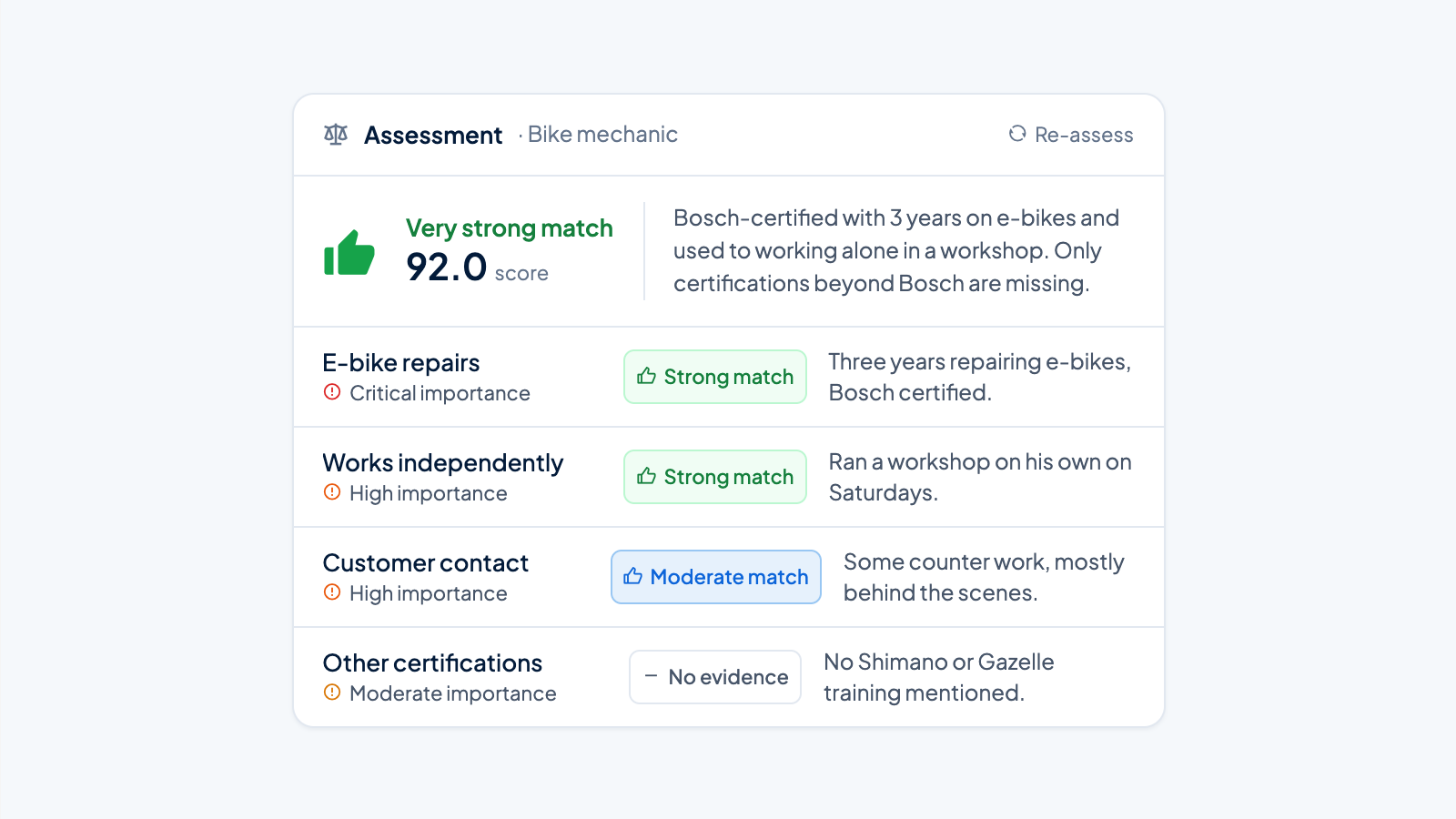
In the world of recruitment and selection, organizations are constantly looking for ways to optimize their recruitment process. One concept gaining increasing attention is the recruitment fingerprint. This innovative approach transforms how companies approach talent acquisition by creating a unique profile specific to each organization and role.
A recruitment fingerprint goes beyond traditional hiring methods by using data, technology, and structured profiles to find the perfect match between candidate and organization. Instead of relying on intuition and standard procedures, this method offers a scientific approach to recruitment strategies.
In this article, you'll discover what a recruitment fingerprint actually involves, why traditional methods often fall short, and how you can implement this innovative approach to dramatically improve your hiring results.
What exactly is a recruitment fingerprint?
A recruitment fingerprint is a unique, data-driven profile that captures all the essential characteristics of both the ideal candidate and the organizational culture and job requirements. Just as a biological fingerprint is unique to each person, a recruitment fingerprint is specific to each role within an organization.
This method combines various elements to create a complete candidate profile. It includes not only technical skills and experience but also personality traits, cultural fit, motivational drivers, and work style preferences. This holistic approach creates a much more accurate picture of what success means in a specific role.
The difference from traditional recruitment methods lies in the systematic and scientific approach. Where traditional hiring is often based on generic job descriptions and subjective assessments, a recruitment fingerprint uses concrete data and measurable criteria to support decisions.
Why traditional recruitment methods fall short
Traditional hiring faces several structural problems that cost organizations a lot of time and money. The biggest issue is the lack of objectivity in the selection process. Recruiters often base decisions on intuition and first impressions, leading to inconsistent results.
Many organizations experience the following challenges in their current recruitment process:
- High cost per hire due to inefficient screening
- Long lead times from vacancy to hire
- High turnover due to a poor candidate-organization match
- Missed opportunities due to a limited candidate pool
- Inconsistent quality of hires among different recruiters
These problems arise because traditional methods focus on what candidates have done rather than how they work and what motivates them. As a result, organizations often hire candidates who look perfect on paper but do not perform well in practice within the team or company culture.
The benefits of a recruitment fingerprint strategy
A well-developed recruitment fingerprint offers measurable benefits for organizations that want to improve their talent acquisition. The main gain lies in the increased precision of candidate selection, which directly translates into lower costs and better results.
Organizations that work with recruitment fingerprints report several concrete benefits. The quality of hires improves significantly because the selection criteria are based on proven success factors within the organization. This leads to employees who become productive faster and stay longer.
The efficiency gains are also substantial. By using clear profiles, recruiters can screen candidates faster and focus on the most promising matches. This reduces time spent on unqualified candidates and increases the speed of the entire process.
Cost savings occur on multiple levels. Less time per vacancy means lower recruitment costs, while better hires lead to less turnover and fewer repeated hiring processes. Many organizations see their cost per hire drop by 40 to 60 percent after implementing a structured recruitment fingerprint approach.
How to develop an effective recruitment fingerprint
Developing a recruitment fingerprint requires a systematic approach that starts with a thorough analysis of your current top performers. This data analysis phase forms the basis for all subsequent steps in the process.
Follow these steps to create your recruitment profile:
- Analyze your best employees by job category
- Identify common characteristics and success factors
- Translate these insights into measurable selection criteria
- Test and refine the criteria with new hires
- Implement feedback loops for continuous improvement
Profile development goes beyond just technical skills. Investigate which personality types perform best in specific roles within your organization. Look at motivational drivers, communication styles, and how people handle stress and change.
The criteria you define must be specific and measurable. Instead of vague terms like “team player” or “proactive,” define concrete behavioral indicators that can be assessed during the selection process. This makes the process more objective and reliable.
AI and technology in recruitment fingerprint systems
Modern HR technology plays a crucial role in automating and optimizing recruitment fingerprints. Artificial intelligence can recognize patterns in candidate data that are difficult for humans to detect, leading to more accurate predictions of job success.
AI systems can analyze large amounts of candidate information and assign scores based on the defined recruitment fingerprint. This includes not only resume analysis but also assessment results, interview responses, and even communication patterns during the application process.
Advanced platforms integrate various data sources to form a complete picture of each candidate. They can analyze social media profiles, automate reference checks, and even predict how well someone will perform in a specific team composition.
The benefits of technology-supported recruitment fingerprints are clear. Recruiters can process more candidates without losing quality, while decision consistency improves. In addition, systems can learn from each hire and continuously refine the fingerprint.
Implementation and measurable results in practice
Successful implementation of recruitment fingerprints requires careful planning and a phased rollout. Organizations that achieve the best results often start with pilot projects for specific roles before applying the concept more broadly.
Important KPIs for measuring success include time-to-hire, cost per hire, quality of hires, and retention rates. Many organizations see significant improvements in these metrics within six months of implementation.
In practice, recruitment fingerprints are especially effective for high-volume roles or critical positions where the cost of a bad hire is high. Organizations in sectors such as technology, sales, and customer service report the greatest benefits.
How Applyfin helps with recruitment fingerprint optimization
Our platform offers a complete solution for developing and implementing effective recruitment fingerprints. By combining advanced AI workflows with intelligent candidate assessment, organizations can make their hiring process up to three times more efficient.
The key benefits of our approach:
- Centralized platform that consolidates all candidate data
- AI-driven scoring based on your unique recruitment profiles
- Automated workflows that eliminate repetitive tasks
- Real-time analytics for continuous optimization of your recruitment strategy
Want to discover how a recruitment fingerprint can transform your hiring results? Contact us for a personal demonstration, or explore our advanced features to see how we can automate your recruitment process. Start optimizing your talent acquisition today by requesting a free consultation.