How do you keep candidates motivated during the application process?
Discover proven strategies for transparent communication and fast feedback that keep top candidates motivated during the application process.

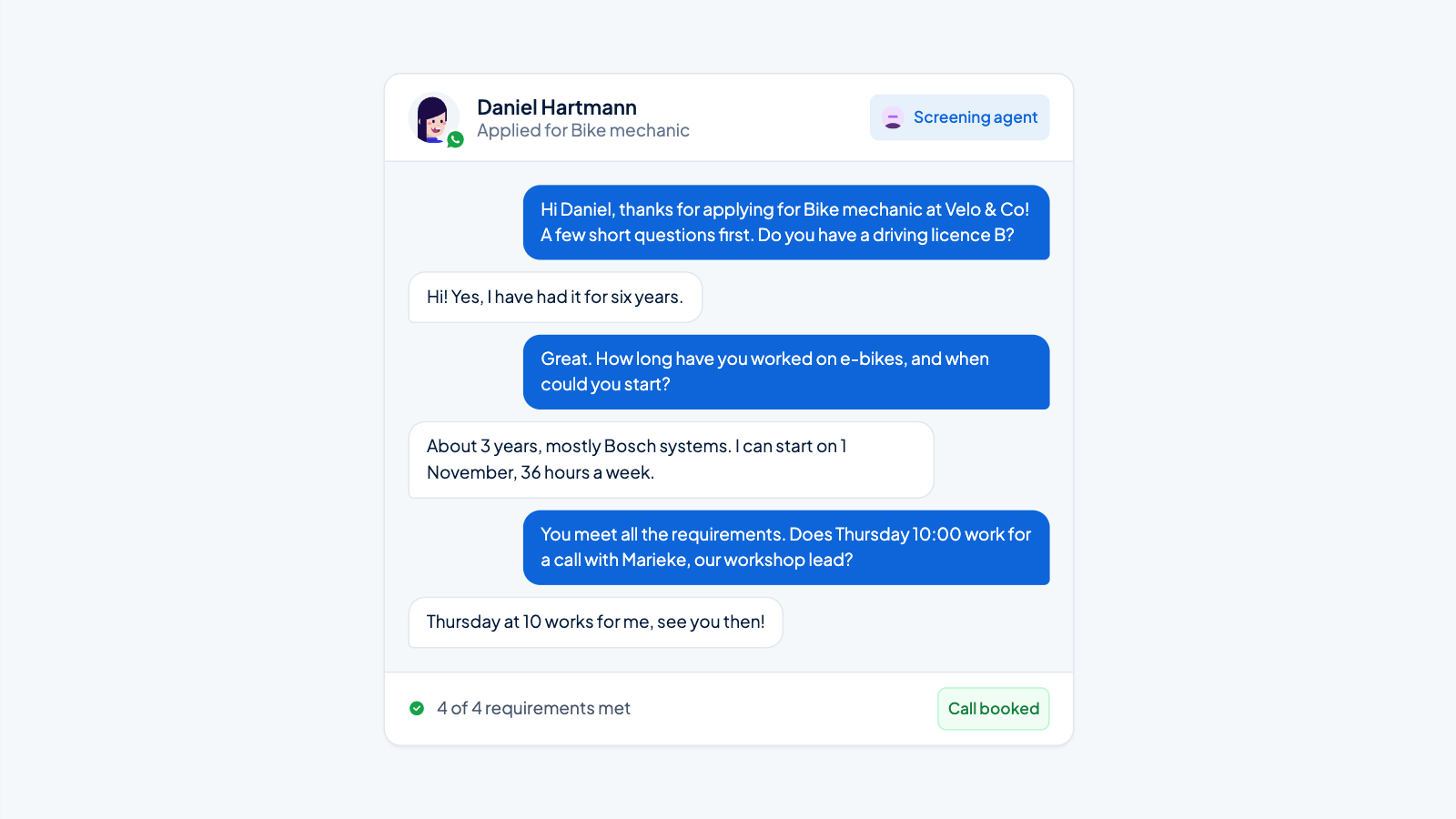
Keeping candidates motivated during the application process requires transparent communication, regular updates, and a structured process with clear timelines. Successful organizations combine fast feedback, personal attention, and efficient workflows to keep candidate engagement high throughout the entire recruitment process.
Long silences destroy your employer branding
When candidates hear nothing for weeks after applying, frustration builds and spreads quickly through online reviews and social media. These negative experiences cost you not only the current candidate, but also damage your reputation with future talent. Use automatic confirmations and set clear expectations about when candidates can expect updates.
Unclear processes drive top talent away
When candidates don't know how many steps remain or how long the process takes, the best professionals often choose employers with clear procedures. This uncertainty lets competitors snatch your favorite candidates while you're still deliberating. Communicate the full process from day one, including time estimates.
Why do candidates lose motivation during the application process?
Candidates lose motivation due to a lack of communication, unclear processes, long waits without updates, and the feeling that their time isn't valued. These factors create uncertainty and frustration.
The biggest problem arises when candidates end up in a communication vacuum. Without regular updates, they assume they've been rejected or that the company is disorganized. Top candidates usually have multiple options and choose employers who communicate professionally.
In addition, inconsistent processes cause confusion. When one candidate gets a response after two days and another after two weeks, it creates a negative candidate experience that damages your employer brand.
How long should an application process take?
An effective application process ideally takes 2–4 weeks from first contact to final answer. Longer processes increase the risk that good candidates drop out or accept other offers.
The optimal timeline depends on the role and organization, but candidates expect clarity about the schedule. For junior positions the process can be faster, while senior roles may take more time due to more extensive evaluations.
More important than the exact duration is transparency about the timeline. Communicate in advance how many steps there are, how long each stage takes, and when candidates can expect updates. This prevents uncertainty and keeps engagement high.
What is the difference between good and bad candidate communication?
Good candidate communication is proactive, personal, and informative, with clear next steps. Bad communication is reactive, generic, and leaves candidates guessing about the next steps or timelines.
Excellent communication is characterized by:
- Automatic confirmation within 24 hours of applying
- Clear explanation of the process and expected timelines
- Regular updates, even when there are delays
- Personal feedback on interviews or assignments
- Respectful rejections with concrete reasons
Bad communication, on the other hand, leaves candidates in uncertainty for weeks, uses standard rejection emails without explanation, and offers no insight into next steps. This type of communication leads to negative reviews and damages your employer brand.
How do you give useful feedback to candidates during the process?
Useful feedback is specific, constructive, and actionable. Focus on concrete observations about skills and behavior instead of vague remarks. Give feedback promptly, preferably within 48 hours after each interview.
Effective feedback contains three elements: what went well, what can be improved, and concrete suggestions for development. For example: “Your technical knowledge was impressive, especially your explanation of API integrations. For future interviews, it would help to give more concrete examples of team leadership.”
Constructive feedback is also valuable in rejections. It shows respect for the candidate's time and effort and helps them grow. Candidates who receive good feedback often remain positive about your organization and may apply again later or recommend others.
What updates do candidates expect during the application process?
Candidates expect confirmation of receipt, information about next steps, updates when there are delays, and clear communication about decisions. These updates should happen regularly and proactively, not only when the candidate asks.
Essential updates during the process:
- Confirmation of receipt within 24 hours
- Invitation to interviews with an agenda and practical information
- Feedback after each interview or assessment
- Updates when there are delays in the process
- Final decision with an explanation
Timing is crucial. Candidates understand that decisions take time, but they still want to know where they stand. A simple update like “We're still in discussions and expect a decision next week” prevents uncertainty and frustration.
How do you use technology to keep candidates engaged?
Recruitment technology keeps candidates engaged through automated updates, transparent process progress, and personalized communication. Modern platforms provide real-time insight into application status and create a consistent candidate experience.
Effective technology solutions include automated email sequences that inform candidates about every process step, portals where candidates can check their status, and chatbots for immediate questions. These tools ensure no one falls into a communication vacuum.
The key lies in personalization within automation. Technology should support human interaction, not replace it. Use data to send relevant updates and make sure candidates always have a human contact person for specific questions.
How do you measure whether candidates stay motivated during your process?
Measure candidate motivation through response rates to communication, feedback scores, time between invitation and response, and the percentage of candidates who complete the entire process. These metrics provide insight into the quality of your candidate experience.
Important indicators of candidate engagement:
- Percentage of candidates who attend interviews after being invited
- Average response time to emails and requests
- Feedback scores after interviews or assessments
- Number of candidates who leave the process early
- Net Promoter Score for your recruitment process
Actively ask for feedback during and after the process. Exit interviews with candidates who drop out provide valuable insights into bottlenecks. Use this data to continuously improve your process and optimize the candidate experience.
How Applyfin helps with candidate engagement
We automate the communication and follow-up that keeps candidates motivated throughout the entire application process. Our platform provides consistent updates, transparent process progress, and a personalized candidate experience without adding administrative burden for your team.
Key benefits for candidate engagement:
- Automatic confirmations and updates at crucial moments
- Transparent process progress that candidates can follow
- Integrated feedback workflows for fast communication
- Dashboards to monitor candidate satisfaction
- Personalized communication at scale
With our AI workflows, recruiters can effectively manage up to 3x more candidates while the candidate experience improves. This means faster processes, better communication, and higher acceptance rates. Discover how our recruitment features can improve your candidate engagement, explore our full platform capabilities, or contact us for a personal demo of our solutions.