How does AI select the best candidates?
Discover how AI uses machine learning to screen candidates and find the best matches for your job openings.

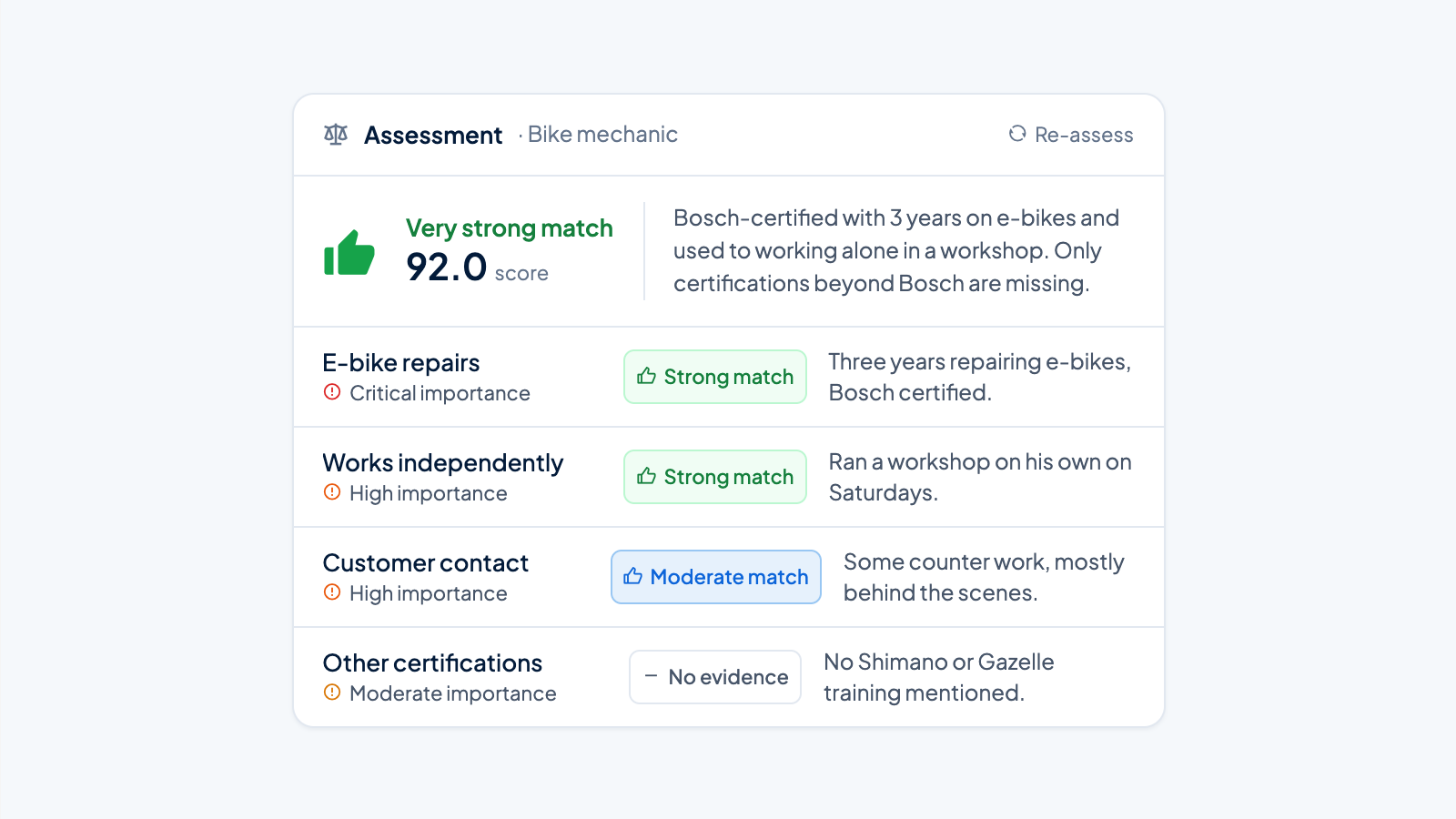
AI candidate selection uses machine learning algorithms and data analysis to identify the best candidates for specific roles. Artificial intelligence analyzes resumes, cover letters, and behavioral patterns to create objective matches between candidates and job requirements. This automated process significantly increases the efficiency of recruitment technology and improves the quality of candidate matching.
What is AI-driven candidate selection and how does it work?
AI-driven candidate selection is a recruitment technology that uses machine learning algorithms to automatically evaluate and rank candidates based on their suitability for specific roles. The system analyzes patterns in data to make predictions about candidate success.
The technology works by having various AI algorithms perform recruitment processes. Machine learning models are trained on historical hiring data to learn which traits characterize successful employees. These algorithms recognize patterns in resumes, skills, and experiences that correlate with strong performance.
The process starts with data-driven hiring, where the system analyzes job requirements and translates them into search parameters. The AI then scans thousands of candidate profiles within seconds and assesses them for relevance, experience, and potential cultural fit. This automated screening saves recruiters a significant amount of time.
What data does AI use to identify the best candidates?
AI systems analyze various data sources to form a complete picture of candidates. The primary data sources include resumes, cover letters, LinkedIn profiles, assessment results, and behavioral data from application processes. This information is combined into accurate candidate profiles.
The main data sources for smart hiring are:
- Structured resume data, such as education, work experience, and skills
- Unstructured text from cover letters and personal statements
- Social media profiles and professional networks
- Assessment scores and test results
- Behavioral patterns during online applications
The system uses natural language processing to analyze text and sentiment analysis to determine motivation and attitude. HR automation tools automatically extract relevant information and normalize it for comparison between candidates. This approach ensures a consistent evaluation based on objective criteria.
How does AI assess candidate suitability for specific roles?
AI assesses candidate suitability using a matching algorithm that analyzes competencies, experience, and cultural fit. The system compares candidate profiles with ideal job profiles and generates compatibility scores. Predictive models estimate the likelihood of success in the specific role.
The matching process consists of several evaluation layers. The AI analyzes technical skills by identifying keywords and certifications. Soft skills are inferred from language use and descriptions of past achievements. The system also assesses career trajectories to evaluate growth and stability.
Cultural fit is determined by inferring values and work styles from candidates' communication. The AI compares these with indicators of the company culture. Artificial intelligence recruitment also uses predictive models based on successful employees in similar roles to estimate future performance.
What are the benefits of AI selection compared to traditional methods?
AI selection offers significant advantages over manual processes, including higher speed, greater objectivity, and better cost efficiency. Automated screening processes hundreds of candidates in the time a recruiter needs for ten manual reviews. This results in a shorter time-to-hire.
The main benefits of AI hiring are:
- Objectivity – Reduction of unconscious bias in the initial screening
- Scalability – Processing large volumes of candidates without quality loss
- Consistency – Uniform evaluation criteria for all candidates
- Cost reduction – Lower recruitment costs through more efficient processes
- Speed – Drastic reduction in screening time
Traditional methods are time-consuming and susceptible to human bias. AI systems work 24/7 and can identify patterns that people might miss. The technology also improves the candidate experience through faster feedback and more transparent processes.
What challenges and limitations does AI have in candidate selection?
AI candidate selection has significant challenges, including potential algorithmic bias, privacy issues, and the lack of human intuition. Algorithms can unintentionally discriminate if training data contains historical biases. Continuous monitoring and adjustment are essential for fair selection.
The main limitations include the risk of bias amplification when AI learns from historical hiring data that contains discriminatory patterns. Privacy regulations like the GDPR impose strict requirements on data collection and processing. Candidates have the right to transparency about how their data is used.
Human factors remain crucial for successful hiring. AI lacks emotional intelligence and cannot assess subtle interpersonal dynamics. Data-driven hiring must therefore be combined with human expertise. The system also requires regular calibration to remain effective as job requirements change.
How can companies successfully implement AI in their hiring process?
Successful AI implementation requires a phased approach with careful tool selection, team training, and gradual integration with existing systems. Start with clear objectives and choose platforms that align with specific recruitment needs. Ensure adequate change management and user adoption.
The implementation steps include defining use cases where AI adds the most value, such as volume recruitment or technical roles. Evaluate different platforms on functionality, integration capabilities, and compliance with privacy legislation. Train HR teams in using AI tools and interpreting results.
Integration with existing applicant tracking systems is crucial for seamless workflows. Establish clear KPIs to measure AI effectiveness and continuously optimize based on results. Regularly monitor AI performance and adjust algorithms when necessary. Ensure transparency with candidates about the use of AI in selection processes. Always combine AI insights with human judgment for optimal results.
How Applyfin helps with AI candidate selection
Applyfin offers a complete solution for organizations looking to automate their recruitment processes with advanced AI technology. Our platform combines the power of machine learning with user-friendly interfaces to make recruitment more efficient and effective.
Our AI-driven recruitment solution offers:
- Intelligent candidate matching – Automatic analysis and ranking of candidates based on job requirements
- Seamless integration – Easy connection with existing HR systems and workflows
- Bias-free selection – Algorithms that guarantee objective evaluations without discrimination
- Real-time analytics – Comprehensive reports and insights for continuous optimization
- Compliance-ready – Fully GDPR-compliant with transparent data processing
Discover how Applyfin can transform your recruitment processes and contact us today for a personal demonstration of our AI candidate selection solutions.