How can you screen candidates faster with an ATS?
An ATS speeds up candidate screening by automatically analyzing, filtering, and ranking resumes based on relevance. Where manually screening a hundred resumes takes hours, modern recruitment software makes an initial selection within minutes using objective criteria. Through bulk actions, intelligent matching, and automated communication, recruiters save significant time on administrative tasks. This leaves more room for quality conversations with the most promising applicants, while you efficiently manage larger candidate flows without compromising selection quality.

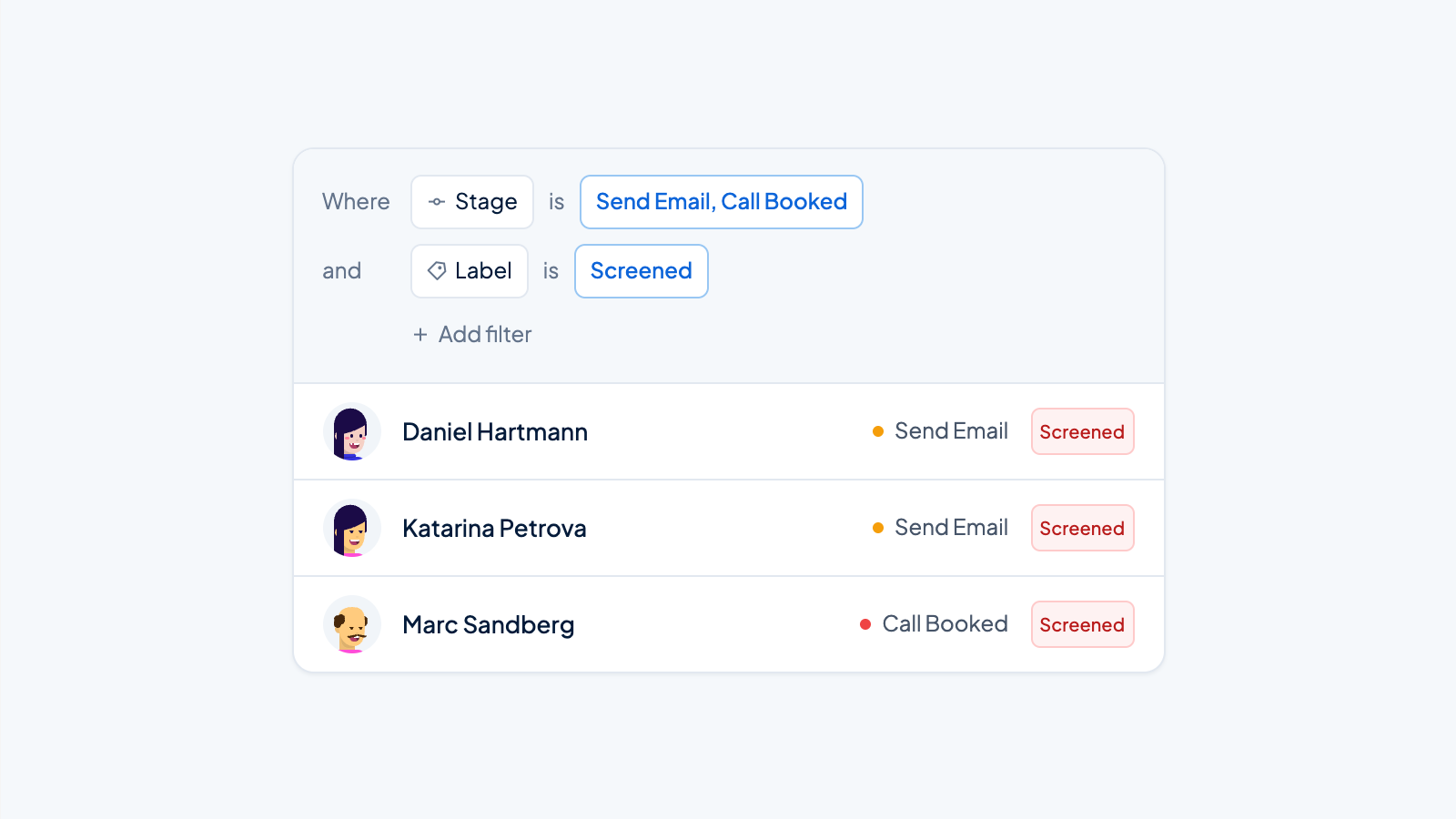
An ATS (Applicant Tracking System) speeds up candidate screening by centralizing the recruitment process and automating repetitive tasks. Instead of manually sorting resumes and evaluating candidates, the system automatically filters and ranks applicants based on predefined criteria. Recruitment software makes it possible to manage larger numbers of candidates more efficiently while recruiters can focus on the most promising applicants.
An ATS speeds up the screening process by automatically filtering and ranking candidates.
What is an ATS and why does it speed up candidate screening?
An ATS is recruitment software that centralizes the entire recruitment process, from job posting management to candidate selection. The system collects all applications in one environment, regardless of whether candidates apply via a job board, email, or other channels. This centralized approach eliminates time-consuming tasks such as manually searching inboxes or organizing resumes in different folders.
What sets an ATS apart from traditional methods is its ability to create structured data from unstructured information. When a candidate applies, the system automatically reads the resume and extracts relevant data such as work experience, education, and skills. This information becomes immediately usable for filtering and comparison.
For recruiters dealing with high application volumes, this means a significant acceleration. Where manually screening a hundred resumes can take hours, modern ATS recruitment can make an initial selection based on objective criteria within minutes. The system also tracks all communication and actions, so hiring teams always have visibility into where each candidate is in the process.
How does an ATS automate the screening process?
An ATS automates screening by automatically analyzing resumes and scoring candidates on relevance. The system recognizes keywords, competencies, and years of experience that match the job requirements. Candidates who meet the most important criteria are automatically ranked higher, while less suitable profiles move down the list.
Automation starts as soon as applications are received. Modern recruitment software parses incoming resumes and automatically populates candidate profiles with structured data. This means recruiters no longer have to manually retype information or organize documents.
AI-driven workflows then take over routine tasks:
- Sending acknowledgment emails
- Scheduling initial screening interviews with available candidates
- Automatically moving applicants to the next stage when they meet certain qualifications
- Consolidating candidate information from different sources (resumes, emails, WhatsApp messages) into one profile
Pipeline management is also automated. The system visualizes where each candidate is in the recruitment process and automatically sends reminders to recruiters when action is required. This prevents promising candidates from falling through the cracks due to busy schedules or forgetfulness.
Which screening features make the difference in speed?
The speed gains from an ATS come mainly from bulk actions and intelligent filtering. Instead of evaluating candidates one by one, you can reject, forward, or label dozens of applicants at once with a few clicks. Automated filter options let you search directly for specific criteria such as years of experience, education level, or availability.
Intelligent candidate matching makes the difference for recruiters who manage multiple job openings. The system recognizes when a candidate applying for position A is actually a better fit for position B, and automatically suggests that match. This saves time that would otherwise be lost by re-screening the same candidate pool for different roles.
Integration with job boards and advertising platforms ensures that job postings are automatically distributed and incoming applications appear directly in the system. For example, we generate branded landing pages for job openings and automate distribution to advertising platforms, so recruiters don't have to manually copy and paste job descriptions across different sites.
Centralized communication tools make rapid response possible. Instead of switching between email, phone, and messaging apps, recruiters can send messages directly from the ATS, schedule interviews, and set up follow-ups. All communication history remains linked to the candidate profile, so team members have immediate context without lengthy briefings.
What are the biggest time savings when screening with an ATS?
The biggest time savings when using an ATS are:
- Eliminating manual resume review – The system presents a pre-sorted list with the most relevant candidates at the top, filtered by must-have criteria
- Automating administrative tasks – Scheduling interviews, sending emails, updating statuses, and generating reports happens largely automatically
- Faster candidate communication – Automated updates keep applicants informed, so recruiters spend less time answering status questions
- Improved team collaboration – Hiring managers can provide feedback directly in the system, making endless email threads and meetings unnecessary
This gives recruiters more room for valuable work such as having quality conversations and building relationships with talent. Candidates appreciate the quick response, which contributes to a positive employer image.
How do you ensure faster screening doesn't come at the expense of quality?
Maintaining quality during faster screening starts with carefully setting qualification criteria. It's important to distinguish between must-have requirements and nice-to-have attributes. Overly strict automatic filtering can exclude good candidates who fall just outside the parameters, while overly loose criteria cancel out the time savings by producing too many false positives.
The balance between automation and human judgment is crucial. An ATS should take over repetitive tasks, but important decisions remain with the recruiter. Use automation for the initial screening on objective criteria such as years of experience or required certifications, but let human recruiters make the final assessment of cultural fit, motivation, and potential.
Awareness of potential bias in automated screening helps ensure fair processes. Although AI systems can be more objective than people, they can also reinforce existing biases if they are trained on historical data. Regularly check which candidates do and do not pass the automatic filters, and adjust criteria if certain groups are systematically excluded without a valid reason.
Building checkpoints into the process ensures that speed does not lead to hasty decisions. Even with automated screening, it's wise to include at least two human evaluation moments before a candidate is rejected or made an offer. This can be a short review of the automatically generated shortlist, followed by a more in-depth conversation with the best candidates.
By using recruitment software intelligently, teams can manage more candidates without compromising on the quality of selection. The art is to use automation for speed in routine tasks, while human expertise is deployed where nuance and judgment make the difference.
Want to experience for yourself how a modern ATS can speed up your screening process? Check out Applyfin's features and discover how AI-driven workflows and intelligent matching make your recruitment more efficient. With automated candidate selection and centralized communication, you'll spend less time on administration and more on finding the right talent. Contact us for a personal demo or start directly with Applyfin to take your recruitment process to the next level. This creates a screening process that is both efficient and effective.