How does job ad campaign tracking work?
Job ad campaign tracking systematically measures where applicants come from and how they move through your recruitment process. With tracking codes, you gain insight into which channels deliver the best candidates, so you can use your recruitment budget more effectively. Modern platforms automate this process and collect all data centrally, allowing you to optimize quickly without manual administration. Learn which metrics are essential and how to use tracking data to shorten your time-to-hire and lower hiring costs.

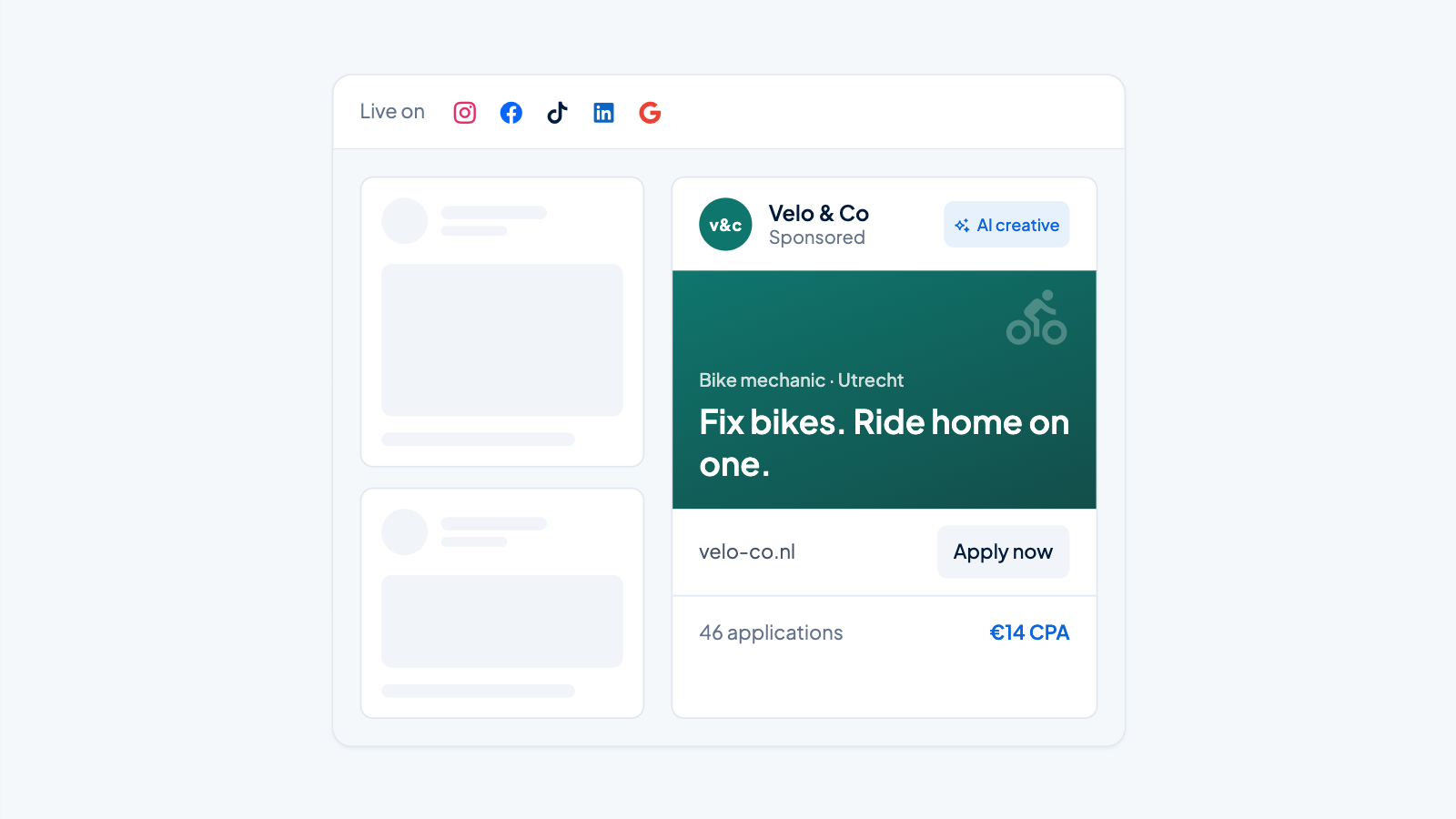
Job campaign tracking is the systematic measurement of your recruitment campaigns’ performance by recording where applicants come from and how they move through your hiring process. By using tracking codes and parameters, you gain insight into which channels deliver the most and the best candidates. This lets you allocate your recruitment budget more effectively and make data-driven decisions that shorten your time-to-hire.
What is job campaign tracking and why is it important?
Job campaign tracking is the process of measuring and analyzing which recruitment channels and campaigns deliver the best results. It’s about collecting data on where applicants find your job posting, how they respond, and which channels ultimately lead to successful hires. This information is gathered centrally in modern HR systems.
For recruiters, effective tracking means the difference between guessing and knowing. Without tracking, you might invest heavily in job boards that barely produce suitable candidates, while cheaper channels go unnoticed. With proper tracking, you immediately see which channels attract the best candidates and where your budget works hardest.
The impact on your recruitment efficiency is significant. By knowing which channels perform, you can strategically redistribute your budget and shorten your time-to-hire. Modern recruitment platforms automate this process and bring all data together in one overview, so you can pivot and optimize quickly without manual administration.
How does job campaign tracking work in practice?
The tracking process starts when you create your job posting and generate unique links for each channel where you advertise. These links contain tracking parameters (such as UTM codes) that register when someone clicks on them. Once a candidate applies, this information is linked to the applicant profile in your applicant tracking system.
The technical workflow looks like this: you post a job on LinkedIn, Indeed, and your own career site, each with a unique tracking link. When candidates apply, the system automatically records the source. All data is collected and aggregated, so you can see per channel how many views, clicks, and applications you received.
Modern recruitment platforms automate this entire process. Instead of manually generating links and collecting data from different systems, everything happens centrally. The software automatically generates tracking links, collects all candidate data in one profile, and presents the results in clear dashboards. This saves recruiters a huge amount of time and prevents errors in data collection.
Which metrics should you track for job campaigns?
To steer your recruitment campaigns effectively, you need insight into specific performance indicators that help you understand what works and what doesn’t. These metrics give you a complete picture of your hiring performance and help you focus your budget and efforts better.
The most important metrics to track are:
- Number of applicants per channel – shows which sources generate the most volume and where your reach is greatest
- Cost-per-applicant – calculates how much each application costs you per channel, essential for budget optimization
- Application completion rate – measures how many visitors actually finish their application, signaling problems in your process
- Source quality metrics – analyzes which channels deliver candidates who progress further in your funnel
- Time-to-hire per source – shows which channels lead to hires faster
- Conversion rates through the funnel – shows where candidates drop off and which sources have the highest success rate
These metrics are crucial because they help you distinguish between volume and quality. A channel with many applicants but low conversion can be more expensive than a channel with less volume but better matches. By combining this data, you make smarter decisions about where to invest.
What are the biggest challenges in tracking recruitment campaigns?
Implementing effective campaign tracking comes with several obstacles that can affect data quality and usability. Many recruiters struggle with fragmented systems and incomplete data, making it difficult to draw reliable conclusions.
A common problem is that data is scattered across multiple platforms. Your job board statistics are in one system, your website analytics in another, and your applicant data somewhere else. Manually merging this data takes a lot of time and leads to errors. Moreover, candidates often use multiple touchpoints before applying, which makes attribution complex.
The lack of integration between job boards and ATS systems worsens this problem. Not all job boards share full tracking data, and many legacy systems don’t offer modern tracking capabilities. Additionally, there’s the challenge of measuring quality alongside quantity. A channel with many applicants seems successful, but if no one is suitable, you waste time on screening. AI in recruitment processes can help here by automatically qualifying candidates, but only if your tracking is set up properly. These challenges make it difficult to optimize quickly and maximize your recruitment ROI.
How do you improve the results of your job campaigns with tracking data?
By using your tracking data strategically, you transform recruitment from a cost center into a predictable, efficient process. The key lies in systematically analyzing your data and, based on that, implementing concrete optimizations that measurably improve your results.
Follow these optimization strategies for better campaign results:
- Analyze channel performance and redistribute budget – identify your best-performing channels based on cost-per-hire and quality, and shift budget from underperformers to top channels
- Eliminate underperforming job boards – stop investing in channels that consistently deliver poor results and test new alternatives
- Refine targeting based on quality metrics – use data on which target groups and locations produce the best candidates to sharpen your targeting
- A/B test job descriptions and creatives – experiment with different approaches and measure which versions generate higher conversion rates
- Optimize your application process based on drop-off data – identify where candidates drop off and simplify those steps to get more completions
- Implement continuous improvement cycles – make weekly or monthly reviews of your data standard to keep optimizing consistently
Modern platforms make this optimization significantly easier by collecting all data centrally and using AI in recruitment tasks. At our features you can see how automated tracking and AI-driven qualification work together to make your recruitment faster and cheaper. By automating AI recruitment tasks, you as a recruiter can manage up to three times more applicants while keeping your focus on the highest-quality candidates.
The beauty of data-driven recruitment is that improvements reinforce each other. Better tracking leads to smarter budget allocation, which yields better candidates, which in turn shortens your time-to-hire. By using our platform, you automate this entire process and get real-time insight into what works. Want to see how this can work for your organization? Contact us for a personal demo where we show how AI transforms recruitment processes and can lower your hiring costs by up to 60%.