How do you organize applications from different channels?
Centralize applications from LinkedIn, Indeed, and other channels with modern recruitment software for more efficient candidate selection.

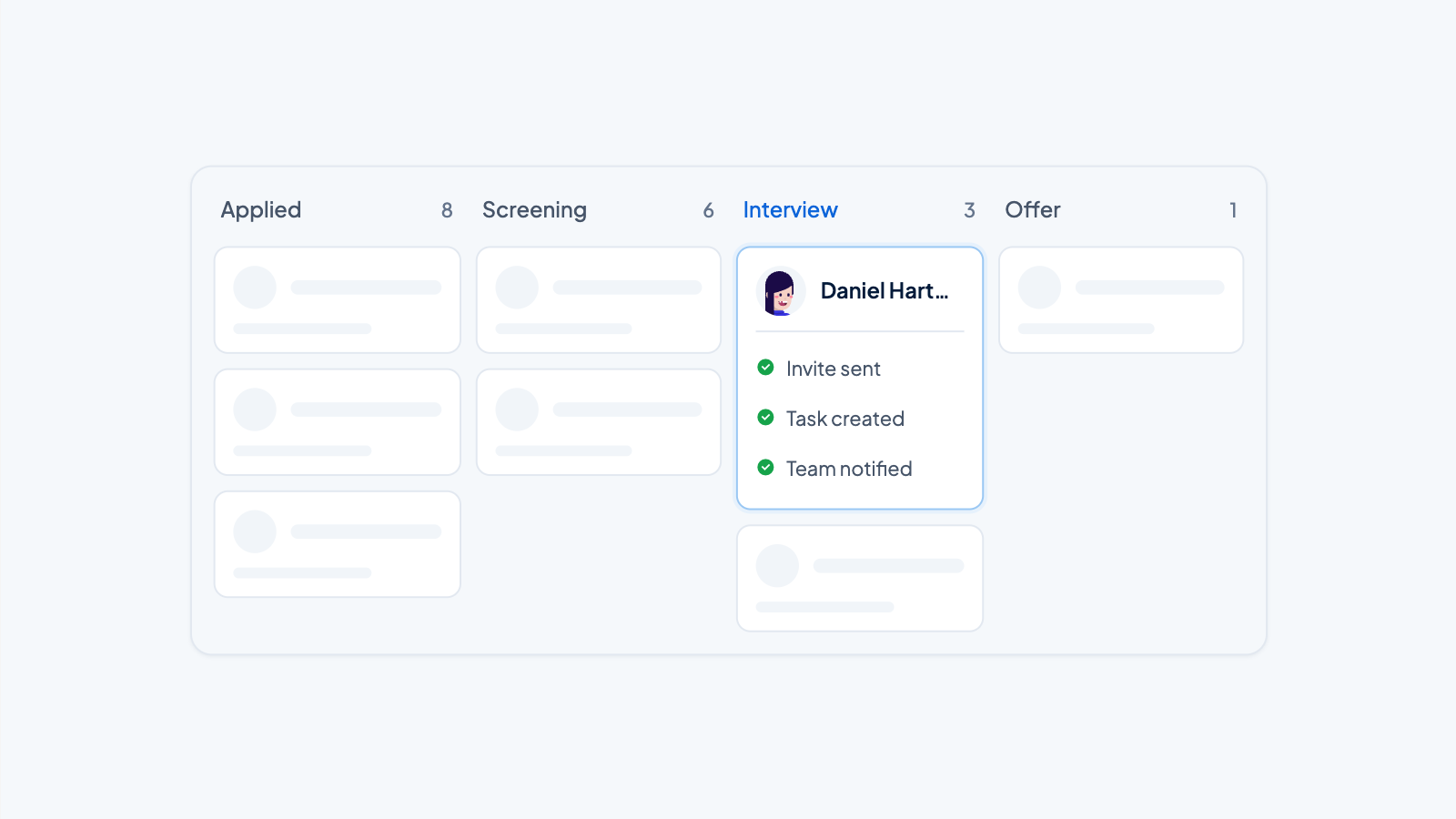
Organizing applications from different channels requires a centralized system that brings all candidate data together. Modern recruitment software automates this process through integrations with job boards, social media, and company websites. This creates a single, clear database where recruiters can efficiently manage, screen, and track candidates throughout the entire hiring process.
Why is organizing applications from different channels so challenging?
Modern recruiting brings fragmented data, because applications come in via LinkedIn, Indeed, company websites, recruitment agencies, and referrals. Each source has its own formats and systems, causing candidate information to be scattered across multiple platforms.
This fragmentation leads to several problems for HR teams. Recruiters waste time switching between different systems and miss potentially suitable candidates because information isn’t centrally available. In addition, inefficient workflows arise where the same tasks are performed multiple times.
The complexity increases as organizations use more recruitment channels. Without a structured approach, tracking candidate progress, communication, and evaluations becomes an administrative burden that takes focus away from actual candidate selection.
Which channels generate the most applications for companies?
LinkedIn and Indeed dominate as the largest sources of applications for most organizations. LinkedIn is especially effective for professional roles, management positions, and specialist roles. Indeed attracts a broader audience and generates volume for operational and administrative positions.
The company website remains an important source, especially for candidates with a specific interest in the organization. These applications are often of higher quality because candidates deliberately choose the company.
Other relevant channels include:
- Glassdoor for candidates who value transparency
- Facebook and Instagram for younger target groups
- Industry-specific job boards for specialized positions
- Personal networks and referrals for trust-based roles
The effectiveness of each channel varies by sector and job level. Technical roles perform better on LinkedIn, while retail and hospitality have more success through social media and general job boards.
How do you centralize all applications in one clear system?
An applicant tracking system (ATS) forms the basis for centralization by collecting all candidate data in one database. Modern recruitment software offers automatic integrations with major job boards and social media platforms.
Implementation follows these steps:
- Choose recruitment software with native integrations for your most important channels
- Configure automatic resume import and parsing for structured data
- Set up uniform candidate profiles with standard information fields
- Create workflows for automatic assignment and follow-up
- Train the team on the new centralized system
Automatic import eliminates manual copying of candidate data between systems. Resume parsing technology extracts relevant information and places it in standardized profile fields, so all candidates are presented comparably, regardless of the original source.
What are the best practices for categorizing applications?
Effective categorization starts with consistent labels and tags based on role, experience level, source channel, and key qualifications. This enables quick filtering and searches for targeted candidate selection.
Practical categorization strategies include:
- Role-specific tags for different departments and roles
- Experience levels such as junior, mid-level, and senior
- Channel tagging for source analysis and optimization
- Status labels for tracking the recruitment process
- Qualification indicators for quick suitability assessment
Advanced filter systems allow recruiters to find relevant candidates within seconds based on multiple criteria simultaneously. Search functions with Boolean operators enable complex queries for highly specific profiles.
Automatic categorization based on resume content and channel source saves manual time and ensures consistent labeling across the entire team.
How do you automate the initial screening of applications from different sources?
AI-driven screening evaluates candidates consistently, regardless of the original channel, by applying standardized criteria. Automatic resume parsing extracts relevant information, while keyword matching compares job requirements with candidate profiles.
Modern screening automation includes several components. Resume parsing technology recognizes education, work experience, and skills from various document formats. Keyword matching algorithms assess the match between job requirements and candidate profiles based on relevant terms and concepts.
Pre-screening questionnaires can be automatically sent to new applicants, with answers directly linked to the candidate profile. This provides additional information not always listed in resumes.
Scoring systems give each candidate an objective assessment based on preset criteria. This helps recruiters prioritize and focus on the most promising profiles, regardless of the channel through which the application came in.
Which metrics should you track to optimize your recruitment channels?
Key performance indicators per channel include conversion rates, time-to-hire, cost-per-hire, and candidate quality scores. These metrics show which sources deliver the best return on investment and where optimization is needed.
Essential KPIs for channel optimization:
- Conversion rate from application to interview per channel
- Average time-to-hire for different sources
- Cost-per-hire, including platform costs and time investment
- Candidate quality scores based on post-hire performance
- Employee retention rates per recruitment channel
Regular analysis of these metrics reveals trends and patterns in channel effectiveness. Some sources may deliver more volume but lower quality, while other channels provide fewer candidates but better matches.
Dashboard reports enable real-time monitoring of all recruitment metrics. This allows teams to quickly adjust when certain channels underperform or to shift budget to better-performing sources.
How Applyfin helps organize applications from different channels
Applyfin offers a complete solution for centralizing and automating your recruitment from all channels. Our platform integrates seamlessly with major job boards and social media platforms, so all applications automatically come together in one clear database.
Concrete benefits of Applyfin:
- Automatic import of applications from 50+ channels
- AI-driven resume parsing and candidate screening
- Real-time dashboards with all key recruitment metrics
- Automated workflows for efficient candidate communication
- Advanced search and filter functions for quick candidate selection
Teams ready to professionalize their recruitment can contact us for a personal demonstration of our recruitment automation solutions.