How does AI predict candidate suitability?
AI analyzes resumes and predicts candidate suitability with 70–85% accuracy. Discover how machine learning is transforming recruitment.

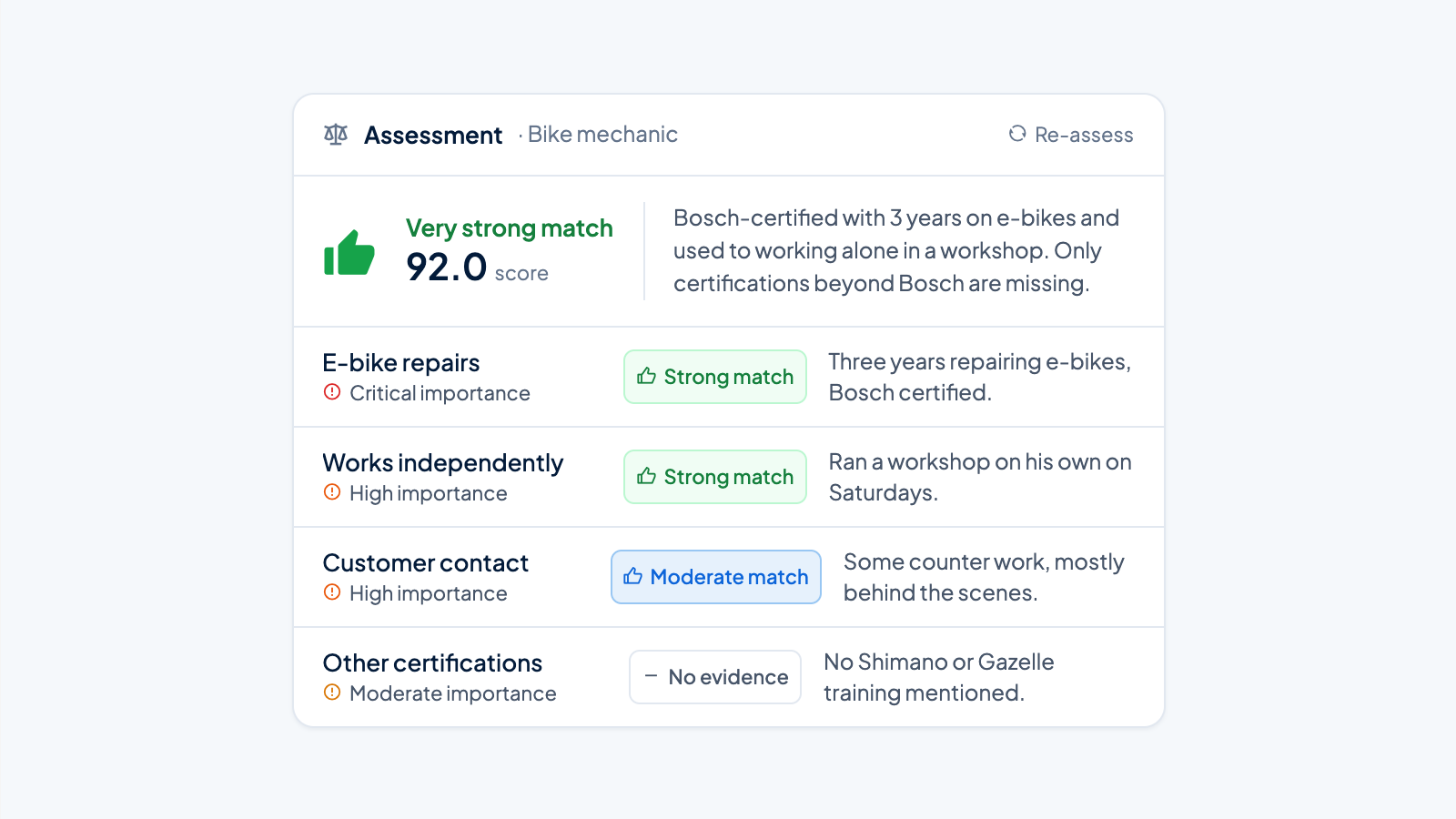
AI candidate suitability prediction uses machine learning algorithms to analyze the potential fit of applicants for specific roles. This technology processes CVs, assessments, and other candidate data to make objective predictions about job performance. AI-powered recruiting helps recruiters select more efficiently by recognizing patterns that human judgment may miss.
What is AI-driven candidate suitability prediction?
AI-driven candidate suitability prediction is a method for predictive recruitment analytics in which algorithms use historical data and candidate information to calculate the likelihood of success in a given role. The system learns from previous successful hires and identifies patterns in skills, experience, and behavioral traits.
The technology combines various machine learning techniques, such as natural language processing for CV analysis and predictive modeling for suitability scores. This HR technology automates the initial screening process and helps recruiters make more objective decisions.
Modern AI recruitment systems can assess thousands of applications in seconds against relevant criteria. They analyze not only hard skills but also soft competencies by evaluating language use and response patterns.
How does AI analyze candidate data?
AI systems process candidate data through structured data extraction from various sources, such as CVs, cover letters, online profiles, and assessment results. Natural language processing algorithms convert unstructured text into analyzable data points that can be compared with job requirements.
The analysis process begins with text recognition and semantic analysis to identify relevant information. These data points are then weighted against historical performance indicators of successful employees in similar roles.
Advanced systems also use sentiment analysis to measure motivation and enthusiasm based on written communication. This recruitment automation technology can recognize patterns in word choice, sentence structure, and content focus that correlate with job performance.
Which factors does AI use to predict candidate suitability?
AI selection systems evaluate a broad spectrum of factors to make accurate predictions. These data points are combined into a holistic suitability score that helps recruiters in their decision-making.
The main evaluation factors are:
- Technical skills and certifications relevant to the role
- Work experience in similar roles and sectors
- Educational background and performance
- Career progression and stability in previous positions
- Communication skills, analyzed based on written material
In addition, modern systems analyze behavioral patterns such as responsiveness, attention to detail in application materials, and consistency across different information channels. Together, these factors form a predictive model for potential job performance.
What are the benefits of AI prediction in recruitment?
AI prediction in recruitment offers significant time savings and increases the objectivity of the selection process. Recruiters can focus on in-depth conversations with shortlisted candidates instead of manual CV screening.
The main benefits are:
- Drastic reduction in screening time, from hours to minutes
- More objective assessment with fewer unconscious biases
- Better match between candidate competencies and job requirements
- Consistent evaluation criteria for all applicants
- Improved candidate experience through faster feedback
Organizations also experience cost savings through more efficient processes and lower turnover thanks to better matches. The technology enables recruiters to process more candidates without sacrificing quality in selection.
How reliable are AI predictions for candidate suitability?
The reliability of AI candidate suitability predictions depends on the quality of the training data, the degree of algorithmic refinement, and regular calibration. Well-configured systems achieve prediction accuracy of 70–85%, significantly better than traditional screening methods.
Factors that influence reliability include the size of historical datasets, the diversity of training data, and regular updates to algorithms. Systems perform better as they collect more relevant data about successful hires.
Organizations can measure effectiveness by comparing predictions with actual performance after hiring. Key metrics include retention rates, performance reviews, and promotion rates of AI-selected candidates.
For optimal results, AI insights should be combined with human expertise in the final decision. This hybrid approach maximizes the benefits of both methods while minimizing their limitations.
How Applyfin helps with AI candidate suitability prediction
Applyfin offers a complete solution for organizations that want to transform their recruitment with advanced AI technology. Our platform seamlessly integrates AI candidate suitability prediction into your existing hiring processes and delivers concrete benefits:
- Intelligent candidate screening: Automatic analysis of CVs and profiles with 85% accuracy
- Predictive analytics: Data-driven insights for better matching between candidates and roles
- Integrated dashboard: Clear reports and real-time tracking of recruitment results
- Bias reduction: Objective evaluation criteria that minimize unconscious bias
- Time savings: Up to 70% faster screening processes without loss of quality
Ready to revolutionize your recruitment with AI? Schedule a personal demo and discover how Applyfin can improve your hiring efficiency.