How to use data for better hiring decisions
Discover how recruitment analytics prevents costly hiring mistakes and dramatically improves your ROI.

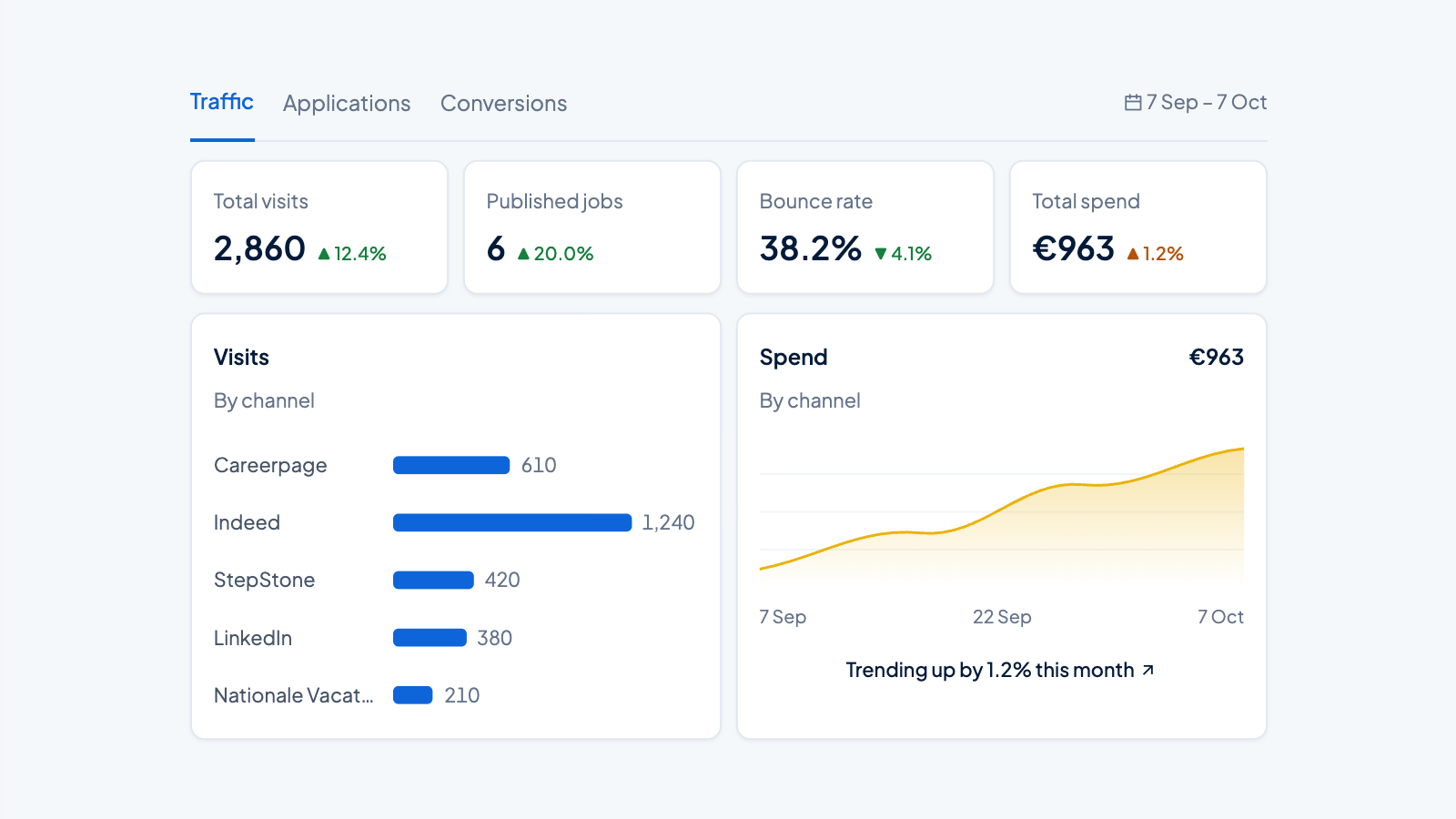
Making hiring decisions based on gut feeling and first impressions is still the norm at many companies. While technology is making huge leaps, many recruiters cling to traditional methods that lead to costly mistakes and missed opportunities for top talent.
Data-driven recruitment changes this completely. By smartly leveraging recruitment analytics and HR data, companies can transform their hiring process from guesswork into a strategic, measurable approach. This article shows how you can use recruitment intelligence to find better candidates, make faster decisions, and ultimately dramatically improve your hiring ROI.
We cover why traditional methods fail, which recruitment metrics really matter, and how to set up a data-driven hiring process step by step that delivers results.
Why traditional hiring decisions often fail
Traditional recruitment methods lead to a high failure rate because they are based on subjective impressions rather than objective data. Research shows that intuitive hiring decisions lead to wrong choices within the first year in 70% of cases.
The biggest pitfalls in traditional recruitment are:
- Confirmation bias, where recruiters unconsciously seek information that confirms their first impression
- Lack of consistency in assessment criteria between different candidates
- Excessive focus on resume data without context of actual performance
- Emotional decisions based on personal liking
The financial impact of bad hires is enormous. A poor hire costs on average 2.5 times the annual salary of the position due to lost productivity, rehiring, and training replacements. For a €50,000 position, this means €125,000 in hidden costs.
In addition, traditional methods lead to longer time-to-fill, higher turnover, and a worse candidate experience. Companies that stick to old methods systematically miss out on the best candidates to competitors that do apply data-driven recruitment.
Which recruitment data you should collect and why
Effective recruitment analytics starts with collecting the right metrics. Not all data is equally valuable, so focus on recruitment KPIs that directly contribute to better hiring decisions.
The essential recruitment metrics are:
- Time-to-hire: Measure the time from job posting to acceptance to identify bottlenecks
- Cost-per-hire: Total recruitment costs divided by the number of hires, for budget optimization
- Quality of hire: Performance of new employees after 6 and 12 months
- Source effectiveness: Which channels deliver the best candidates
- Candidate experience score: Feedback from candidates about the recruitment process
- Retention rate: Percentage of new employees still employed after one year
This HR data provides insight into where your recruitment process is successful and where improvement is needed. Time-to-hire, for example, helps optimize your process, while source effectiveness shows where your recruitment budget is best spent.
Quality of hire is perhaps the most important metric, because it measures the actual value of your hiring decisions. By tracking the performance of new employees, you can discover patterns in what successful candidates have in common.
How to set up recruitment analytics in 5 steps
Implementing data analysis in recruitment requires a systematic approach. These five steps help you move from intuitive to data-driven recruitment:
- Determine your baseline metrics: Measure your current performance in terms of time-to-hire, cost-per-hire, and quality of hire to have a starting point
- Choose the right tools: Invest in a recruitment platform that automatically collects data and generates reports
- Set up tracking mechanisms: Ensure every step in your recruitment process is recorded, from first contact to onboarding
- Create dashboards: Build clear reports that provide real-time insight into your recruitment KPIs
- Train your team: Teach recruiters how to interpret data and use it for better decisions
Start small with a few core metrics and expand gradually. It's better to have reliable data on three metrics than incomplete information on ten different points.
Make sure your systems communicate with each other. Isolated data in different tools does not give a complete picture of your recruitment intelligence. Integration is essential for effective analysis.
Data-driven screening and candidate assessment techniques
Modern candidate assessment goes far beyond evaluating resumes. By smartly leveraging data and technology, you can predict much more accurately which candidates will be successful in your organization.
Effective data-driven screening techniques include:
- Structured interviews with standardized questions and scoring criteria
- Skills assessments that measure actual skills rather than claims
- Behavioral data analysis based on past work performance and results
- AI-powered screening tools that recognize patterns in successful employees
The advantage of this approach is that it reduces bias and increases consistency. Every candidate is assessed on the same criteria, leading to fairer and more accurate decisions.
Predictive analytics can help predict which candidates are likely to stay long and perform well. By analyzing historical data of successful employees, you can identify patterns that are difficult to see with traditional assessment.
From data to action: making better hiring decisions
Collecting recruitment data is just the beginning. The real value emerges when you use this information to make better hiring decisions and continuously improve your recruitment process.
Practical steps to turn data into action:
- Analyze trends in your recruitment metrics to identify patterns
- Compare performance of different recruitment channels and shift budget to the most effective ones
- Use quality-of-hire data to refine your selection criteria
- Monitor candidate experience scores and improve bottlenecks in your process
For example, if your data shows that candidates from certain platforms perform better and stay longer, you can shift your recruitment budget there. Or if your time-to-hire is too long for certain roles, you can optimize specific steps in the process.
The most important thing is to evaluate and adjust regularly. Data-driven recruitment is not a one-time implementation, but a continuous process of measuring, analyzing, and improving.
How Applyfin helps with data-driven recruitment
Applyfin makes data-driven recruitment accessible for SMBs by centralizing all essential recruitment analytics in one platform. Our system automatically collects the most important metrics and turns them into actionable insights for better hiring decisions.
The benefits of Applyfin for data-driven hiring:
- Automatic tracking of all recruitment KPIs without manual input
- Real-time dashboards that provide immediate insight into your recruitment performance
- AI-powered screening that assesses candidates based on data instead of intuition
- Integrated analytics that make source effectiveness and quality of hire measurable
With Applyfin, you can manage up to three times more candidates while simultaneously increasing the quality of your hiring decisions. Discover all features of our platform and see how recruitment intelligence can transform your recruitment process.
Ready to take the step to data-driven recruitment? Contact us for a personal demonstration and experience how Applyfin takes your recruitment analytics to the next level.