How to optimize job postings for Google
Discover how to optimize your job postings for Google for Jobs and attract 3x more qualified candidates.

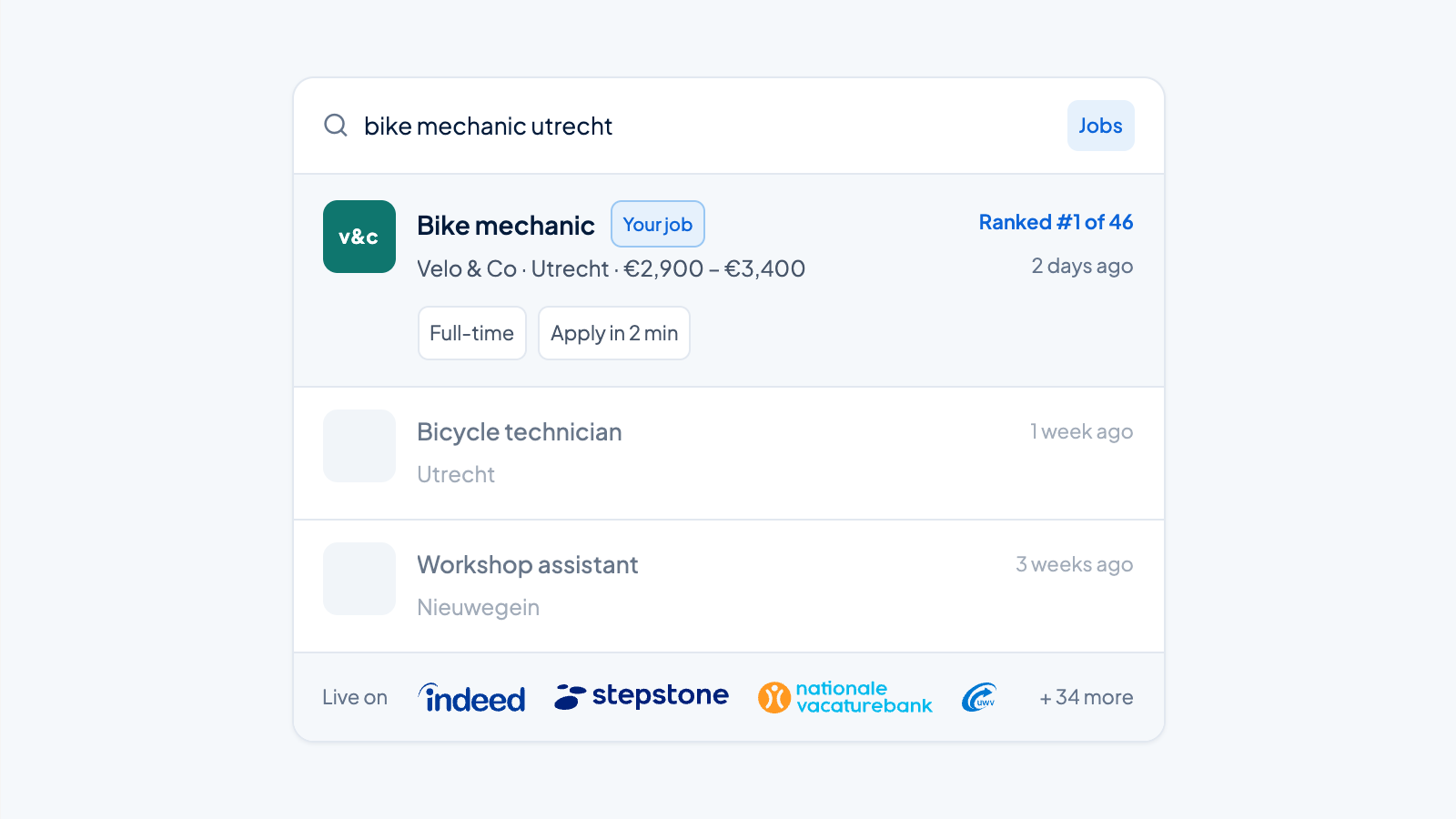
In today’s job market, Google increasingly determines which job openings candidates find. With millions of jobs online, visibility in Google search results has become crucial to recruitment success. Optimizing job postings for Google goes beyond traditional SEO and requires specific knowledge of Google for Jobs algorithms.
The difference between a highly visible job posting and an invisible ad can mean hundreds of qualified candidates. By applying recruitment SEO strategically, you not only increase the visibility of your job postings, but also attract more relevant candidates who are actively searching for your type of role.
This guide covers everything you need to know about job posting SEO, from implementing structured data to measuring how your job postings perform in Google search results.
Why Google optimization is critical to job posting success
Google for Jobs has fundamentally changed the recruitment landscape since its introduction in 2017. The platform displays job postings directly in search results, so candidates no longer need to navigate to job boards. This shift has made job posting visibility a critical success factor.
Research shows that more than 70% of candidates start their job search on Google. Job postings that are well optimized for Google receive on average three to five times more clicks than non-optimized ads.
The impact of Google optimization goes beyond simply getting more applications. Well-optimized job postings attract candidates who are specifically looking for your role and company, resulting in:
- Higher-quality candidates who are a better match for the job requirements
- Shorter time between posting and the first qualified application
- Lower recruitment cost per hire through better targeting
- Increased employer brand awareness through consistent visibility
Google for Jobs: how the algorithm ranks job postings
Google for Jobs works differently from traditional search engines. The algorithm evaluates job postings based on relevance, quality, and user experience. Job posting optimization requires an understanding of these specific ranking factors.
The main ranking factors are location relevance, how well the job title matches search queries, and the completeness of the job posting information. Google prefers job postings with complete structured data, clear job descriptions, and accurate location details.
The algorithm also considers user signals such as click-through rates and the time spent reading the job posting. Job postings that keep candidates engaged longer and prompt them to act earn higher rankings in future search results.
One unique aspect of Google for Jobs is its focus on the job seeker’s experience. The algorithm rewards job postings that are transparent about salary, benefits, and company culture, because this leads to better matches between employer and candidate.
Structured data and schema markup for perfect indexing
Structured data is the technical foundation for successful job posting indexing in Google. JobPosting schema markup tells Google exactly what your job posting contains and how it should be displayed in search results.
Implementing structured data for job postings requires specific fields. Required elements are jobTitle, description, datePosted, and hiringOrganization. Optional but recommended fields are baseSalary, jobLocation, employmentType, and validThrough.
For correct implementation, follow these steps:
- Implement JobPosting schema in JSON-LD format on every job posting page
- Make sure all required fields are filled in correctly with current information
- Use Google’s Rich Results Test to validate your markup
- Monitor Google Search Console for indexing issues
- Update the schema data whenever job posting information changes
Validation tools such as Google’s Structured Data Testing Tool help identify errors before your job postings go live. Correct structured data implementation is essential for visibility in Google for Jobs.
Writing job posting copy that convinces Google and candidates
Effective job posting copy balances search engine optimization with human appeal. Recruitment SEO starts with keyword research that is specific to your industry and functional area.
Job titles should match how candidates search. Use common job titles rather than internal ones. “Marketing Manager” performs better than “Brand Experience Orchestrator” because candidates are more likely to search for traditional job titles.
In the job description, integrate relevant keywords naturally without harming readability. Focus on:
- Clear job requirements and responsibilities
- Specific skills and experience required
- A description of the company culture and work environment
- Concrete benefits and development opportunities
Avoid keyword stuffing and focus on creating valuable content that helps candidates understand whether the role is a good fit for them. Google rewards job postings that genuinely help candidates in their decision-making process.
Common mistakes that destroy your Google rankings
Many organizations make critical mistakes that can completely eliminate their job posting visibility. Duplicate content is a common pitfall, where identical job posting copy on multiple platforms leads to ranking penalties.
Poor structured data implementation causes indexing issues. Missing required fields, incorrect date formats, or outdated information can cause Google to ignore your job postings.
Misleading information in job postings harms not only your Google rankings but also your employer brand. Incorrect salaries, locations, or job requirements lead to high bounce rates and negative user signals.
Technical issues such as slow load times, pages that are not mobile-friendly, or broken links negatively affect your rankings. Google prioritizes user experience, so technical excellence is essential for success in Google search results for job postings.
Measure and optimize your job posting performance
Effective job posting optimization requires continuous monitoring and adjustment. Google Search Console provides insight into how your job postings perform in search results, including impressions, clicks, and average position.
Click-through rates (CTR) are an important indicator of how attractive your job posting is. A low CTR suggests that your job title or snippet is not appealing enough to candidates. Test different titles and descriptions to improve your CTR.
Tracking conversions from Google traffic to actual applications helps identify quality differences between traffic sources. Candidates who arrive via Google for Jobs often show different behavioral patterns than candidates from traditional job boards.
Continuous optimization strategies include regular keyword analysis, A/B testing of job posting copy, and monitoring competitor performance. Keep track of which adjustments lead to improved visibility and more qualified applications.
How Applyfin helps with job posting optimization for Google
Our recruitment automation platform makes Google optimization of job postings simple and effective. We automate the technical aspects of job posting SEO while you can keep focusing on attracting the right candidates.
Applyfin offers concrete benefits for optimizing job postings for Google:
- Automatic structured data implementation for all job postings
- Integrated keyword optimization tools for better visibility
- Real-time performance monitoring and optimization suggestions
- Centralized job posting management with Google for Jobs integration
With our advanced features, recruiters can manage up to three times more applicants while achieving better Google rankings. Our platform combines technical excellence with user-friendly interfaces for optimal recruitment results.
Want to find out how we can improve your job posting visibility? Contact us for a personal demo of our recruitment automation solutions.