How do you improve your candidate sourcing strategy?
Learn how modern sourcing tactics and AI automation can transform your recruitment results with proven strategies.

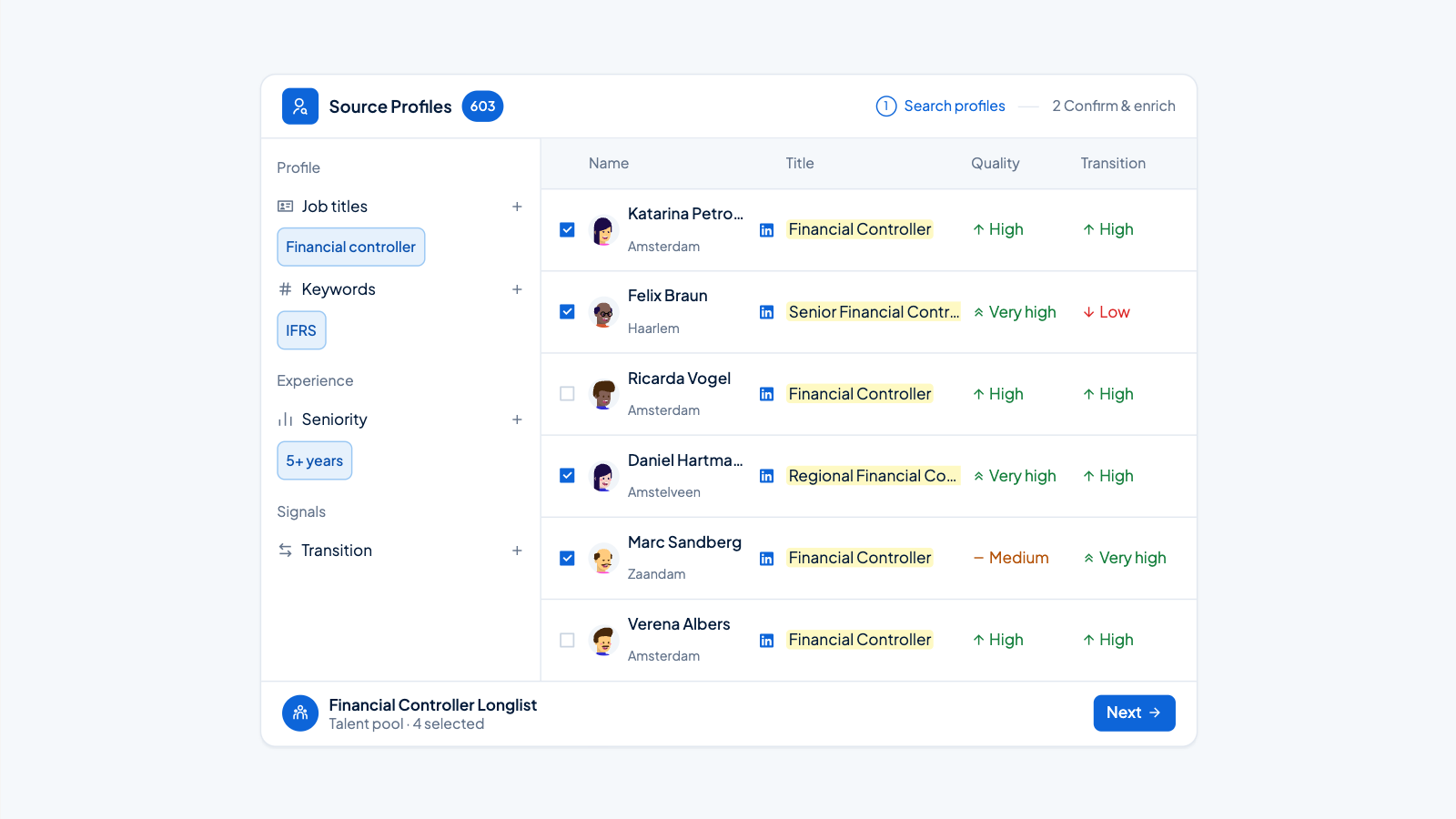
Recruitment in 2026 is under pressure. Talent is scarce, candidates are more demanding, and traditional sourcing methods are delivering diminishing returns. For HR professionals and hiring managers, finding qualified candidates has become one of the biggest challenges. A strong candidate sourcing strategy is no longer a nice-to-have, but an absolute necessity for companies that want to grow.
The right candidates aren’t waiting for your job posting. They need to be actively approached, convinced, and guided through the recruitment process. This article shows you how to improve your sourcing approach with proven tactics, modern technology, and data-driven decision-making.
Why traditional sourcing methods fall short
Manual sourcing processes cost recruiters far too much time and energy. The average recruitment team spends more than 60% of its time on administrative tasks instead of actually reaching out to candidates. This is due to fragmented tools and inefficient workflows.
Most recruiters work with a combination of LinkedIn, Excel sheets, various job boards, and separate email systems. This fragmentation causes:
- Loss of candidate data between different platforms
- Duplicate work due to a lack of centralized data storage
- No overview of the effectiveness of different sourcing channels
- Slow response times to candidates due to chaotic processes
The result is that recruiters work reactively instead of proactively. They respond to incoming applications rather than actively approaching the best candidates for their vacancies.
What makes an effective candidate sourcing strategy?
A successful sourcing strategy starts with a clear definition of your ideal candidate. Without this focus, sourcing becomes an inefficient search without direction. Target group segmentation forms the foundation of any effective recruitment approach.
Effective sourcing strategies are characterized by three core principles. First, a multichannel approach, where you reach candidates through various channels such as social media, referrals, and direct search. Second, data-driven decision-making, where you base your sourcing efforts on concrete metrics and results. Third, continuous optimization of your processes based on what works and what doesn’t.
The best recruitment teams treat sourcing as a marketing function. They build employer branding, create engaging content, and nurture talent pools for future vacancies. This proactive approach yields better candidates than reactively waiting for applications.
5 proven tactics for better candidate sourcing
These concrete techniques can be implemented immediately to improve your sourcing results:
- Boolean search optimization: Learn advanced search techniques for LinkedIn and other platforms. Use operators such as AND, OR, and NOT to find specific candidate profiles.
- Social media sourcing: Go beyond LinkedIn and explore platforms like GitHub for developers, Behance for creatives, and industry-specific communities.
- Employee referral programs: Motivate employees to refer candidates by creating attractive rewards and simple processes.
- Building talent pools: Maintain relationships with interesting candidates who aren’t available now, but might be in the future.
- Automated outreach: Use personalized but automated messages to reach more candidates without sacrificing quality.
Successfully implementing these tactics requires consistency and patience. Start with one or two techniques and gradually expand your repertoire.
How AI and automation transform your sourcing process
Modern HR technology can drastically increase your sourcing productivity. AI-driven tools can screen candidate profiles, assess suitability, and even conduct initial conversations. This doesn’t mean human recruiters become redundant, but that they can focus on strategic tasks.
Predictive analytics helps identify candidates who are likely to be successful in specific roles. Machine learning algorithms analyze patterns in successful hires and predict which new candidates have similar characteristics.
Workflow automation eliminates repetitive tasks such as sending follow-up emails, scheduling interviews, and updating candidate statuses. This allows recruiters to effectively manage up to three times more candidates without additional workload.
Implementing recruitment automation does require a thoughtful approach. Start with simple automations and gradually build more complex workflows, based on your specific processes and needs.
Measuring and optimizing sourcing ROI for sustainable success
Effective sourcing requires continuous measurement and optimization. Key performance indicators such as cost-per-hire, time-to-fill, and source effectiveness provide insight into what works and what can be improved.
The most important metrics for sourcing success are:
- Response rate per sourcing channel
- Conversion rate from first contact to interview
- Quality-of-hire scores per source
- Time spent per qualified candidate
Use this data to allocate your sourcing budget and time to the most effective channels. What works for one company may not work for another, so base decisions on your own results.
Market changes require flexibility in your sourcing strategy. What was effective last year may work less well this year due to shifts in candidate behavior or new platforms. Keep experimenting and adapting.
How Applyfin helps with candidate sourcing
We understand the challenges of modern candidate sourcing and have therefore developed a platform that centralizes all aspects of recruitment. Our solution combines smart job listings, data-powered sourcing, and AI-integrated workflows in one system.
With Applyfin, recruitment teams can:
- Centralize all candidate data from different sources in one clear system
- Set up automated sourcing workflows that save time and ensure consistency
- Use AI-driven screening to assess and prioritize candidates
- Gain real-time insight into sourcing performance and ROI per channel
Our clients report that they can manage up to three times more candidates with the same resources, while hiring costs drop by 60%. Want to discover how Applyfin can transform your sourcing strategy? Contact us for a personal demo, check out our comprehensive features, or visit our website for more information about our recruitment automation solutions.