How do you automate interview scheduling?
Automate interview scheduling and save 2-3 hours per day. Increase candidate satisfaction and reduce no-shows by 30%.

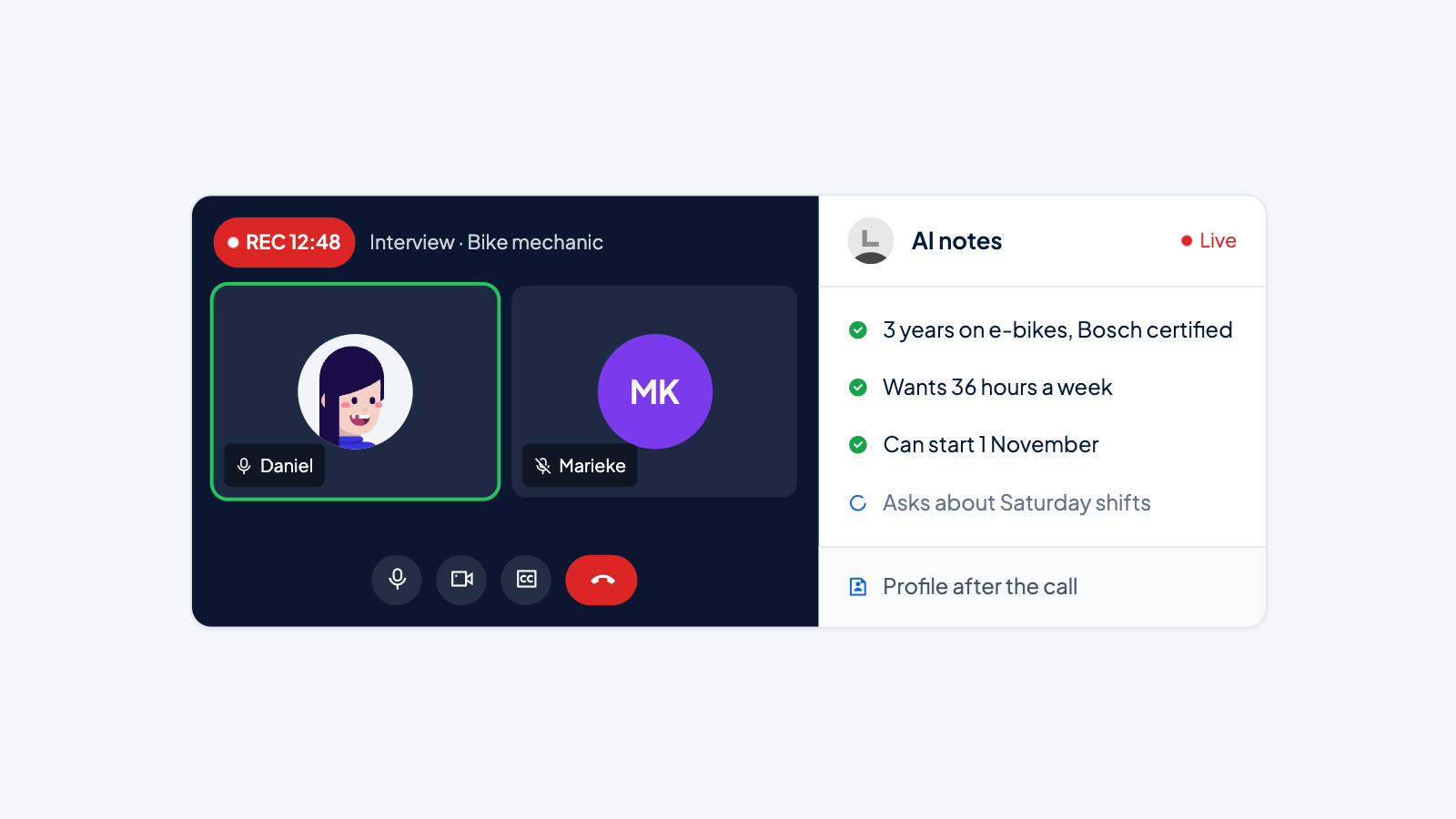
Scheduling job interviews is a daily challenge for many recruiters that eats up valuable time. Between the back-and-forth emails with candidates, searching for available time slots, and preventing double bookings, more time often disappears into admin than into actually selecting talent. Modern automation solutions offer a way out of this time-consuming cycle.
Automating interview scheduling can drastically improve your recruitment efficiency while also creating a better candidate experience. In this article you’ll discover how to move step by step to automated interview scheduling, which tools can help, and how to measure the results.
Why manual interview scheduling costs recruiters time and candidates
Traditional interview scheduling brings several problems that frustrate both recruiters and candidates. The most obvious problem is the time lost through endless email exchanges. An average recruiter spends 2 to 3 hours a day coordinating appointments, time that could be spent much more effectively evaluating candidates.
Miscommunication regularly arises when multiple parties are involved in scheduling. Wrong time zones, unclear locations, or forgotten confirmations lead to missed appointments and frustrated candidates. This has a direct impact on your employer branding.
No-shows are another major problem. Without automated reminders and confirmations, the no-show rate often falls between 15 and 25%. This means recruiters and hiring managers regularly sit ready for nothing, further disrupting the schedule.
The administrative burden piles up as the number of vacancies grows. Manual scheduling simply doesn’t scale with growing recruitment needs, creating bottlenecks in your hiring process.
How automation transforms your recruitment process
Automated interview scheduling revolutionizes the way recruitment teams operate. The most immediate benefits are time savings and increased productivity. Recruiters can focus on their core activities while the system takes over scheduling.
The candidate experience improves significantly thanks to immediate availability of time slots and automatic confirmations. Candidates can choose a suitable time from the available options themselves, which increases the feeling of control and professionalism.
Administrative errors largely disappear because the system automatically checks for double bookings and ensures correct time zone conversions. This leads to less stress and greater reliability in your recruitment process.
Scheduling efficiency increases because the system takes the availability of everyone involved into account. Complex scheduling with multiple interviewers becomes much simpler.
Show-up rates improve significantly through automated reminders and clear communication. Many systems report a 20 to 30% improvement in attendance at interviews.
What tools and technologies enable interview automation
Various technologies enable modern interview scheduling automation. AI-driven scheduling tools form the backbone of these systems. These tools learn from patterns and preferences to suggest optimal time slots.
Calendar integrations connect seamlessly with popular systems such as Outlook, Google Calendar, and Apple Calendar. This keeps everyone informed of scheduled appointments without manual entry.
Chatbots for appointment scheduling offer candidates an interactive way to schedule interviews. These bots can be available 24/7 and answer simple questions about the application process.
Integrated ATS systems provide the most complete solution by combining interview scheduling with candidate management. This creates a central place where all recruitment activities come together.
When comparing features, the most important aspects are:
- Integration capabilities with existing systems
- User-friendliness for both recruiters and candidates
- Customization options for different interview types
- Reporting and analytics features
- Mobile accessibility
Step-by-step implementation of automated interview scheduling
Implementing interview scheduling software requires a thoughtful approach. Start by evaluating your current workflow and identifying the biggest bottlenecks. This helps you choose the right solution.
The system choice depends on your specific needs:
- Determine your budget and desired features
- Evaluate integration options with existing tools
- Test different solutions with a small group of users
- Ask for references from similar organizations
- Consider scalability for future growth
Integration with existing tools is crucial to success. Make sure the new system works seamlessly with your current ATS, CRM, and calendar applications.
Configure workflows that fit your recruitment process. This includes setting up different interview types, durations, and people involved.
Training your team is essential. Organize workshops and provide clear documentation. A gradual rollout helps everyone get used to the new system.
Best practices for successful interview automation
Successful automation requires attention to details that make the difference. Personalization of automated messages ensures candidates feel valued despite the automation. Use the candidate’s name and refer to the specific role.
The timing of communication plays an important role. Send confirmations immediately after scheduling, followed by reminders 24 hours and 2 hours before the interview. This optimizes attendance without causing irritation.
Backup planning for technical issues prevents chaos. Provide alternative communication methods and train your team in manual procedures for emergencies.
The balance between automation and human touch is crucial. Keep personal elements in your communication and make sure candidates always have a human point of contact for complex questions.
Measuring the ROI of automated recruitment processes
Measuring results shows the value of your investment in automation. Improved time-to-hire is often the most visible metric. Many organizations report a 20 to 40% reduction in the time between first contact and offer.
Cost savings per hire are calculated based on the reduced time spent by recruiters and hiring managers. This time can be devoted to more strategic activities.
Candidate satisfaction scores provide insight into the applicant experience. Regular surveys help optimize the process.
Recruiter productivity metrics show how many more candidates a recruiter can manage with automated support. This is especially valuable for organizations that want to scale quickly.
The long-term impact on hiring quality measures whether increased efficiency also leads to better hires. This requires longer-term tracking, but gives the most complete picture of success.
How Applyfin helps with interview automation
We offer a complete solution for recruitment automation where interview scheduling integrates seamlessly with your entire hiring process. Our AI-integrated workflows automate not only scheduling but also follow-ups and candidate communication.
The benefits of our approach:
- Central platform that combines all recruitment activities
- Smart algorithms that suggest optimal time slots
- Automatic integration with popular calendar systems
- Comprehensive reporting for ROI tracking
- 24/7 candidate self-service options
Recruiters who work with us can manage up to three times more candidates compared to traditional workflows. This results in significant cost savings and improved recruitment efficiency.
Ready to transform your recruitment process? Discover all possibilities of our automation solutions. Contact us for a personal demonstration and experience for yourself how automation can improve your daily work. Start optimizing your recruitment process today.