How do you schedule interviews more efficiently?
Save 4-6 hours per week on interview scheduling with smart automation. Discover practical tools and strategies for more efficient recruiting.

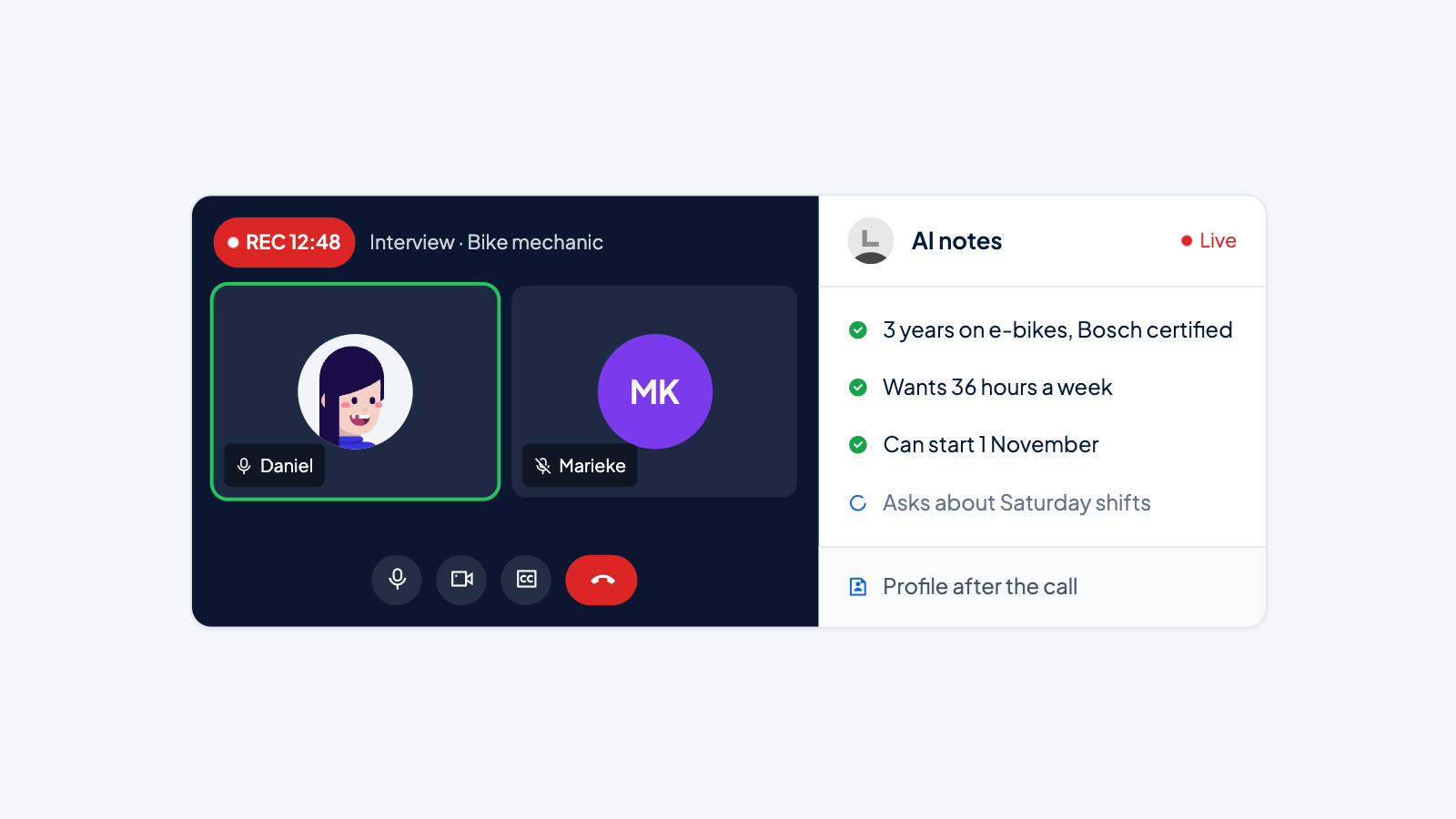
Interview scheduling costs recruiters an average of 4–6 hours per week in administrative work. While you should be focused on finding the perfect candidate, you’re sending emails about availability, comparing calendars, and chasing follow-ups. The result? Strong candidates drop out due to long wait times and your hiring process grinds to a halt.
Modern recruitment calls for a smart approach to interview scheduling. Companies that optimize their interview planning fill vacancies 40% faster and retain more qualified candidates. In this article, you’ll discover how to set up your interview process more efficiently, which tools can help you, and which pitfalls to avoid.
Why traditional interview planning fails in modern recruitment
Most recruiters still use an outdated approach to interview planning. You send an email to the candidate with a few time slots, wait for a reply, check the calendars of everyone involved, and hope everything aligns. This method causes unnecessary delays in your hiring process.
Manual interview planning leads to three major problems. Candidates experience long wait times between interviews, which may cause them to sign with a competitor. Hiring managers get frustrated by the constant back-and-forth emails about availability. The administrative work takes up so much time that you have less attention for candidate screening and employer branding.
The candidate experience suffers the most. Top talent often has multiple options and chooses companies that communicate quickly and professionally. If your interview planning moves slowly, you make a poor first impression that’s hard to recover from.
The essential elements of efficient interview planning
Successful interview scheduling revolves around four core components that connect seamlessly. Time management forms the foundation: you need realistic time estimates for different types of interviews and buffer time for unexpected overruns.
Stakeholder coordination requires clear agreements about who is available when. Use shared calendars and set fixed interview times each week. Candidate communication must be clear and timely, with all necessary information about the location, contact persons, and what candidates can expect.
Technical preparations include booking suitable rooms, testing video connections for online interviews, and preparing interview materials. Together, these elements determine whether your interview process runs smoothly or gets bogged down in logistical problems.
Which tools and technologies speed up your interview process
Modern scheduling tools make the difference between chaos and control in your recruitment planning. Calendly and similar scheduling platforms let candidates choose time slots themselves from your available times. This eliminates the ping-pong effect of email communication.
ATS integrations ensure that all interview information is automatically updated in candidate profiles. You no longer need to manually track who was invited when or which follow-up actions are needed. AI-driven scheduling platforms go a step further by suggesting optimal time slots based on the preferences of everyone involved.
Automation solutions can send reminders, generate confirmation emails, and even handle rescheduling without your intervention. These tools not only save time but also improve the consistency of your candidate communication.
Optimizing interview scheduling step by step in 5 phases
A streamlined interview planning process starts with the right preparation. Follow these five phases to professionalize your scheduling:
- Intake and planning: Determine the number of interview rounds, stakeholders involved, and desired timeline before contacting candidates.
- First contact: Send an invitation within 24 hours of screening with clear time slots and all practical information.
- Confirmation and preparation: Confirm appointments 48 hours in advance and send preparation materials to everyone involved.
- Execution: Have backup plans for technical issues and keep contact details handy for last-minute changes.
- Follow-up: Communicate the next steps within 48 hours after the interview and update your ATS with all relevant information.
How automation makes your interview planning 3x faster
Automation workflows transform time-consuming tasks into efficient processes that run in the background. A candidate who completes a screening automatically receives an invitation for the next interview with available time slots. No manual intervention needed.
Time-saving features like bulk scheduling let you plan multiple interviews at once. Template emails ensure consistent communication while still allowing you to add personal details. Automatic reminders reduce no-shows by 60% because candidates are reminded of their appointment in time.
The efficiency gains are measurable. Recruiters who use automation spend 70% less time on administrative tasks. They can focus on candidate evaluation and relationship building, leading to better hiring decisions and higher acceptance rates.
Common interview planning mistakes that cost you candidates
Certain planning mistakes have a direct impact on your candidate experience and employer branding. Late communication tops the list: candidates who receive their interview details only a day in advance feel undervalued.
Unclear instructions cause stress and confusion. Don’t forget to mention whether the interview is online or in person, who will be present, and how long the interview will last. Overbooking hiring managers creates a poor impression when interviews are cancelled or postponed.
Practical solutions for these problems are easy to implement:
- Create standard communication templates with all necessary information
- Block fixed time slots in hiring managers’ calendars
- Use confirmation emails with calendar invitations
- Implement a backup plan for technical issues
- Train your team in professional candidate communication
How Applyfin helps with efficient interview planning
We developed Applyfin to help recruitment teams fully automate their interview scheduling. Our platform centralizes all aspects of your hiring process, from first contact to final decision.
The key benefits of our approach:
- Integrated scheduling: Candidates choose their own time slots that are automatically synced with everyone involved
- AI-driven workflows: Automatic follow-ups, reminders, and rescheduling without manual intervention
- Centralized overview: All candidate information and interview history in one place
- Template communication: Consistent and professional candidate experience at every interaction
Recruiters who use our features manage up to 3x more candidates than with traditional methods. Want to see how this works for your organization? Contact us for a personal demonstration, or check out our platform to get started right away with more efficient interview planning.