How does data-driven recruitment work?
Transform your recruitment with data analytics: increase efficiency, reduce costs, and find the right candidates faster.

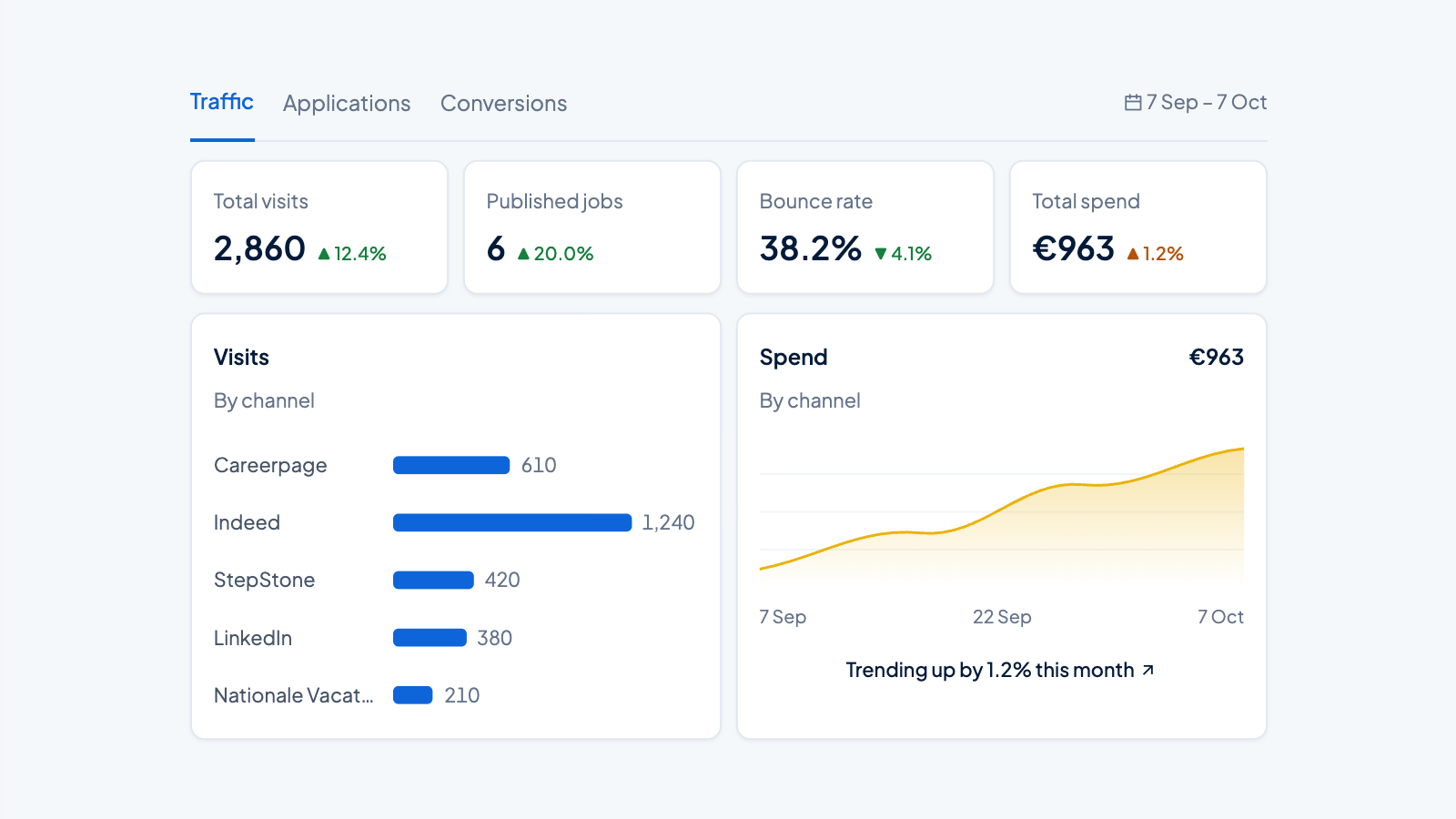
The recruitment world is changing at lightning speed. Where recruiters once relied on intuition and experience, today's market demands a more strategic approach. Data-driven recruitment offers the solution for organizations looking to optimize their hiring processes and achieve better results.
In this comprehensive guide, you'll discover how recruitment data can help you make smarter decisions, work more efficiently, and ultimately find the right candidates faster. We'll discuss practical implementation strategies, essential metrics, and the role of AI in modern recruitment technology.
Why traditional recruitment methods fall short in 2024
Traditional hiring methods rely heavily on intuition and personal impressions. This approach brings several challenges that are becoming increasingly apparent in today's job market.
Manual processes cause significant delays. Recruiters spend hours sifting through resumes, scheduling interviews, and tracking candidate data across different systems. This fragmented way of working leads to inefficiency and increases the likelihood of errors.
Bias plays a major role in traditional recruitment. Unconscious prejudices influence decisions about candidates, which can lead to missed opportunities and a less diverse work environment. Recruitment based on gut feeling lacks the objectivity needed for consistent quality.
The cost of bad hires is high. When a new employee doesn't perform well, costs arise from rehiring, training, and lost productivity. Traditional methods offer little insight into why certain choices are successful or not.
What exactly is data-driven recruitment?
Data-driven recruitment uses concrete data and analysis to support hiring decisions. Instead of relying on intuition, recruiters base their choices on measurable information about candidates, processes, and outcomes.
This approach uses different types of recruitment data:
- Demographic data: background information, education, and work experience
- Behavioral data: how candidates respond during the application process
- Performance data: historical data on successful employees
- Process data: metrics on the efficiency of recruitment activities
The difference from traditional approaches is significant. Where traditional recruitment is reactive, data-driven hiring is proactive. It helps identify patterns, make predictions, and continuously improve processes based on concrete results.
Which data and metrics are essential for modern recruiters?
Successful implementation of data analytics in recruitment requires focus on the right KPIs. These metrics provide insight into both the efficiency and effectiveness of your hiring process.
The most important recruitment metrics are:
- Time-to-hire: the average time between job posting and contract signing
- Cost-per-hire: total recruitment costs divided by the number of hired candidates
- Quality-of-hire: performance of new employees after a certain period
- Candidate experience scores: feedback from candidates about the application process
- Source effectiveness: which channels yield the best candidates
This HR data is collected by monitoring various touchpoints in the hiring process, from the moment a candidate responds to a vacancy to the first evaluation after hiring. Modern recruitment technology makes it possible to collect and analyze this data automatically.
Interpreting talent analytics requires context. A low time-to-hire, for example, is not always positive if it comes at the expense of candidate quality. It's important to view different metrics in relation to each other.
How AI and automation optimize recruitment data
Artificial intelligence is transforming how we use recruitment data. AI recruitment tools can recognize patterns invisible to humans and make predictions about candidate success.
Machine learning algorithms analyze resumes and profiles to identify the best matches. These systems learn from historical data on successful hires and can predict with increasing accuracy which candidates will perform well.
Recruitment automation plays a crucial role in optimizing data processes. Automated sourcing tools search multiple platforms simultaneously and identify potential candidates based on predefined criteria.
Predictive analytics goes a step further. By combining historical performance data with candidate profiles, these systems can predict which candidates have the greatest chance of long-term success within the organization.
Practical implementation of data-driven recruitment strategies
The transition to data-driven hiring requires a systematic approach. Start by establishing clear goals and identifying which metrics are most relevant to your organization.
Steps for successful implementation:
- Evaluate your current recruitment technology and identify gaps
- Select tools that integrate with existing HR systems
- Train your recruitment team in data interpretation and analytics
- Start with pilot projects to gain experience
- Scale gradually to full implementation
Common pitfalls include collecting too much data without a clear purpose, insufficient team training, and ignoring the human factor in recruitment. Successful data-driven hiring combines technology with human expertise.
Measuring ROI and results of your data-driven approach
Measuring the return on investment is essential to demonstrate the value of data-driven recruitment. Organizations that implement this approach often see significant improvements in efficiency and quality.
Effective monitoring requires real-time dashboards that visualize key metrics. These dashboards give recruiters and management direct insight into the performance of the hiring process and enable quick adjustments.
Typical improvements reported by organizations include shorter hiring times, lower cost-per-hire, and higher satisfaction scores from both candidates and hiring managers. The investment in recruitment technology often pays for itself within the first year through increased efficiency.
How Applyfin helps with data-driven recruitment
We understand that the transition to data-driven hiring can be challenging. Our platform centralizes all recruitment data and provides the tools you need for effective talent analytics.
Our solution offers:
- Centralized dashboard with real-time recruitment metrics and KPI tracking
- AI-powered candidate screening that automatically identifies the best matches
- Automated workflows that eliminate manual tasks
- Comprehensive reporting functionalities for ROI measurement
Organizations working with us manage up to three times more candidates than with traditional methods and reduce their recruitment costs by as much as 60%. Our advanced features make it possible to start with data-driven recruitment immediately.
Ready to transform your recruitment process? Contact us for a personal demonstration of how our recruitment technology can help your organization achieve better results.