How does candidate tracking with AI work?
Candidate tracking with AI revolutionizes recruitment by automating resume screening, matching, and communication. This technology combines machine learning with natural language processing to objectively assess and rank applicants. Recruiters manage up to three times as many candidates while selection quality improves. AI reduces human bias, substantially shortens time-to-hire, and generates data-driven insights for continuous optimization. Discover which tasks AI takes over and how you choose the right platform for your organization.

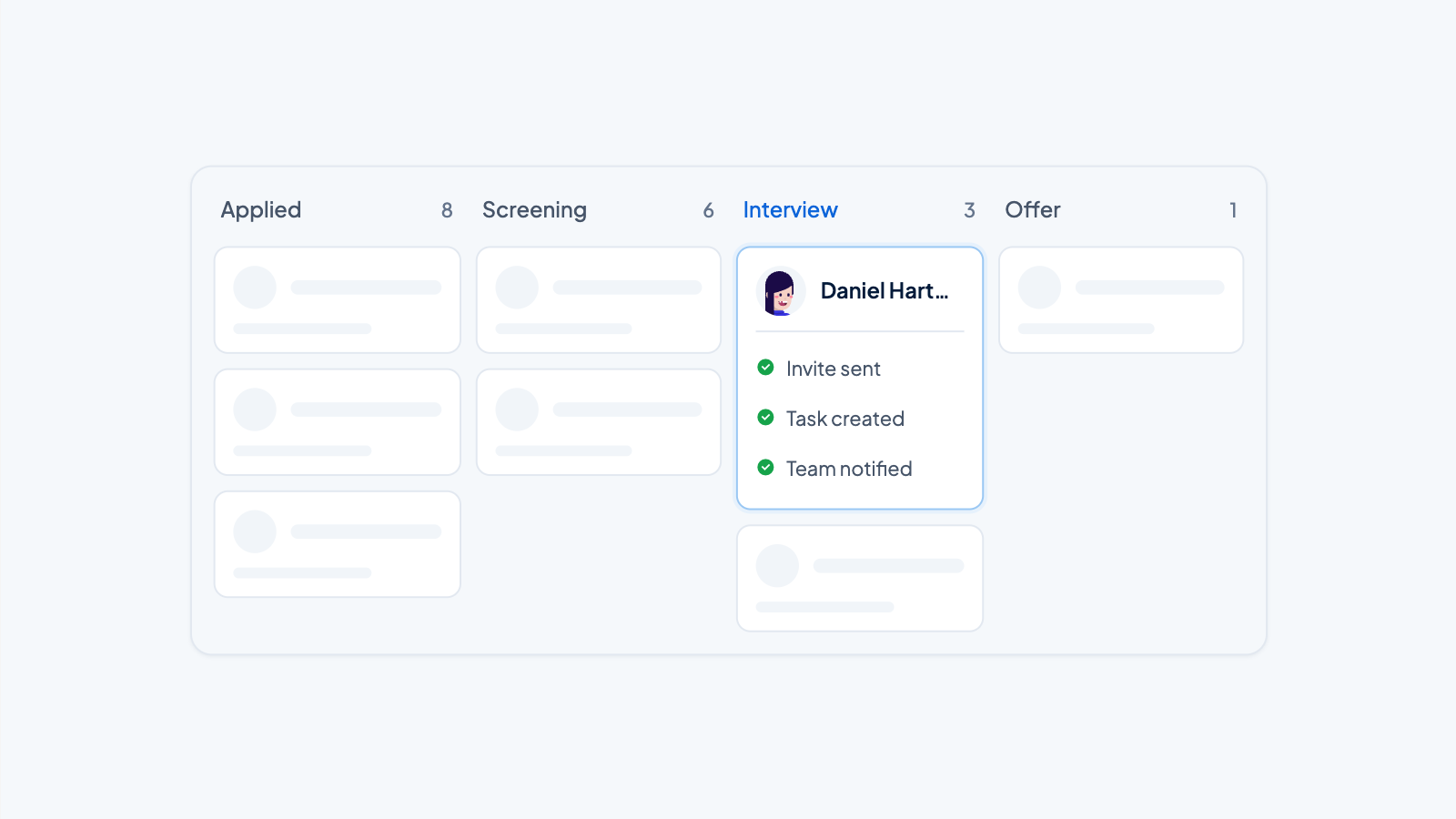
AI-powered candidate tracking combines traditional applicant tracking systems with artificial intelligence to automate and improve the recruitment process. This technology analyzes resumes, matches candidates with jobs, and predicts suitability based on data. AI in recruitment processes makes it possible to manage more applicants while improving selection quality. This article answers the key questions about how AI-driven candidate tracking works and what benefits it offers recruitment teams.
What is candidate tracking with AI and why is it important?
Candidate tracking with AI is a system that uses machine learning and data analysis to automatically screen, assess, and rank applicants. Unlike traditional applicant tracking systems that primarily handle administrative tasks, AI technology also makes qualitative decisions about candidate suitability.
The value for modern recruitment teams is significant. Where recruiters previously spent hours manually reviewing resumes, AI recruitment processes now do this in seconds. The system identifies relevant skills, work experience, and education, and compares them with job requirements.
AI in recruitment transforms the hiring landscape because it reduces human bias and uses objective data for decision-making. Organizations adopt this technology because it allows them to recruit faster and more accurately. The time savings means that recruitment teams can focus on personal contact with the best candidates instead of administrative tasks.
For companies with high volumes of applicants, this difference is crucial. Without AI support, valuable candidates can be overlooked simply because there is too little time to thoroughly assess each application.
How does AI technology work in a recruitment system?
AI algorithms within candidate tracking systems use machine learning to recognize patterns in successful applications. The system analyzes historical data on hired candidates and learns which traits correlate with good performance in specific roles.
Natural language processing (NLP) forms the basis for resume analysis. This technology understands written text and extracts relevant information such as skills, education, and work experience. The system also recognizes synonyms and industry-specific terminology, ensuring candidates are not missed because they use different words than the job posting.
The key AI functionalities in recruitment systems are:
- Automatic resume parsing that creates structured data from unstructured documents
- Semantic matching that pairs candidates with jobs based on meaning, not just keywords
- Predictive scoring that forecasts each candidate’s likelihood of success
- Chatbots that answer initial questions from applicants and gather qualifying information
- Learning algorithms that continuously improve based on recruitment decisions and outcomes
The system becomes smarter as it processes more data. Every hired candidate, every rejected profile, and every successful hire adds knowledge to the algorithm. This self-improving capability makes AI recruitment processes increasingly effective over time.
Which tasks does AI automate in the hiring process?
AI takes over a wide range of recruitment tasks that traditionally take a lot of time. This automation frees recruiters from repetitive work so they can focus on strategic activities and human interaction with top candidates.
The main automated steps in the hiring process are:
- Resume screening and parsing: The system automatically reads all incoming applications, extracts relevant information, and assesses suitability within seconds of receipt.
- Candidate qualification: AI asks targeted questions via chatbots or automated forms to verify essential qualifications before human recruiters get involved.
- Automated communication: The system sends acknowledgments, status updates, and rejections without manual intervention, improving the candidate experience.
- Interview scheduling: AI-driven scheduling tools automatically find available time slots that suit both candidate and interviewer, including calendar synchronization.
- Pipeline management: The system automatically moves candidates through recruitment stages based on actions and decisions, with alerts when human input is needed.
- Data analysis and reporting: AI generates insights on recruitment metrics, bottlenecks, and optimization opportunities without manual data collection.
This automation means that AI recruitment tasks that previously took days are now completed in hours. Recruiters can therefore manage more job openings without sacrificing quality, and candidates experience faster response times.
What are the benefits of AI-driven candidate tracking for recruiters?
AI technology in recruitment delivers concrete benefits that are directly noticeable in daily workflows. The main benefit is increased productivity: recruiters can effectively manage up to three times more applicants compared to traditional methods.
Better candidate matching arises because AI objectively compares skills and experience against job requirements. The system does not overlook relevant candidates and prevents suitable profiles from getting lost in the pile. This leads to higher-quality shortlists and better hiring decisions.
Faster time-to-hire is a direct result of automated screening and communication. Where the hiring process traditionally takes weeks, AI recruitment processes can substantially shorten this period. Top candidates remain in limbo for less time and accept offers more quickly.
Cost reduction comes from more efficient processes and better matches. Less time per applicant means lower recruitment costs. Better matches result in employees who stay longer, reducing replacement costs. This makes AI recruitment cheaper in the long run.
The candidate experience improves significantly thanks to fast responses and transparent communication. Applicants appreciate receiving quick feedback, even if it’s an automated rejection. This protects your employer brand and keeps the talent pool warm for future vacancies.
Data-driven insights enable recruitment teams to optimize continuously. The system shows where candidates drop off, which sources deliver the best applicants, and where the process slows down. This transparency makes strategic improvement possible.
How to choose the right AI recruitment platform for your organization
Selecting an AI-powered applicant tracking system requires careful consideration of several factors. Start by mapping out your specific recruitment needs: how many vacancies do you manage, what are your biggest bottlenecks, and which processes take the most time.
Integration capabilities are crucial for a smooth workflow. The platform must connect with your existing HR systems, job boards, and communication tools. At ApplyFin, for example, we provide seamless integrations with all major platforms, so data automatically syncs without duplicate work.
User-friendliness determines whether your team will actually use the system. A powerful platform that is too complex will go unused. So always test the interface and ask if a demo is available. On our features page you can see how intuitive modern AI recruitment processes can be.
Scalability is essential as your organization grows. The platform must scale with increasing volumes of applicants and vacancies without performance issues. Ask about the experiences of similar organizations and what volumes the system can handle.
The AI functionalities themselves deserve thorough evaluation. Not all systems offer the same capabilities. Check whether the platform includes smart resume parsing, predictive scoring, automated communication, and learning algorithms that improve over time.
Reporting and analytics tools provide insight into recruitment performance. The platform should offer clear dashboards with relevant metrics such as time-to-hire, source effectiveness, and candidate pipeline status. This data helps you continuously optimize your processes and makes AI recruitment more quickly measurable.
Support and implementation assistance make the difference between a successful adoption and a frustrating experience. Ask what onboarding the platform offers, whether training is available, and how quickly support responds to questions. We understand that switching to AI-driven recruitment requires guidance, so you can speak directly with specialists via our contact form who will walk you through the process.
Finally, consider the total costs versus the expected benefits. An effective AI recruitment platform saves significantly on recruitment time and costs, so the investment pays for itself. Calculate how much time your team currently spends on manual tasks and what those hours are worth.
Want to see how AI-driven candidate tracking can transform your recruitment processes? Discover on our homepage how modern technology helps recruitment teams achieve more with less effort. The future of hiring is data-driven, automated, and surprisingly human at the same time.